What is a balanced diet?
Mostly fruit, veg and starchy food. In the UK, each makes up just over a third of what you eat. But the healthy eating plate you see online is American. It splits things differently.
On this page
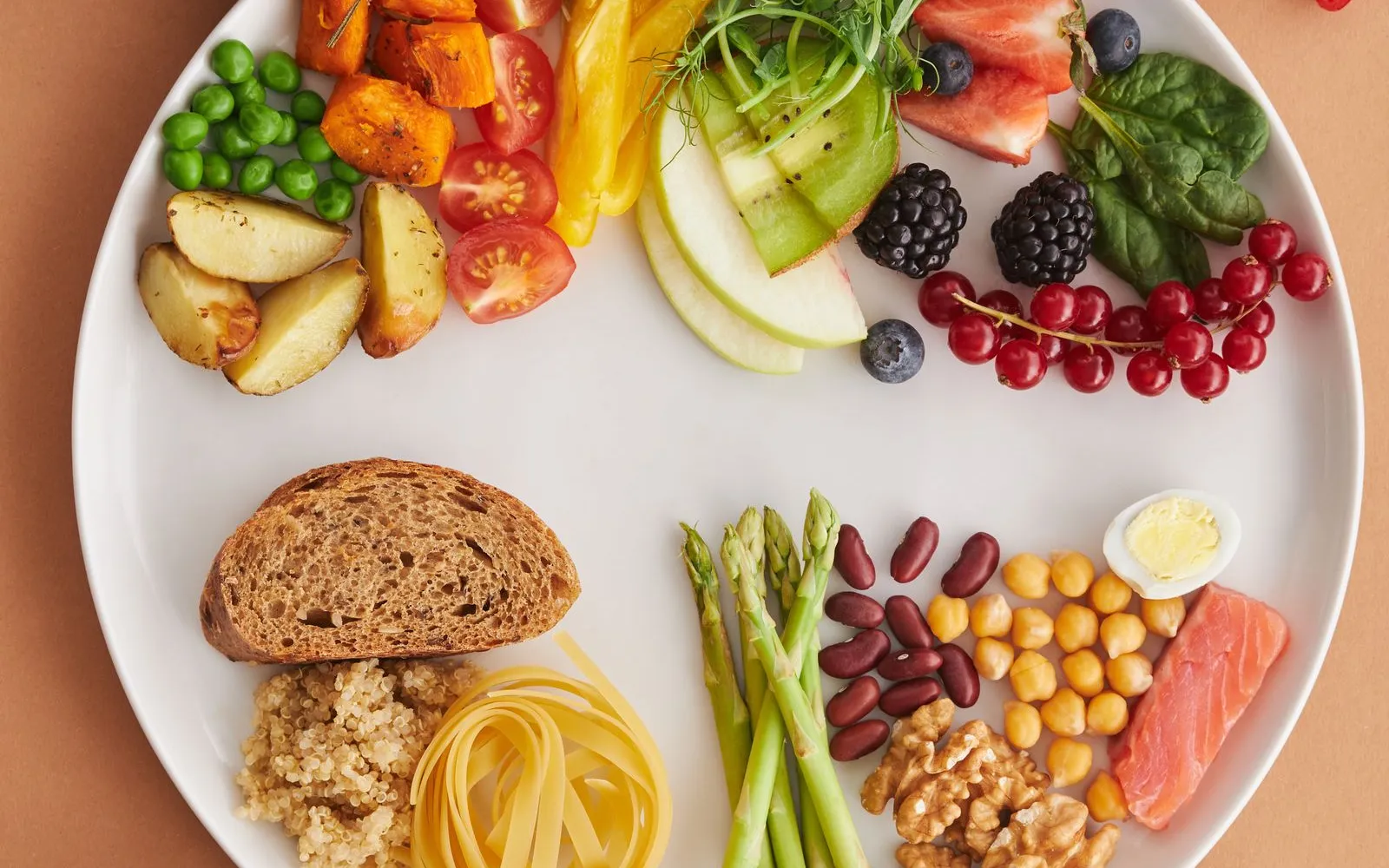
What is a balanced diet?
It means eating a wide variety of foods in the right proportions. In the UK, those proportions come from the NHS Eatwell Guide.
Fruit and veg make up just over a third of the food you eat each day. Starchy foods, like bread, rice, pasta and potatoes, make up just over a third too. Protein, dairy and a little oil fill the rest.
| Food group | Share of your food | Foods to pick |
|---|---|---|
| Fruit and veg | 39% | Fresh, frozen, tinned or dried. Apples, carrots, peas, tinned tomatoes. |
| Starchy foods | 37% | Wholegrain bread, brown rice, wholewheat pasta, oats, potatoes in their skins. |
| Protein | 12% | Beans, lentils, fish, eggs, lean meat. |
| Dairy and alternatives | 8% | Semi-skimmed milk, plain yoghurt, reduced-fat cheese, soya drinks. |
| Oils and spreads | 1% | Small amounts of olive, rapeseed or sunflower oil. |
Sources: NHS Eatwell Guide; GOV.UK Eatwell model
The shares are by weight of food, not calories. The last 3% is cake, crisps, chocolate and sugary drinks. The NHS says these are not needed, so have them less often and in small amounts.
The guide works whether you eat meat or are vegetarian. It does not apply to children under 2.
Look at today’s food. Is fruit, veg and starch most of it? That’s your first check.
What is the healthy eating plate?
The plate you see online is Harvard’s Healthy Eating Plate. A US university made it.
The UK dropped its own plate in 2016. People read the plate, knife and fork as a rule for every meal, so it became the Eatwell Guide.
Harvard gives veg and fruit half the plate. It doesn’t count potatoes as veg, because of their effect on blood sugar. It also limits milk and dairy to 1 to 2 servings a day.
The NHS keeps potatoes as a starchy food. Eat the skins, but they don’t count towards your 5 A Day. Sweet potatoes, parsnips and swedes do.
Live in the UK? Use the Eatwell Guide. If you like the plate picture, fill half with veg and fruit either way.
How big is a portion on a balanced plate?
Your hands are a handy guide. The British Nutrition Foundation suggests these hand measures.
| Food | Hand measure | Weight |
|---|---|---|
| Dried pasta or rice | About two handfuls | 75g |
| Baked potato | About the size of your fist | 220g |
| Breakfast cereal | About three handfuls | 40g |
| Chicken breast | About the size of your whole hand | 120g |
| Cheddar cheese | About two thumbs together | 30g |
| Fruit or veg | 1 medium apple, or 3 heaped tablespoons of veg | 80g |
Sources: British Nutrition Foundation; NHS: 5 A Day
Over a day, aim for at least 5 portions of fruit and veg and 3 to 4 of starchy food. Add 2 to 3 of protein and 2 to 3 of dairy.
These sizes suit an average woman’s 2,000 calories. If you’re tall or very active, you may need more. On average, men need around 2,500.
Next time you serve pasta, scoop it with your hands first. It shows you what 75g looks like.
Does every meal have to be balanced?
No. The NHS says get the balance right over a day or even a week, not at every meal.
One balanced day, meal by meal
- 1
Breakfast
Porridge with milk and a sliced banana.
- 2
Lunch
Jacket potato with beans and a side salad.
- 3
Dinner
Salmon, brown rice, broccoli and peas.
- 4
Snacks
An apple and a plain yoghurt.
Count it up. That’s at least 5 portions of fruit and veg, 3 starchy foods, 2 dairy and 2 protein.
Eating pizza, curry or a sandwich? Check what’s in it and see how it fits the groups. If it’s light on veg, add a side or put more veg in your next meal.
For a full week of meals, use our 7-day healthy meal plan. On a tight budget, try these cheap healthy meals.
How can I make my diet more balanced?
Most people in the UK eat too much saturated fat (the fat in butter, cheese and fatty meat), sugar and salt. They also get too little fruit, veg, oily fish and fibre. So start with these.
Six changes for a more balanced diet
- Base each main meal on a starchy food, and pick wholegrain or leave the skins on potatoes.
- Add fruit or veg to every meal, to reach at least 5 portions of 80g a day.
- Have at least 2 portions of fish a week, and make 1 of them oily, such as salmon or mackerel.
- Swap some meat for beans, peas or lentils. If you eat more than 90g (cooked weight) of red or processed meat a day, cut down to 70g.
- Choose lower-fat, lower-sugar dairy where you can, like semi-skimmed milk and plain yoghurt.
- Drink 6 to 8 glasses of fluid a day, and keep juice and smoothies to 150ml a day in total.
Sources: NHS Eatwell Guide; NHS: meat; NHS: 5 A Day
People who eat at least 5 portions of fruit and veg a day can have a lower risk of heart disease, stroke and some cancers.
Salt hides in bought food. More than 1.5g of salt per 100g is high. For the daily limits, see how much salt a day, how much sugar a day and how much fibre a day.
Pick one change this week. Add the next one once it sticks.
When to speak to a GP
Have special dietary needs or a medical condition? A registered dietitian (a qualified food and diet expert) can help you adapt the Eatwell Guide. See a GP if:
- You’ve lost a lot of weight over the last 3 to 6 months without meaning to. The NHS calls this a main sign of malnutrition, when your body gets too few nutrients.
- You have other signs of malnutrition. These include little interest in food or drink, or feeling tired all the time or weak. Getting ill often and taking a long time to recover is another.
- You think a child or older person you care for may be malnourished. In children, a sign is not growing or not putting on weight as expected.
- You worry a lot about your weight or shape, or eat very little. Or you keep very strict food routines, exercise too much, or make yourself sick or take laxatives (medicines that make you poo) after eating. These can be signs of an eating disorder. See a GP as soon as you can.
Never stop or change a prescribed medicine without your prescriber.
You can also talk in confidence to the eating disorder charity Beat on 0808 801 0677.