Order your kit.
Choose your panel and have the collection kit sent to your home.
Look beyond your total cholesterol number.
Explore what your blood can tell you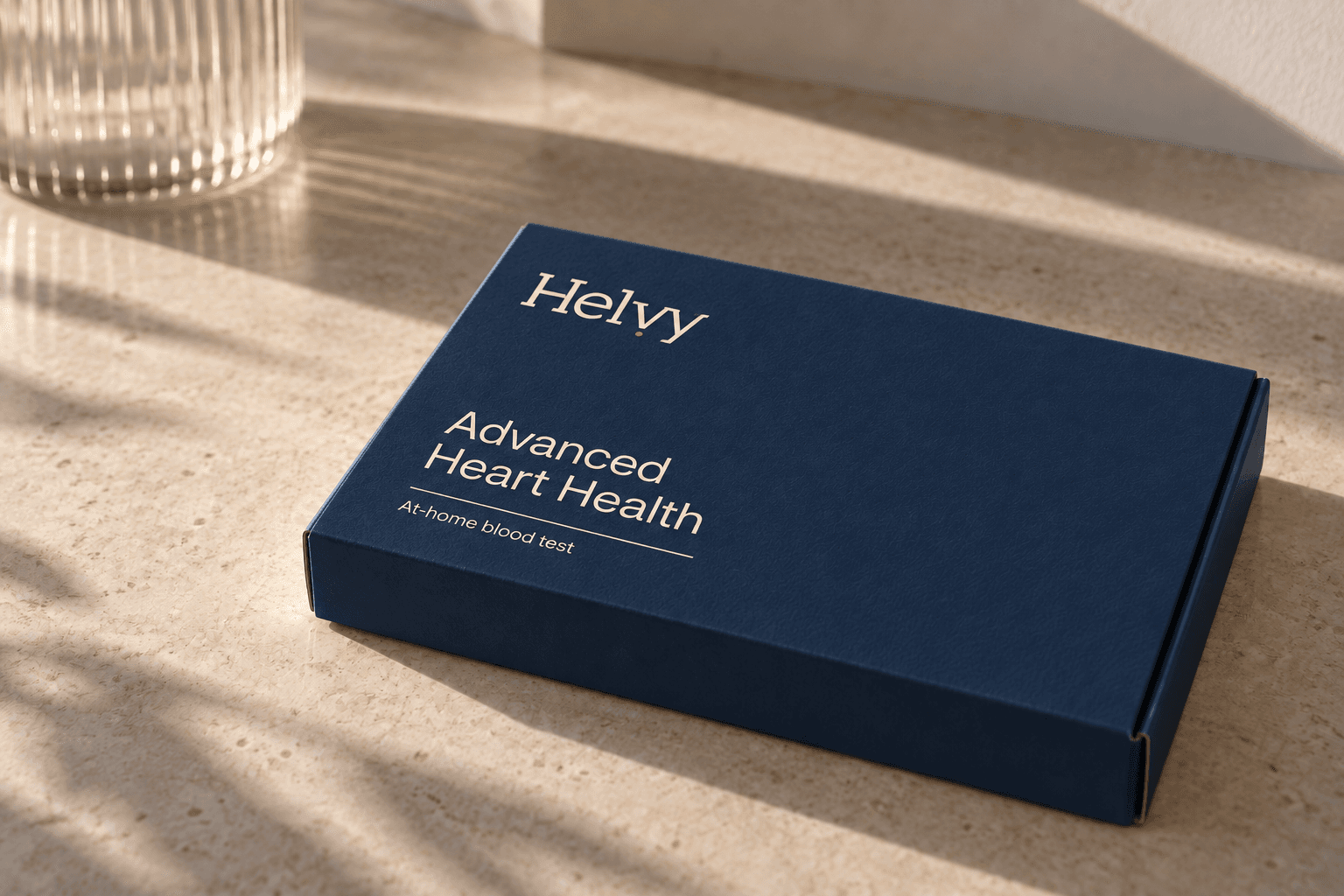
Meet your baseline
A look inside the panelStart with the things you’re curious about.
Tap a marker to see what it means.
Your results need context. A single number doesn’t tell the whole story.
 YOUR PANEL, EXPLAINED
Advanced Heart Health
Get to know what each of these markers reflects.
The total amount of cholesterol your blood is carrying, protective and harmful particles counted together.
A result needs context. Read it alongside your other results and discuss concerns with your GP.
The particles that carry cholesterol back to the liver for disposal, a marker of how well that return traffic is running.
A result needs context. Read it alongside your other results and discuss concerns with your GP.
The cholesterol carried by the particles that can lodge in artery walls.
A result needs context. Read it alongside your other results and discuss concerns with your GP.
The fat your blood is transporting between meals and storage, which rises with recent food, alcohol and excess carbohydrate.
A result needs context. Read it alongside your other results and discuss concerns with your GP.
Every cholesterol-carrying particle that can enter an artery wall, in one number.
A result needs context. Read it alongside your other results and discuss concerns with your GP.
The balance between your total cholesterol and the protective fraction, shown for context.
A result needs context. Read it alongside your other results and discuss concerns with your GP.
Illustrative presentation · Not a patient report
The total amount of cholesterol your blood is carrying, protective and harmful particles counted together.
A result needs context. Read it alongside your other results and discuss concerns with your GP.
The particles that carry cholesterol back to the liver for disposal, a marker of how well that return traffic is running.
A result needs context. Read it alongside your other results and discuss concerns with your GP.
The cholesterol carried by the particles that can lodge in artery walls.
A result needs context. Read it alongside your other results and discuss concerns with your GP.
The fat your blood is transporting between meals and storage, which rises with recent food, alcohol and excess carbohydrate.
A result needs context. Read it alongside your other results and discuss concerns with your GP.
Every cholesterol-carrying particle that can enter an artery wall, in one number.
A result needs context. Read it alongside your other results and discuss concerns with your GP.
The balance between your total cholesterol and the protective fraction, shown for context.
A result needs context. Read it alongside your other results and discuss concerns with your GP.
A direct count of the particles capable of entering an artery wall, one tag per particle.
A result needs context. Read it alongside your other results and discuss concerns with your GP.
An inherited variant of a cholesterol-carrying particle, set by your genes and stable for life.
A result needs context. Read it alongside your other results and discuss concerns with your GP.
A protein the liver releases when something is inflamed, measured on an assay sensitive enough to pick up the low background level.
A result needs context. Read it alongside your other results and discuss concerns with your GP.
The proportion of your red blood cells that have sugar attached, which averages your blood glucose over about three months.
A result needs context. Read it alongside your other results and discuss concerns with your GP.
Your kit. Your sample. Your results.
You don’t have to understand every marker to take the first step.
Find your baseline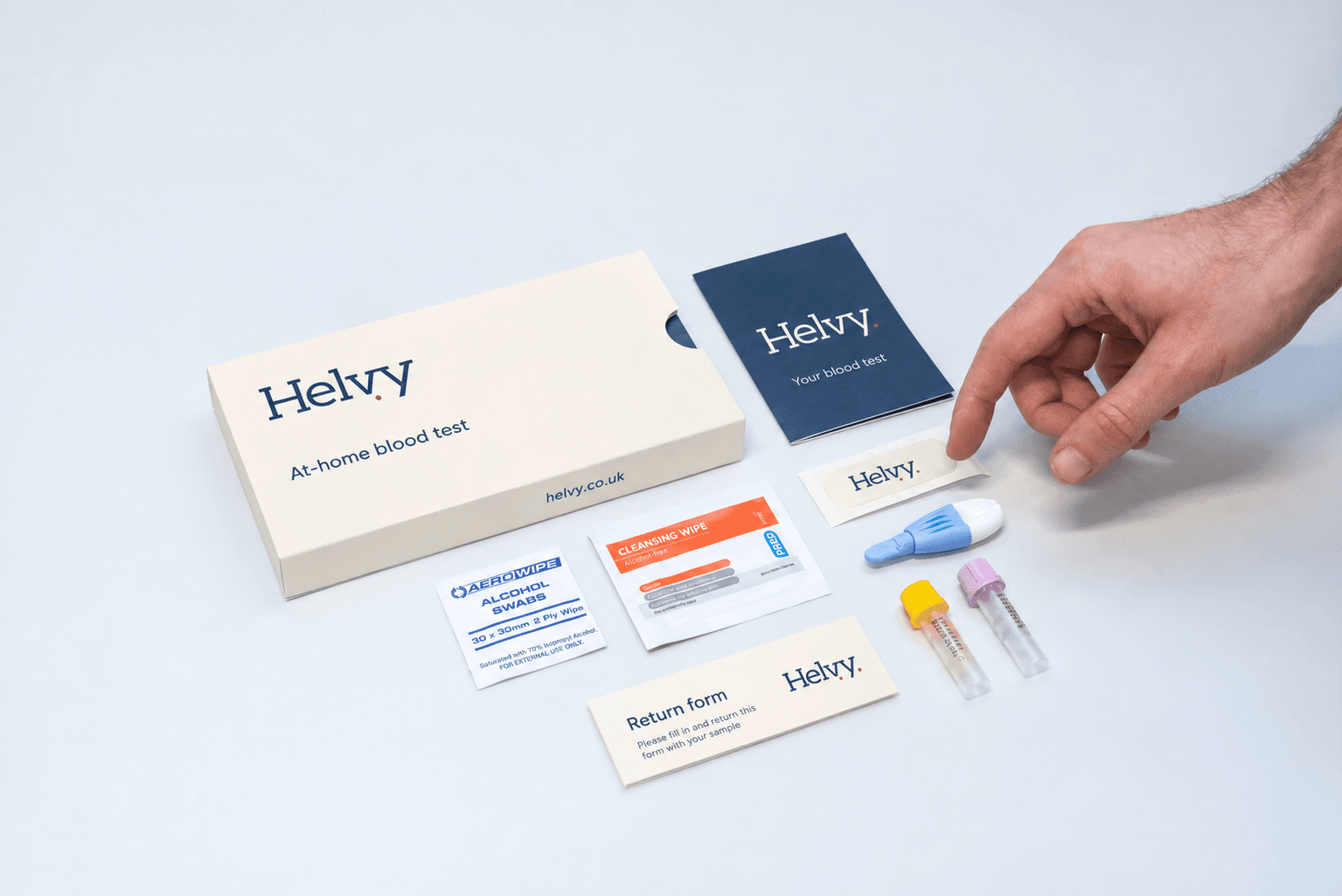
Choose your panel and have the collection kit sent to your home.
Follow your kit’s instructions, register your sample and return it for analysis.
See your blood test results in your Helvy account.
UKAS-accredited UK lab · Results within 5 working days of sample receipt
Your results, online
Explore an illustrative Advanced Heart Health report, using the same display as your Helvy account.
Explore the sample report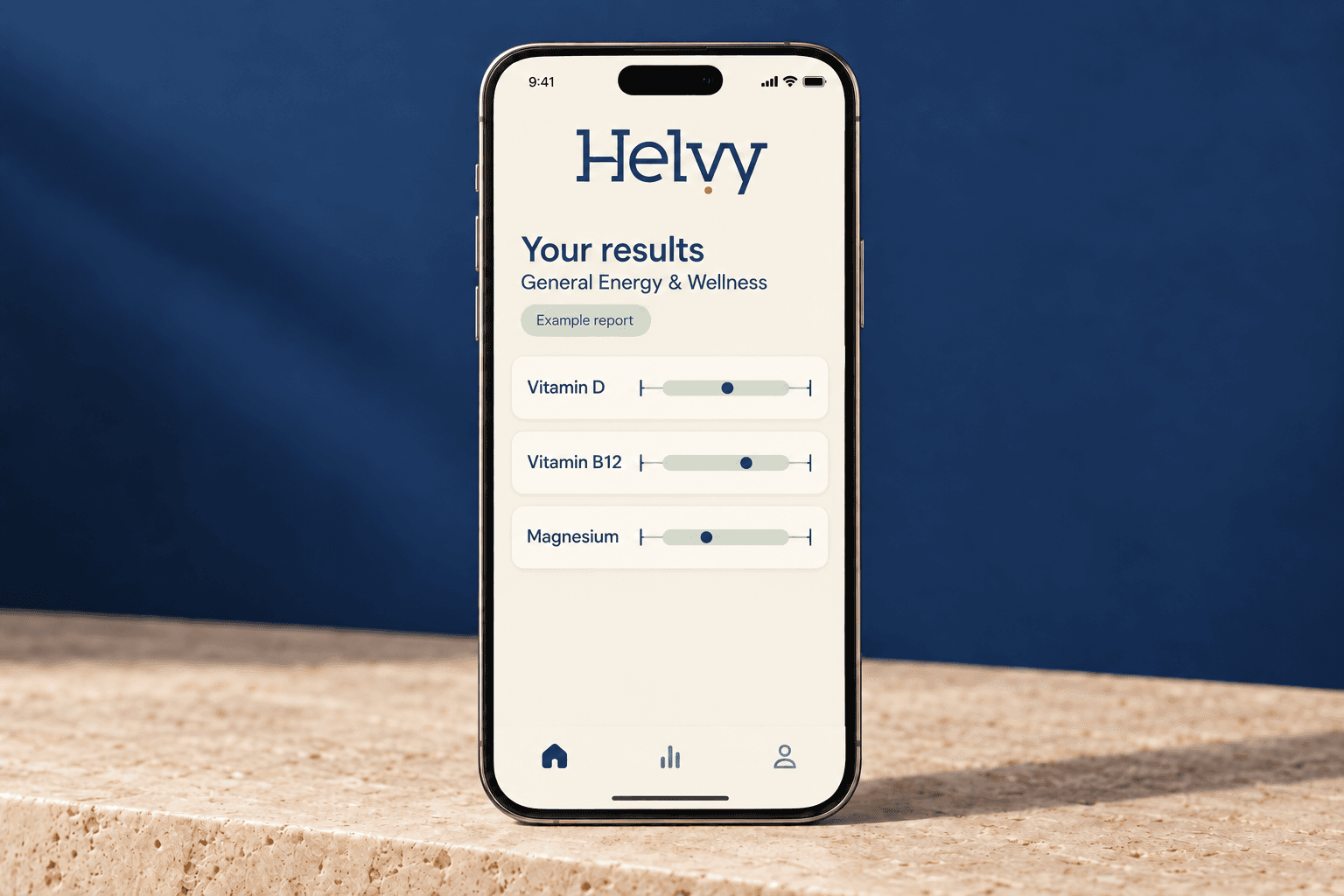
Before you begin
Choose this panel for the included cholesterol, blood-fat and related markers. Blood results are one part of heart health; blood pressure, family history and other factors also matter. This is not a diagnosis or a complete risk assessment.
Follow the collection and preparation instructions supplied with your kit. Register your sample and record the collection time before returning it for analysis. If you take medication, ask your clinician about testing; do not stop prescribed medication for a test.
It gives you a snapshot of the markers included in this panel. One result outside a range does not on its own mean something is medically wrong. Speak to your GP about persistent or concerning symptoms.
Your blood test results are displayed in your Helvy account. You can explore the sample report on this page to see an illustrative example before you order.
Blood markers cannot show plaque in an artery or provide an all-clear for heart health. Results need context, including your blood pressure, family history and other factors.
Advanced Heart Health
£159 · One test, no subscription
Explore all blood testsThis is a wellness service. It is not intended to diagnose, prevent, monitor or treat any medical condition.