Order your kit.
Choose your panel and have the collection kit sent to your home.
A starting point for understanding your hormone levels.
Explore what your blood can tell you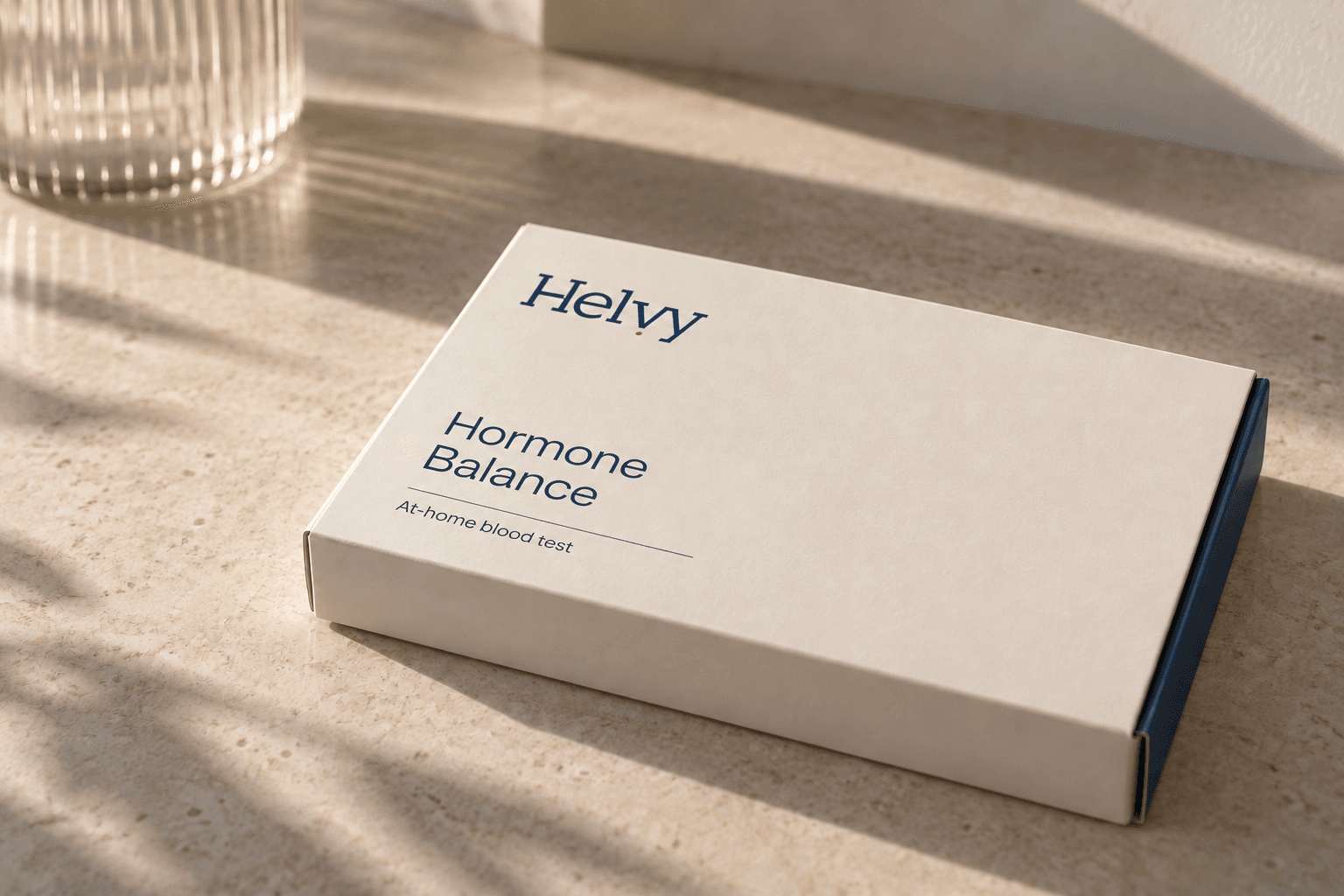
Meet your baseline
A look inside the panelStart with the things you’re curious about.
Tap a marker to see what it means.
Your results need context. A single number doesn’t tell the whole story.
 YOUR PANEL, EXPLAINED
Hormone Balance
Get to know what each of these markers reflects.
A pituitary hormone that tells the ovaries or testes to do their work. In women it moves through the menstrual cycle.
A result needs context. Read it alongside your other results and discuss concerns with your GP.
A pituitary hormone that triggers ovulation in women and signals the testes to make testosterone in men.
A result needs context. Read it alongside your other results and discuss concerns with your GP.
The protein that binds testosterone and oestrogen in the blood and decides how much is left free. It moves with thyroid hormone, insulin and the contraceptive pill.
A result needs context. Read it alongside your other results and discuss concerns with your GP.
The main androgen circulating in your blood, most of it carried bound to proteins. It peaks in the early morning and falls through the day.
A result needs context. Read it alongside your other results and discuss concerns with your GP.
The ratio of your total testosterone to SHBG, used as a rough read of how much androgen is left unbound.
A result needs context. Read it alongside your other results and discuss concerns with your GP.
Illustrative presentation · Not a patient report
A pituitary hormone that tells the ovaries or testes to do their work. In women it moves through the menstrual cycle.
A result needs context. Read it alongside your other results and discuss concerns with your GP.
A pituitary hormone that triggers ovulation in women and signals the testes to make testosterone in men.
A result needs context. Read it alongside your other results and discuss concerns with your GP.
The protein that binds testosterone and oestrogen in the blood and decides how much is left free. It moves with thyroid hormone, insulin and the contraceptive pill.
A result needs context. Read it alongside your other results and discuss concerns with your GP.
The main androgen circulating in your blood, most of it carried bound to proteins. It peaks in the early morning and falls through the day.
A result needs context. Read it alongside your other results and discuss concerns with your GP.
The ratio of your total testosterone to SHBG, used as a rough read of how much androgen is left unbound.
A result needs context. Read it alongside your other results and discuss concerns with your GP.
Your kit. Your sample. Your results.
You don’t have to understand every marker to take the first step.
Find your baseline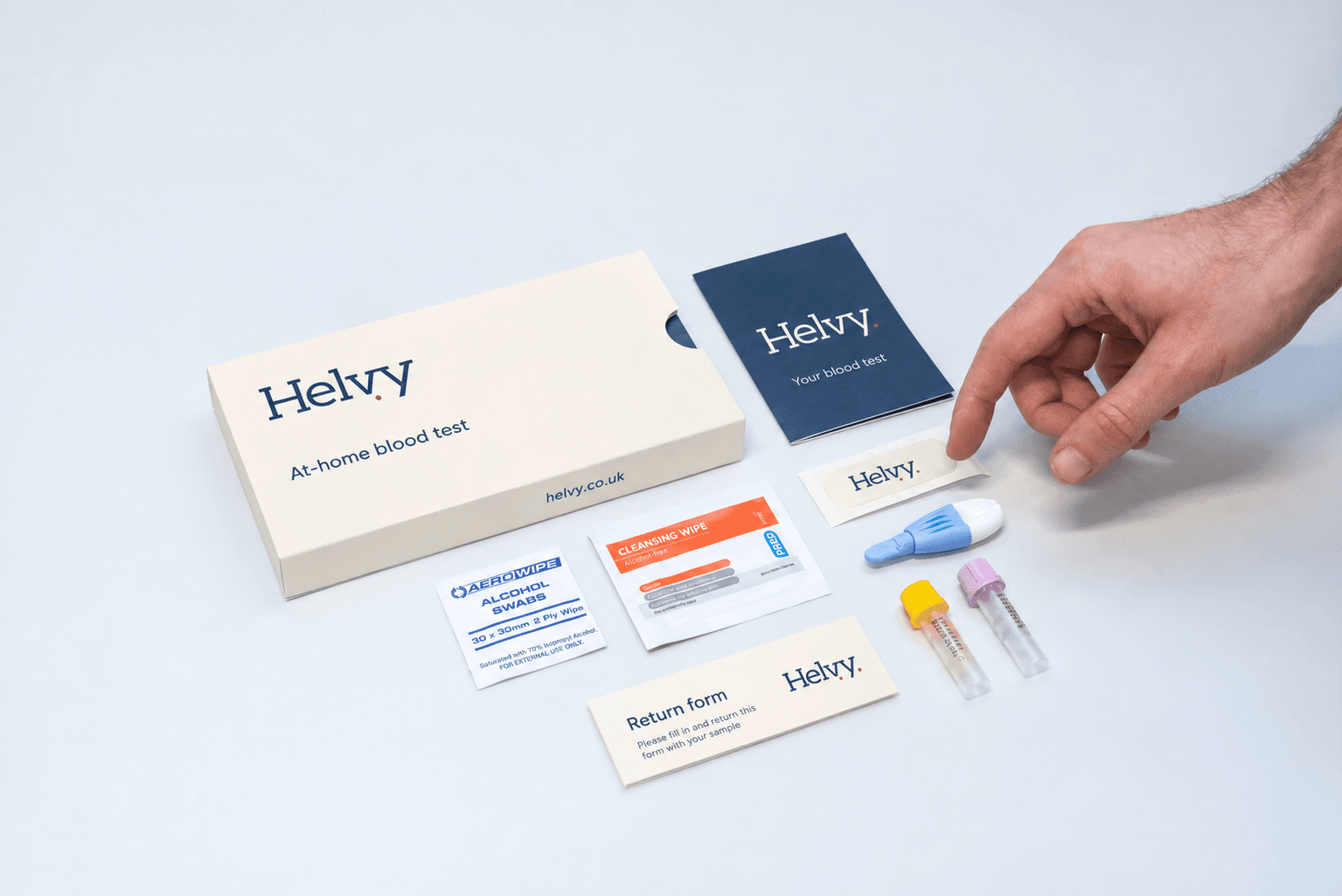
Choose your panel and have the collection kit sent to your home.
Follow your kit’s instructions, register your sample and return it for analysis.
See your blood test results in your Helvy account.
UKAS-accredited UK lab · Results within 5 working days of sample receipt
Your results, online
Explore an illustrative Hormone Balance report, using the same display as your Helvy account.
Explore the sample report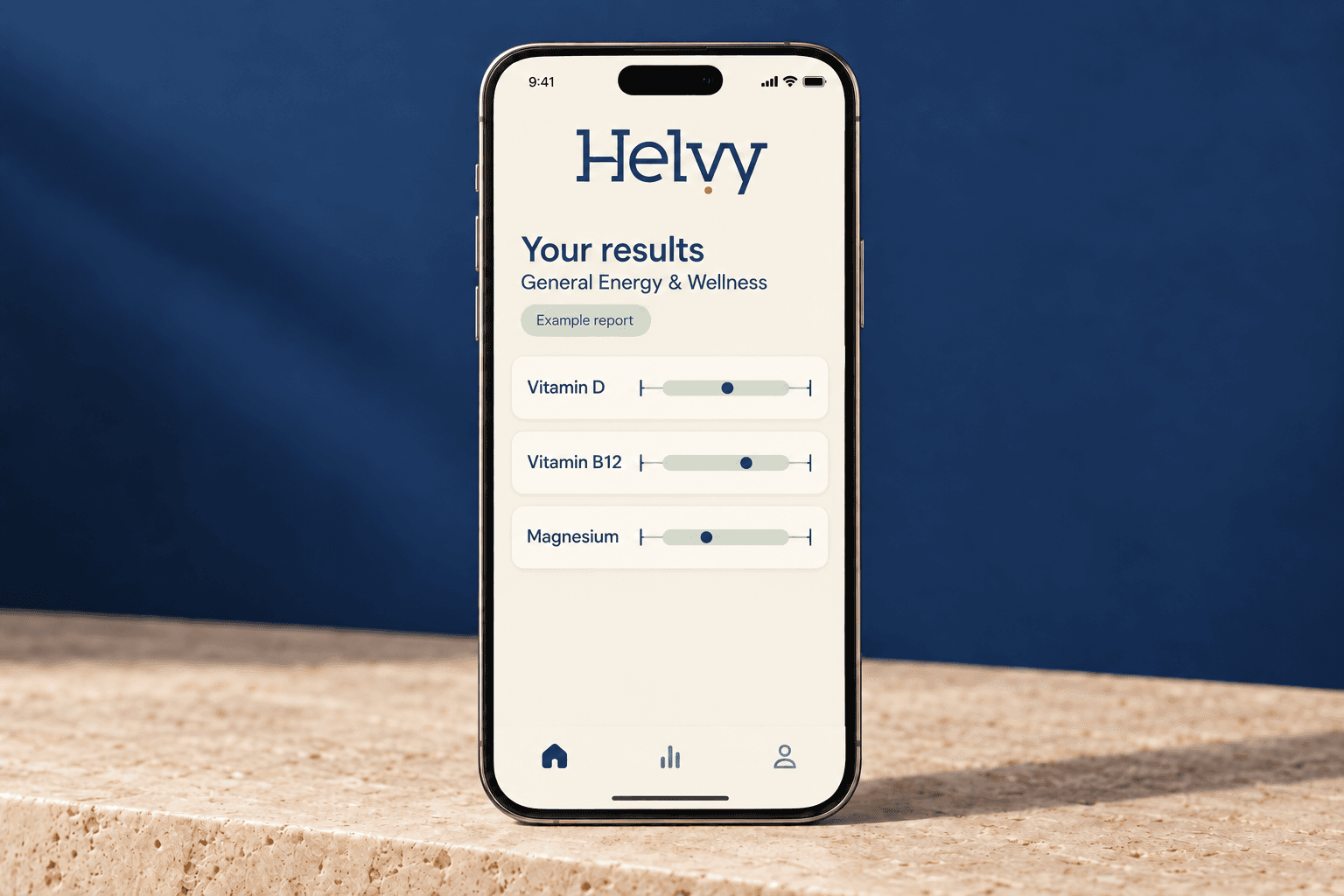
Before you begin
Choose this panel to see the hormone markers listed below. It does not include oestradiol or progesterone, and a single test cannot establish the cause of cycle changes. Discuss symptoms with your GP.
Follow the collection and preparation instructions supplied with your kit. Register your sample and record the collection time before returning it for analysis. If you take medication, ask your clinician about testing; do not stop prescribed medication for a test.
It gives you a snapshot of the markers included in this panel. One result outside a range does not on its own mean something is medically wrong. Speak to your GP about persistent or concerning symptoms.
Your blood test results are displayed in your Helvy account. You can explore the sample report on this page to see an illustrative example before you order.
Hormone levels change with your cycle and can be affected by medication. This panel does not include oestradiol or progesterone. Follow the sample-timing instructions supplied with your kit.
Hormone Balance
£99 · One test, no subscription
Explore all blood testsThis is a wellness service. It is not intended to diagnose, prevent, monitor or treat any medical condition.