Order your kit.
Choose your panel and have the collection kit sent to your home.
An everyday baseline for your energy and wellbeing.
Explore what your blood can tell you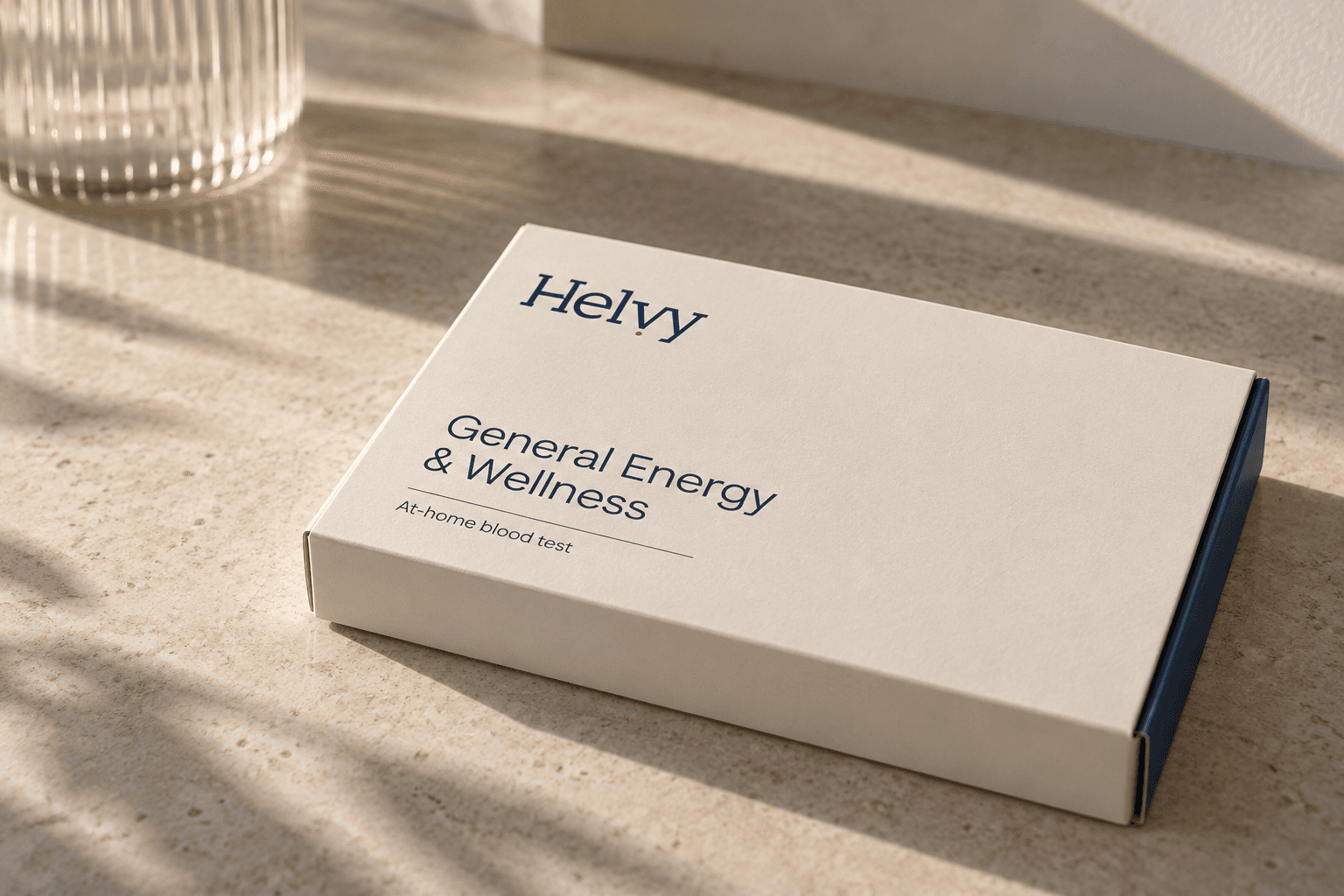
Meet your baseline
A look inside the panelStart with the things you’re curious about.
Tap a marker to see what it means.
Your results need context. A single number doesn’t tell the whole story.
 YOUR PANEL, EXPLAINED
General Energy & Wellness
Get to know what each of these markers reflects.
The pituitary signal that tells the thyroid how much hormone to make. It rises when the thyroid is running slow.
A result needs context. Read it alongside your other results and discuss concerns with your GP.
The main hormone your thyroid releases, in the unbound form your tissues can take up.
A result needs context. Read it alongside your other results and discuss concerns with your GP.
Illustrative presentation · Not a patient report
The pituitary signal that tells the thyroid how much hormone to make. It rises when the thyroid is running slow.
A result needs context. Read it alongside your other results and discuss concerns with your GP.
The main hormone your thyroid releases, in the unbound form your tissues can take up.
A result needs context. Read it alongside your other results and discuss concerns with your GP.
The total amount of cholesterol your blood is carrying, protective and harmful particles counted together.
A result needs context. Read it alongside your other results and discuss concerns with your GP.
The particles that carry cholesterol back to the liver for disposal, a marker of how well that return traffic is running.
A result needs context. Read it alongside your other results and discuss concerns with your GP.
The cholesterol carried by the particles that can lodge in artery walls.
A result needs context. Read it alongside your other results and discuss concerns with your GP.
The fat your blood is transporting between meals and storage, which rises with recent food, alcohol and excess carbohydrate.
A result needs context. Read it alongside your other results and discuss concerns with your GP.
The balance between your total cholesterol and the protective fraction, shown for context.
A result needs context. Read it alongside your other results and discuss concerns with your GP.
Every cholesterol-carrying particle that can enter an artery wall, in one number.
A result needs context. Read it alongside your other results and discuss concerns with your GP.
The circulating store of vitamin D your body draws on, built from sunlight on skin and from what you eat or supplement.
A result needs context. Read it alongside your other results and discuss concerns with your GP.
The total B12 in your blood, most of which is bound to a carrier your cells cannot use. It is the standard first-line test and it is a blunt one.
A result needs context. Read it alongside your other results and discuss concerns with your GP.
The main protein your liver makes to hold fluid inside blood vessels and carry hormones and minerals around.
A result needs context. Read it alongside your other results and discuss concerns with your GP.
All the protein circulating in your blood, albumin plus the antibody and transport proteins.
A result needs context. Read it alongside your other results and discuss concerns with your GP.
The waste product your liver makes from used protein and your kidneys clear, so it moves with both protein intake and hydration.
A result needs context. Read it alongside your other results and discuss concerns with your GP.
A waste product your muscles make at a steady rate, which your kidneys clear, so it reflects both muscle mass and filtration.
A result needs context. Read it alongside your other results and discuss concerns with your GP.
A protein the liver releases when something is inflamed, measured on the standard assay that reports down to about 5 mg/L.
A result needs context. Read it alongside your other results and discuss concerns with your GP.
The small fraction of your body's magnesium that circulates in blood. Your kidneys hold this number steady, so it tells you less than people assume.
A result needs context. Read it alongside your other results and discuss concerns with your GP.
The adrenal hormone that follows a daily rhythm, highest shortly after waking and lowest late at night.
A result needs context. Read it alongside your other results and discuss concerns with your GP.
Your kit. Your sample. Your results.
You don’t have to understand every marker to take the first step.
Find your baseline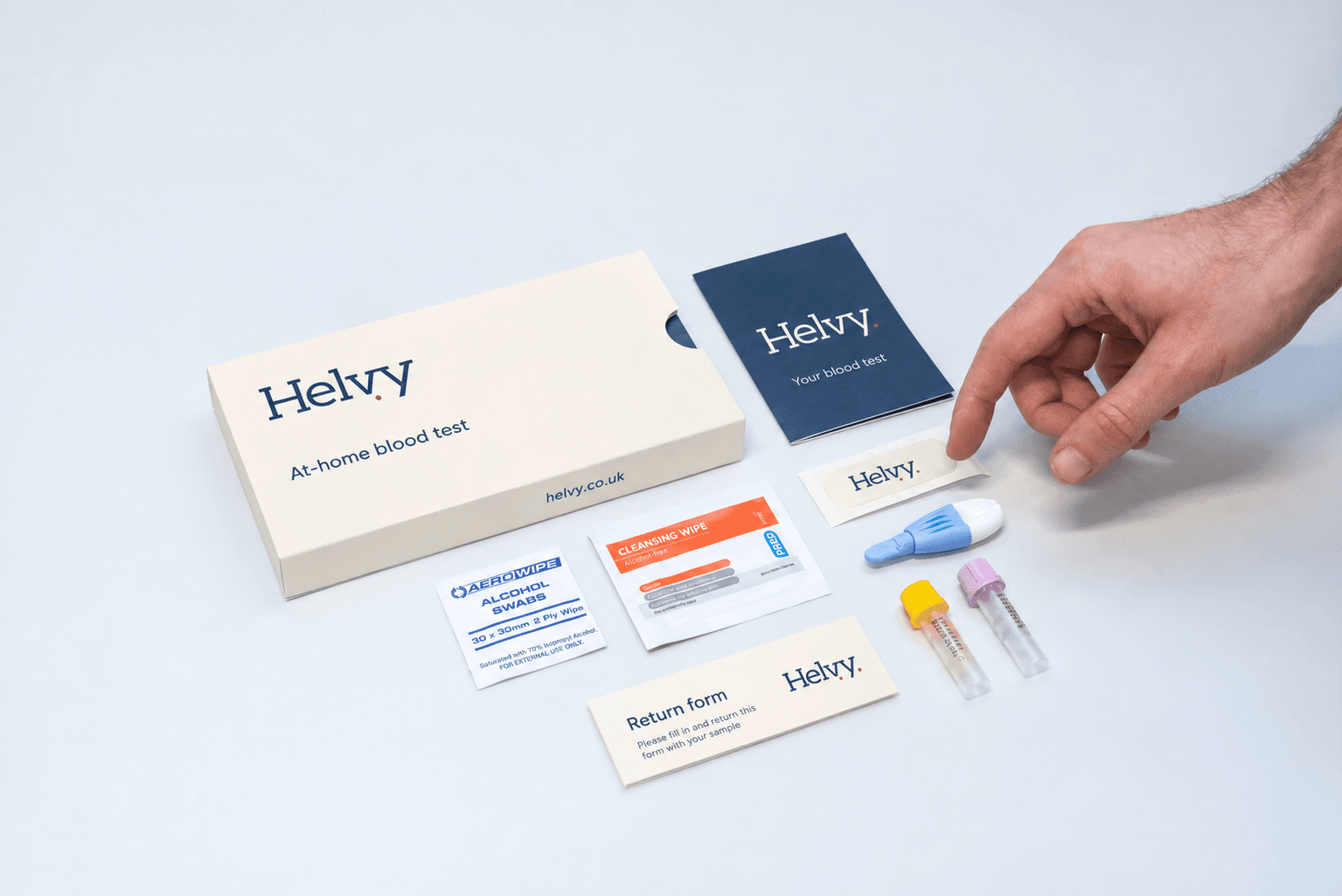
Choose your panel and have the collection kit sent to your home.
Follow your kit’s instructions, register your sample and return it for analysis.
See your blood test results in your Helvy account.
UKAS-accredited UK lab · Results within 5 working days of sample receipt
Your results, online
Explore an illustrative General Energy & Wellness report, using the same display as your Helvy account.
Explore the sample report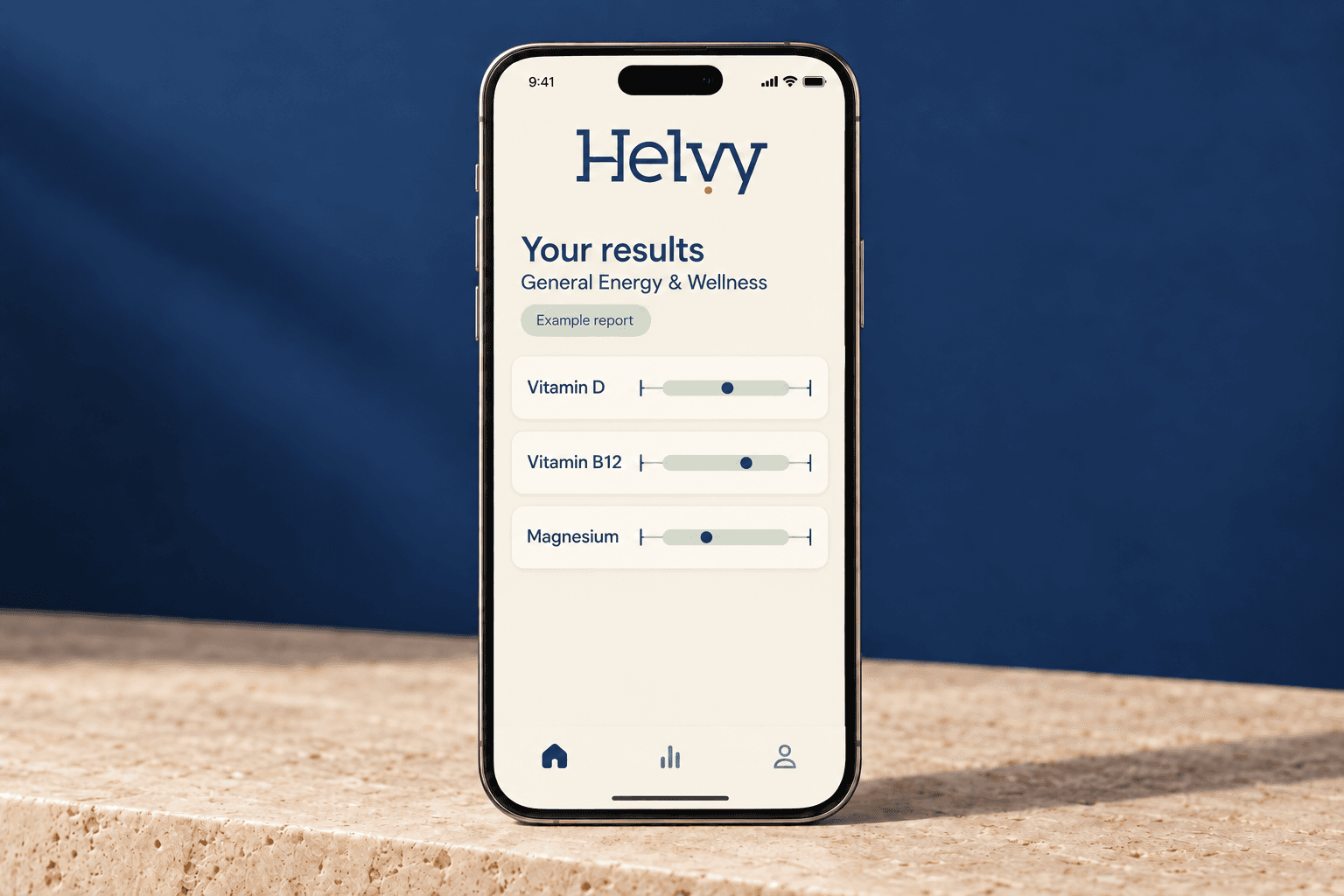
Before you begin
A broad first look if you want an everyday baseline. For a focused look at iron, explore Vitamins & Minerals.
Follow the collection and preparation instructions supplied with your kit. Register your sample and record the collection time before returning it for analysis. If you take medication, ask your clinician about testing; do not stop prescribed medication for a test.
It gives you a snapshot of the markers included in this panel. One result outside a range does not on its own mean something is medically wrong. Speak to your GP about persistent or concerning symptoms.
Your blood test results are displayed in your Helvy account. You can explore the sample report on this page to see an illustrative example before you order.
Cortisol changes through the day, so record the collection time. This panel does not include iron markers. A broad baseline cannot establish why you feel tired or replace a clinical assessment.
General Energy & Wellness
£149 · One test, no subscription
Explore all blood testsThis is a wellness service. It is not intended to diagnose, prevent, monitor or treat any medical condition.