What is a normal blood oxygen level?
95% or more, for most adults at rest. But some people with lung conditions are given a lower target. And a drop from your own usual reading can matter more than the number.
On this page
What is a normal oxygen level?
For most adults, 95% or more is a good reading. An NHS hospital guide calls 95% and above good.
The number is called SpO2. It’s an estimate of how much oxygen your blood carries, as a percentage.
The clearest NHS lines come from NHS England’s home advice, written for people with COVID-19. Under 95, it asks you to retake the reading before you act.
- Below 93 %92 or less: retake now. Still low? A&E or 999.
- 93 to just under 95 %93 or 94: retake within an hour. Still low? Call 111.
- 95 % or aboveGood for most adults.
Sources: NHS England; Gloucestershire Hospitals NHS
Feel fine on a low reading? The NHS says your oxygen may be low even if you don’t feel breathless. So act on the number.
95 or more and feeling well? That’s a good reading.
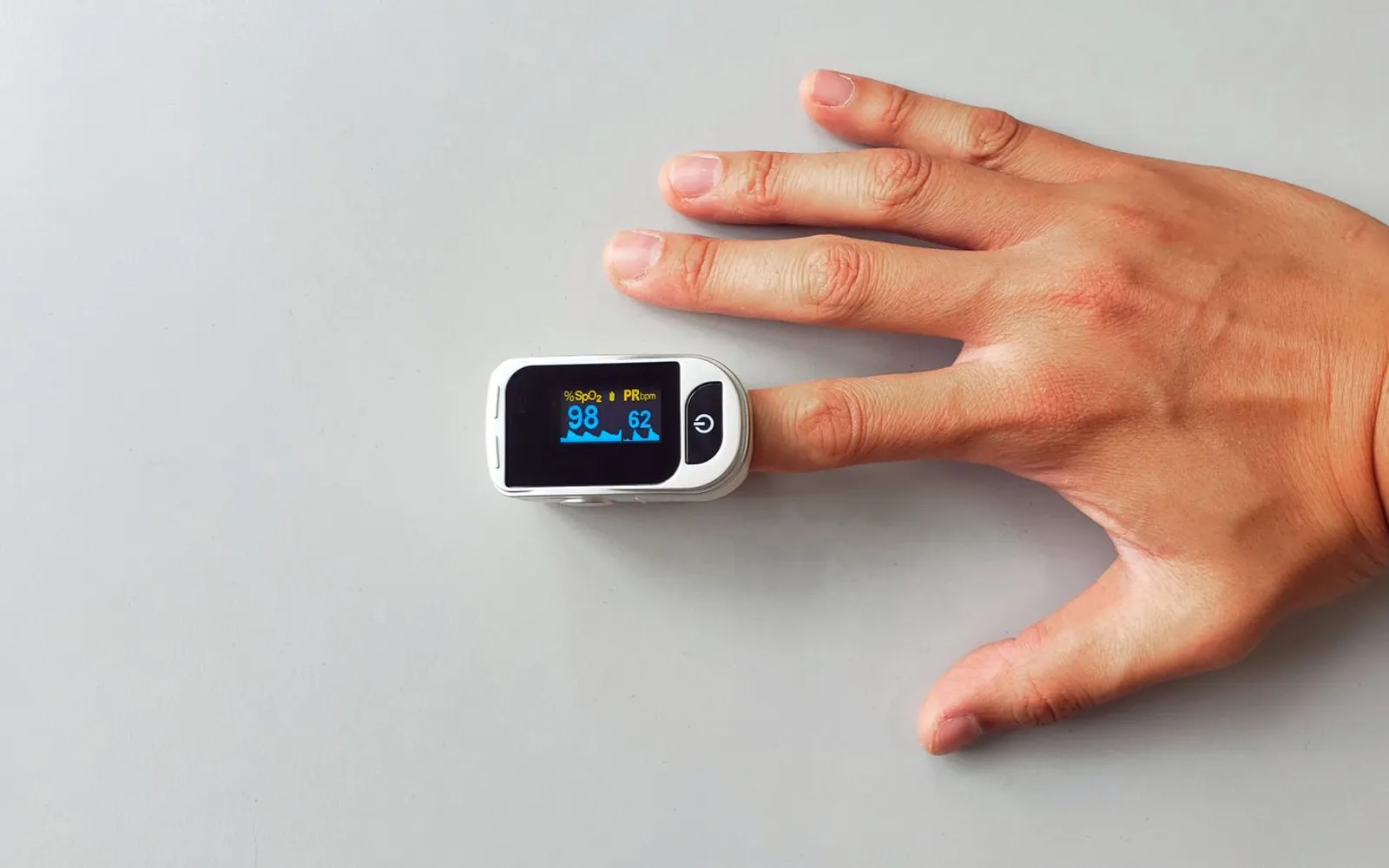
What do the numbers on a pulse oximeter mean?
A pulse oximeter clips on your finger. It shines light into your skin and measures how the blood absorbs it.
| Label | What it is | Good reading |
|---|---|---|
| SpO2 (%) | Your blood oxygen level | 95% and above |
| PR (bpm) | Your pulse, in beats a minute | 50 to 90 (Gloucestershire Hospitals NHS guide) |
Sources: Gloucestershire Hospitals NHS; Cambridge University Hospitals
Mixed them up? On one NHS trust’s device, the top number is heart rate and the bottom is oxygen. Check the labels on yours.
An oximeter doesn’t measure carbon dioxide, the waste gas you breathe out. For more on the pulse number, see normal resting heart rate.
Is a lower oxygen level normal for some people?
Yes, for some. In emergency care, the UK oxygen guideline aims for 94 to 98% for most unwell adults.
Some people are at risk of carbon dioxide building up in the blood. Their target is usually 88 to 92%.
| Who | Guideline target when unwell |
|---|---|
| Most unwell adults | 94 to 98% |
| Known COPD, a long-term lung disease | Usually 88 to 92% |
| Severe obesity, cystic fibrosis, bronchiectasis (long-term widened airways), or a chest wall or nerve and muscle condition | Usually 88 to 92% |
Source: BTS guideline (Thorax 2017)
These targets are set by your care team. If you have one of these conditions, ask them for your own number.
Searching by age? The guideline covers over-16s and gives no age chart.
It does say brief dips to 90% or less during sleep can happen in healthy people.
Snoring and tired all day? See sleep apnoea.
Why your usual reading matters
Write down your reading on a day you feel well. That’s your usual reading.
Think of it like your normal walking pace. If you’re suddenly slower than your own pace, that’s worth noticing, even if you’re still quicker than some people. Your usual reading works the same way.
In emergency care, a sudden fall of more than 3 points prompts a fuller check, even inside the target.
The MHRA, which regulates medical devices, says the change in a reading may matter more than the number itself.
Usually below 95? NHS England says call 111 if it keeps reading lower than your usual, after a retake within an hour.
How to get an accurate reading
Cold hands, moving and nail polish can all throw a reading off. So can henna, tattoos, bright light on the sensor or a sensor that isn’t on properly.
Oximeters only have to be accurate to within about 4 points on average, between 70 and 100%. So it won’t give a precise value, but it’s useful for following trends.
Brown or black skin? Readings may show higher than your real level. The NHS says still use one if you were given it, and check whether your readings are going down.
Six steps to a reading you can trust
- Remove nail varnish or false nails, and warm your hands if they’re cold.
- Rest for at least 5 minutes first.
- Rest your hand on your chest, fingers relaxed.
- Push your fingertip to the end, with the nail covered. No reading in 30 seconds? Try another finger.
- Keep it on for at least a minute. If it jumps about, take the middle number.
- Write each reading down, so you can see any change.
Sources: Gloucestershire Hospitals NHS; NHS England
The MHRA doesn’t advise home checks unless a clinician has asked you to, shown you how, and will review your readings.
Buying one? Look for a CE, UKCA or CE UKNI mark, and check the batteries.
When to speak to a GP
Call 999 or go to A&E if:
- You have severe difficulty breathing.
- You feel suddenly confused.
- Your chest feels tight or heavy.
- Pain spreads to your arms, back, neck and jaw.
- Your lips or skin turn very pale, blue or grey. On brown or black skin, this may be easier to see on the palms.
- Your oxygen is 92% or less on a retake.
Call 111 if it’s 93 or 94 on a retake within an hour. Also call 111 if you’re more short of breath than usual, you feel sick or are being sick, or you’re coughing up blood. The same goes for pain or swelling in 1 leg, or heart palpitations (your heart racing, going too slowly or skipping a beat).
See a GP if:
- Your breathlessness gets worse during normal activities, or when you lie down.
- You feel short of breath and have swollen ankles.
- You’ve been coughing for 3 weeks or more.
Puffed out on hills or stairs? See out of breath when walking.