Does liquid chlorophyll work?
Mostly no, on the evidence so far. Its best-known claim, cutting bad smells, failed its one placebo trial, in people with a colostomy. And most bottles don’t hold real chlorophyll at all.
On this page
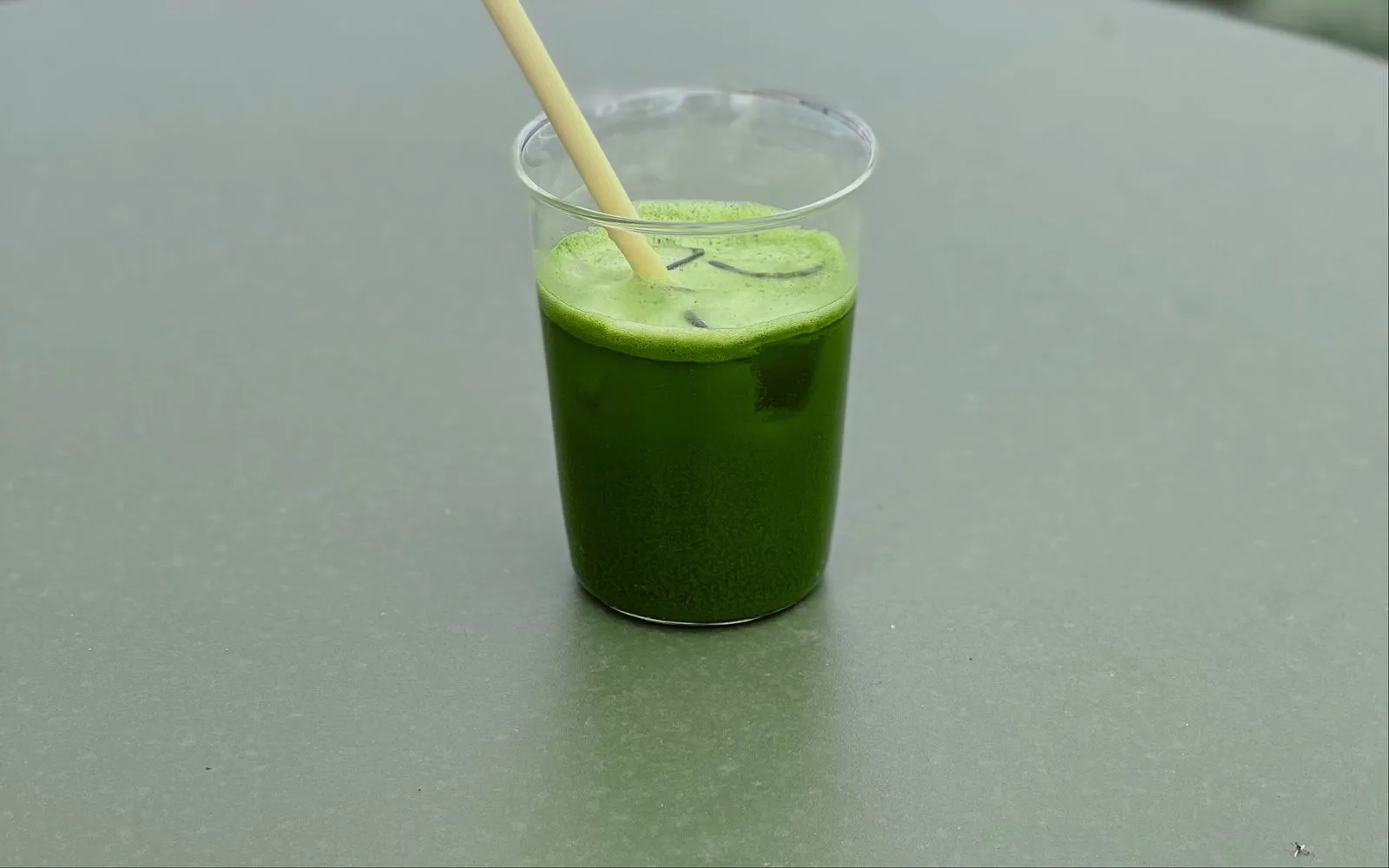
Does liquid chlorophyll actually work?
Not for most of what it’s sold for. Only a handful of human studies exist. Most are small, and most tested people with an unusual problem.
The best-known claim is that it cuts smells. A trial tested it in 28 people with a colostomy (a bag that collects poo). Chlorophyll did no better than a dummy pill at cutting the smell.
| Claim | What the study found | Who was tested |
|---|---|---|
| Less smell from poo | No better than a dummy pill. | 28 people with a colostomy. |
| Less fishy smell (TMAU) | Less of the smelly chemical in urine after 3 weeks. No dummy-pill group. | 7 people in Japan with TMAU, a rare inherited condition. |
| Less damage from a mould toxin (aflatoxin) | 55% lower urine damage marker than the dummy-pill group, measured at month 3 of 4. Cancer not measured. | 180 adults in China eating food with a lot of aflatoxin. |
| Fewer spots | Better than at the start after 3 weeks, using a gel on the skin. No comparison group. | 10 adults with mild to moderate acne. |
| Energy, weight loss or detox | No human trials in the Linus Pauling Institute review. | No one. |
Sources: Christiansen 1989; Yamazaki 2004; Egner 2001; Stephens 2015; Linus Pauling Institute
The aflatoxin trial is where cancer claims come from. But a drop in cancer has not yet been shown in people. It’s also not known if it helps people who don’t eat much aflatoxin.
Chlorophyll isn’t on Great Britain’s list of approved health claims for foods. Before you buy, ask what problem you want it to fix, and check the table for a trial.
What is in liquid chlorophyll?
Chlorophyll is the green colour in plants. But real chlorophyll breaks down easily and costs a lot.
So most chlorophyll supplements contain sodium copper chlorophyllin instead. That’s a part-made-in-a-lab version, with copper in the middle where plants have magnesium.
It’s the same thing food makers use as a green colouring. You’ll see it on labels as E141.
Some sellers say it builds blood. The only support is lab work on an iron version, not the copper kind in most bottles.
Tired and wondering about iron? See low iron symptoms.
Check the label for “chlorophyllin” or E141, so you know which one you’re buying.
Does chlorophyll help with body odour?
The proof is thin. Early case reports said it eased smells from poo and urine in people with a stoma or incontinence (leaks of urine or poo). A case report is one doctor’s notes on a few patients, with no comparison.
When it was tested against a dummy pill, it made no difference.
The one clear result was in TMAU, an inherited condition that can make sweat, breath and urine smell of fish. In 7 people, 180 mg a day for 3 weeks lowered the smelly chemical in urine. There was no dummy-pill group.
For everyday BO, start with what the NHS says works.
NHS steps for body odour
- Wash your armpits, groin and feet at least twice a day with soap, and dry them well.
- Use an antiperspirant and a deodorant.
- Change and wash your clothes often.
- Wear cotton, wool or silk, and avoid tight clothes and manmade fabrics.
- Go easy on strong-smelling or spicy food and on alcohol.
- Ask a pharmacist about stronger antiperspirants.
Source: NHS: body odour
More in our body odour guide.
How much chlorophyll is in food?
Dark green leaves are the richest source of real chlorophyll.
| Raw food | Portion | Chlorophyll (mg) |
|---|---|---|
| Spinach | 1 cup | 23.7 |
| Parsley | Half a cup | 19.0 |
| Garden cress | 1 cup | 15.6 |
| Green beans | 1 cup | 8.3 |
| Rocket | 1 cup | 8.2 |
Source: Linus Pauling Institute
Animal studies suggest the gut takes in only about 1% to 3% of the chlorophyll in food. The rest leaves in your poo.
Greens also bring fibre, which drops don’t. If you’re weighing up a powder instead, read do greens powders work? and supplements worth taking.
Liquid chlorophyll side effects
It has been taken by mouth for over 50 years without any serious side effects. The aflatoxin trial reported no harms at 100 mg three times a day.
| What you notice | What it means |
|---|---|
| Green poo or wee | A known effect of chlorophyll. |
| Yellow or black tongue | A known effect of chlorophyll. |
| Diarrhoea | There are occasional reports. |
| Black or dark red poo | Can be blood. The NHS says get an urgent GP appointment or call 111. |
Sources: Linus Pauling Institute; NHS
Pregnant or breastfeeding? Its safety hasn’t been tested in pregnant or breastfeeding women, so the advice is to avoid it.
Using it on spots? The acne study used a gel on the skin, not a drink. For other options, see sulfur for acne.
When to speak to a GP
See a GP if:
- Your poo is black or dark red, or you have bloody diarrhoea. The NHS says ask for an urgent GP appointment or call 111.
- Your body odour hasn’t got better after treating it yourself, and it’s affecting your self-esteem, smells different from usual, or you suddenly sweat much more. That’s when the NHS says to see a GP.
- Your sweat, breath or urine smells strongly of fish. TMAU can’t be diagnosed by smell alone; it needs a special urine test.
- Your acne isn’t getting better with your own treatment, you have lots of spots, the spots are deep, painful or scarring, the skin looks infected (hot, swollen and red), or it’s affecting your mental health. The NHS says to see a GP.
Call 999 or go to A&E if you’re bleeding from your bottom non-stop, or there’s a lot of blood, such as large clots.
Bad breath that hasn’t gone after a few weeks of cleaning your teeth and tongue, or painful, bleeding or swollen gums? The NHS says see a dentist.