Which foods should I avoid with high cholesterol?
Mostly foods high in saturated fat. Fatty meat, butter, cheese and cakes top the list. Eggs and prawns contain cholesterol but matter less for most people. How you make coffee can count too.
On this page
Which foods raise cholesterol?
Foods high in saturated fat. The NHS says too much of it can raise bad (LDL) cholesterol in your blood.
Its list to eat less of is short. Meat pies, sausages and fatty meat. Butter, lard and ghee. Cream and cheese. Cakes and biscuits. And food made with coconut or palm oil.
Less doesn’t mean never. The BHF says you don’t need to cut cheese out, just keep an eye on the portion.
| Food | Share of UK saturated fat | An easy cut |
|---|---|---|
| Red and processed meat | 15% | Leaner cuts and lean mince, or chicken, fish or beans instead |
| Cakes, biscuits, buns and pastries | 10% | Teacakes or crumpets instead, or smaller portions |
| Cheese | 9% | A portion the size of a small matchbox, grated not sliced |
| Pizza, pasta and rice dishes | 6% | Make your own with reduced-fat cheese and lots of veg |
| Butter | 6% | Olive, rapeseed or sunflower oil or spreads |
| Milk | 6% | 1% or skimmed milk |
| Chicken and turkey dishes | 6% | Skin off, and skip breadcrumbs and frying |
| Chocolate | 5% | Smaller portions |
| Egg dishes | 5% | Boiled or poached, not with butter, cheese or cream |
These are shares of what the UK eats, not how fatty each food is. Milk is on the list because we use so much of it.
Find the two rows you eat most, and cut those first. Unsure about your milk? See milk and cholesterol.
How much saturated fat is too much?
The NHS says men should eat no more than 30g a day, and women no more than 20g. Most people in the UK eat too much.
You can’t see it on a plate, so check the label. Look for “saturates” per 100g.
- 1.5 g per 100g or belowLow.
- Above 1.5 up to 5 g per 100gMedium.
- Above 5 g per 100gHigh. Eat less often.
The BHF also counts 6g or more in one portion as high. That one portion is almost a third of a woman’s 20g for the day.
Trans fats can raise cholesterol too. They can be in “partially hydrogenated vegetable oil”, which must be listed in the ingredients. Most UK supermarkets have taken it out of their own brands, so saturated fat is the bigger job.
Watch “low fat” versions. The NHS says the fat is sometimes swapped for sugar.
Are foods high in cholesterol bad for you?
Usually not. Eggs, shellfish like prawns, and offal like liver all contain cholesterol. A medium egg has about 180mg.
But for most people, cholesterol in food has a much smaller effect on your blood level than once thought. Saturated fat has a much bigger impact, says the BHF.
NICE, which advises the NHS, has dropped advice to limit cholesterol in food.
| Food | What to know |
|---|---|
| Eggs | No set limit. 1 or 2 a day is unlikely to be a problem for most adults, as part of a balanced diet. |
| Prawns and other shellfish | Low in fat. Steamed, baked or grilled beats fried in batter. |
| Liver and liver pâté | Very high in vitamin A. Avoid if pregnant. Eat it every week? You may want to cut down. |
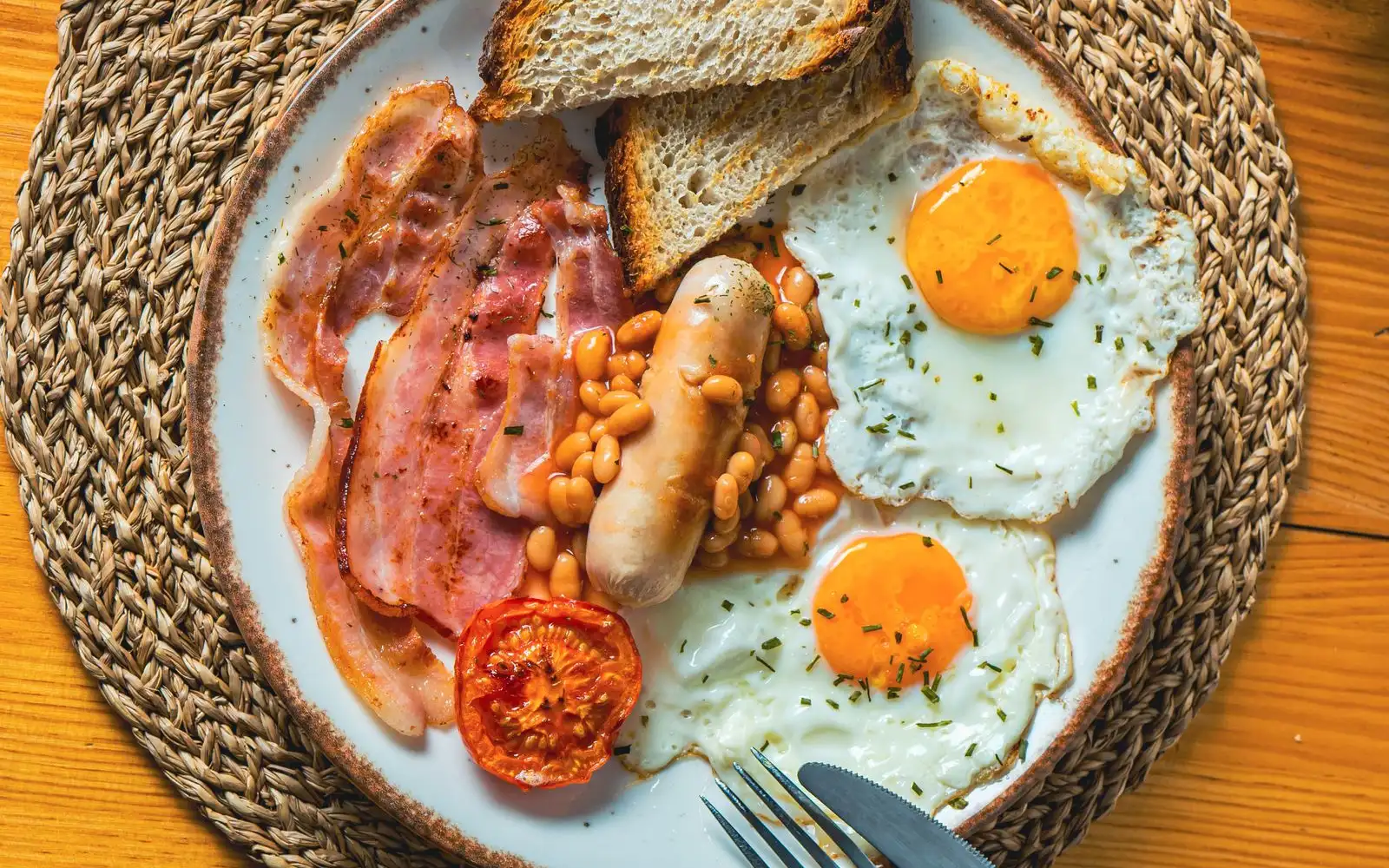
Having a fry-up? The eggs aren’t the issue. The BHF says it’s the saturated fat in the bacon, sausages and butter that can raise your cholesterol.
The exception is familial hypercholesterolaemia (FH), an inherited cause of very high cholesterol. Then you may need to be careful with eggs, shellfish and offal. If you have FH or very high cholesterol, ask your GP or a dietitian how eggs fit in.
Does coffee raise cholesterol?
It can, depending on how you make it. The brew to watch is cafetière coffee.
In a trial, 46 healthy adults drank five to six strong cups a day for 24 weeks. Cafetière coffee raised bad (LDL) cholesterol by 9% to 14% compared with filter coffee.
The rise went away once people stopped.
That was a lot of coffee. The trial didn’t test one or two cups, instant or espresso.
Drink a lot from a cafetière? Try filter for a while. More in is coffee good for you.
What should I eat instead?
Six swaps to start this week
- Swap butter, lard and ghee for olive or rapeseed oil, or spreads made from them.
- Have oily fish, like salmon or mackerel, in place of pies, sausages or fatty meat.
- Cut off visible fat and skin before cooking, and grill meat rather than fry it.
- Choose back bacon over streaky, and lean or extra lean mince.
- Keep cheese to a matchbox-sized portion, and grate it instead of slicing.
- Reach for nuts, seeds and fruit instead of cakes and biscuits.
The NHS says swapping some saturated fat for unsaturated fat, the kind in plant oils and fish, can help lower your cholesterol.
Food is only part of it. High cholesterol can also come from smoking and drinking alcohol. The NHS advice is to avoid drinking more than 14 units a week on a regular basis.
Some people also need medicine. Never stop or change a prescribed medicine without your prescriber.
For foods that help bring it down, see foods that lower cholesterol. For a full day of meals, see the low cholesterol diet.
When to speak to a GP
High cholesterol does not usually cause symptoms. Only a blood test can show it. Speak to a GP if:
- You’re over 40, overweight, or high cholesterol or heart problems run in your family, and you’ve never had a test.
- Your total is above 7.5 mmol/L, or you or a parent, brother, sister or child had heart disease before 60. NICE says to check for FH.
- Your total is above 9 mmol/L, or your non-HDL (the “bad” part) is above 7.5. NICE advises a specialist check.
- You have FH or very high cholesterol, and want to know how eggs, shellfish and offal fit into your diet.
Got a result already? See cholesterol results explained.