Measuring blood pressure
How to take useful blood pressure readings at home
On this page
Your first blood-pressure reading is higher than you expected. You press the button again, then once more. Which number should you keep? The useful record is the one that shows what happened, including the conditions in which you measured it.
Take home blood pressure readings after sitting quietly, with the right cuff and your arm supported. Repeat them on a planned schedule and keep the numbers you actually see. Pressing the button until a lower result appears gives a less useful picture.
A home record can help distinguish a consistently raised pressure from a reading affected by the circumstances of one appointment. Take the record to your clinician and ask what the pattern means for you. Emergency symptoms need help immediately; do not delay a call to take another reading.
Start with the right monitor and cuff
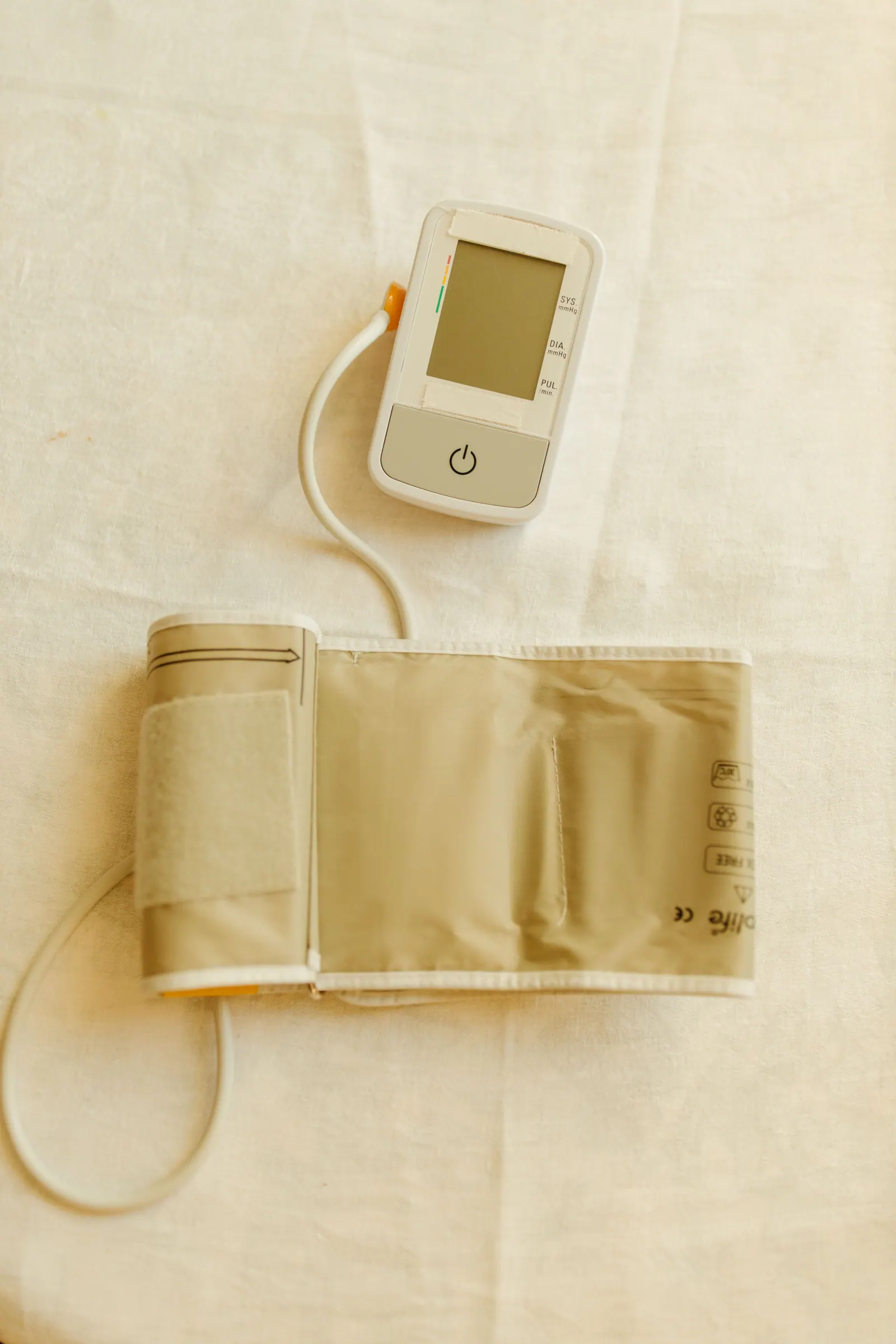
A validated automatic upper-arm monitor is the usual choice for home use. NHS England advises choosing one listed as accurate by the British and Irish Hypertension Society. Check the exact model, including any suffix, rather than assuming a familiar brand makes every device equivalent.
Wrist monitors are easier to misposition. Mayo Clinic's patient guidance explains that readings can be falsely high if the wrist is bent or held at the wrong height. A correctly used and checked wrist device can be an alternative when an arm cuff is unsuitable, but a suitable upper-arm device is generally simpler to position consistently.
Measure your arm according to the manufacturer's instructions and choose the correct cuff range for that device. A cuff fastening around the arm does not prove it is the right size. If two people share the monitor, they may need different cuffs and must keep their records separate.
In the 2023 Cuff(SZ) trial, trained staff measured 195 community adults in Baltimore using an automated professional device. A regular cuff gave systolic readings an average 4.8 mmHg higher when a large cuff was needed, and 19.5 higher when an extra-large cuff was needed. When a small cuff was appropriate, the regular cuff read lower instead.
Those are study averages, not correction factors for your monitor. Subtracting 19.5 from an incorrectly measured result cannot reliably repair it. Use the appropriate cuff and repeat correctly. Ask a pharmacist or practice nurse for a demonstration if fitting the cuff or operating the device is difficult.
NICE also warns that automated measurement can be inaccurate with an irregular pulse. If you have an irregular rhythm, are pregnant or have a specialist monitoring plan, check the device and routine with the relevant team.
Get ready before pressing the button
Blood Pressure UK's measurement instructions advise avoiding measurements within half an hour of eating, smoking, caffeine or exercise. Use the toilet first if needed, then sit quietly for five minutes. Choose a time when you can complete that preparation rather than measuring while rushing out.
Sit with your back supported, feet flat and legs uncrossed. Put your arm on a firm surface with the cuff at heart level. Fit it on the bare upper arm according to the device instructions, without a tight rolled sleeve constricting the arm. Keep still and quiet while it measures.
A table that is too high or low can make this awkward. Adjust the chair or support before starting, so you are not holding your arm in the air. Keep the hand relaxed. Talking, moving or responding to a phone call changes the conditions of the measurement.
Use the same arm for the series once the appropriate arm has been established. Keep prescribed medicine timing as directed; do not delay a dose or change the schedule to obtain a preferred number. If the monitoring is part of treatment review, record any medicine timing your clinician has requested.
Make each reading easier to compare
- 1
Prepare and settle
Follow the preparation instructions in the guide.
- 2
Position the cuff and arm
Use the correct cuff and supported position.
- 3
Repeat and record
Keep the readings and their context together.
How to collect a one-week record
If you bought a monitor yourself, the structured record below gives you something useful to discuss with your GP practice. It follows NICE's home-monitoring protocol for confirming hypertension, rather than assuming every isolated high reading needs the same response.
- Take two seated readings at least one minute apart in each session.
- Measure twice daily, ideally morning and evening.
- Continue for at least four days and ideally seven.
- Exclude day one's readings from the diagnostic average, then average the remaining readings.
For a complete seven-day record, that means 28 individual measurements collected and 24 used after excluding the first day. Keep all 28 in the diary, marking the excluded day so the calculation remains understandable. A different schedule may be appropriate if your clinician is monitoring treatment or has already given you a plan.
Why repeat? Blood Pressure UK's testing guidance notes that the first reading in a session is often high. Its home guidance also explains that unfamiliarity with the monitor can make the first day's readings less accurate. That does not mean every person's first reading must be highest, or that an inconvenient number can simply be deleted.
The first week is a recording period with an endpoint, not an instruction to check twice a day indefinitely. Arrange how and when the practice will review the record. If the results meet the home threshold, discuss them rather than deciding that the device has diagnosed hypertension on its own.
What to write down and how to calculate the average
Write the date, time, arm and both readings. One example entry is: 'Monday, 07:20, left arm, first reading 132/82; second reading 130/80 at 07:21.' These numbers illustrate a format. Include pulse or medicine timing if requested.
If the cuff slips, you speak or the phone rings, record that beside the result. Take any repeat according to the agreed instructions and keep the explanation. The reviewer can then decide what to use, instead of seeing an unexplained replacement.
Average systolic values separately from diastolic values. For example, systolic readings of 130 and 134 have a mean of 132; diastolic readings of 80 and 84 have a mean of 82. The result is 132/82, not one average made from all four numbers.
For the full diary, add all included systolic values and divide by the number of included readings; repeat with the diastolic values. Apply the first-day exclusion before doing this. Keep the individual measurements alongside the final average so any transcription or spreadsheet error can be spotted.
A missed session should stay marked as missed. Do not fill it with yesterday's result or an estimate. Ask whether the remaining record is sufficient or needs extending. An app should let you retrieve the individual readings and distinguish them from another household member's results.
What do the numbers mean at home?
An appointment can temporarily raise blood pressure through stress, often called the white-coat effect. Blood Pressure UK explains that home monitoring gives a broader picture outside the clinic. Repeating measurements under similar conditions helps distinguish that pattern from a consistently high result.
The NHS uses 140/90 mmHg or higher for professional checks and 135/85 or higher at home. The home threshold is lower. A home average of 137/86 should therefore not be dismissed simply because it is below 140/90.
These are assessment thresholds, not everyone's treatment target. NICE's diagnosis pathway combines a raised clinic reading with the home or daytime ambulatory average. Your treatment target can depend on your circumstances, so a single home result is not permission to start, stop or adjust medicine.
Blood pressure has two numbers. As the NHS explains, systolic is the pressure when the heart pumps, and diastolic is the pressure while it relaxes between beats. Record them as displayed, for example 132/82, keeping the first and second numbers in their respective columns.
What should you do with a surprising result?
For an unexpected result without emergency symptoms, check your position, the cuff and whether you had the planned quiet rest. Repeat according to the instructions, keeping the first result and any relevant note. Do not continue indefinitely until the display reaches a number you like.
Bradford Teaching Hospitals' home-monitoring leaflet advises its heart-nurse patients against measuring more often than requested because this can increase anxiety. If checking is making you worried, discuss the schedule and what results require action rather than adding more sessions yourself.
When contacting the practice, include the actual readings, their dates and times, any symptoms and whether the usual technique was followed. 'Two readings were 168/96 and 166/94 after five minutes' gives more useful information than 'my blood pressure was bad'. That is an example of a message format, not a universal action threshold.
When to get urgent or emergency help
Repeated readings of 180 systolic or 120 diastolic, or higher, need urgent medical advice rather than waiting to complete a week. NICE defines a severe clinic reading using either of those numbers. For patient action at home, Littlebury Medical Centre advises contacting NHS 111 for consistently 180/120-and-above readings. If you cannot reach your GP and need medical help now, NHS 111 can direct you. Follow any more specific plan your clinician has provided.
Call 999 for possible heart-attack symptoms, including squeezing chest pain or severe difficulty breathing. Sudden facial drooping, arm weakness or difficulty speaking are stroke signs requiring 999, including signs within the last 24 hours that have stopped. Do not drive yourself or delay the call to obtain another measurement. A lower cuff reading does not rule out these emergencies.
For ordinary follow-up, send the diary as arranged and confirm the next step. Blood tests and wider cardiovascular assessment may also be part of care, but they answer different questions from the home readings. Keep the record available for the review rather than assuming that saving numbers in an app means someone is monitoring them.