How do I start meditating?
Sit upright, close your eyes and follow your breath. Your mind will wander, maybe 10 times in one sitting. That isn’t failing. Bringing it back each time is the meditation.
On this page
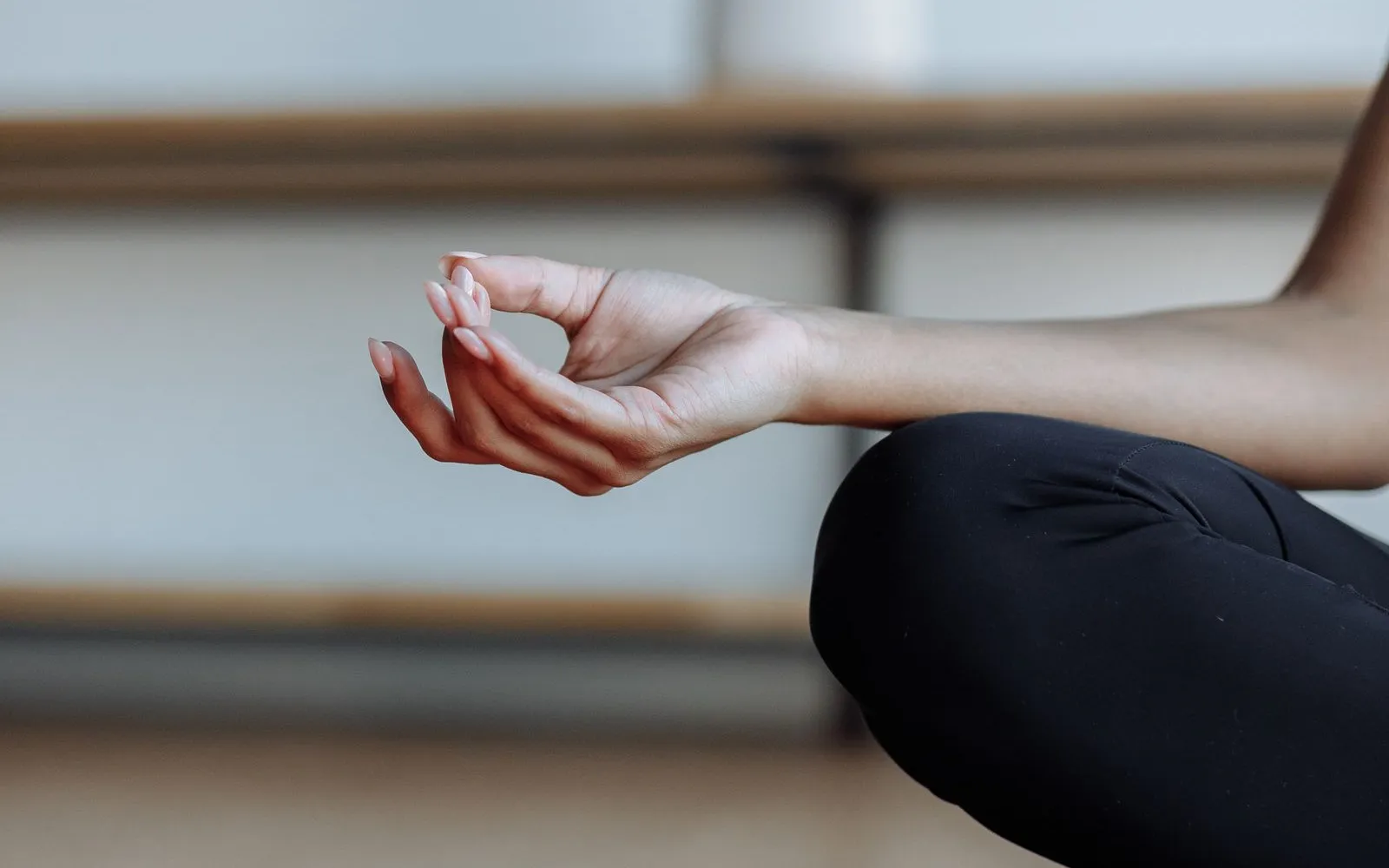
How do I meditate?
Find somewhere warm and quiet, then sit and breathe. The NHS beginner steps need no special kit. A towel or rug on the floor works as well as a mat.
Your first meditation in 5 steps
- 1
Sit upright
Floor, chair or bed. Be comfortable and upright, not slumped.
- 2
Notice your senses
Close your eyes. What can you feel under you, hear, smell or taste?
- 3
Follow your breath
Say “breathe in” in your head as you breathe in, then “breathe out”.
- 4
Come back
When a thought pulls you away, notice it and return to your breath.
- 5
Finish slowly
Stop the words. Keep your eyes closed for a couple more minutes, then open them.
Source: NHS Every Mind Matters
On a chair or bed, pick one that supports you so you don’t sink into it. On the floor, sit cross-legged. Some people find a cushion helps them sit up.
Mindfulness meditation is the same idea. You sit quietly and notice your breath, sounds or body, and you come back when your mind wanders.
Your next step: try the 5 steps once today.
What if my mind keeps wandering?
It will. The NHS calls a wandering mind a natural part of meditation, not a failure. Even people with lots of practice still drift sometimes.
If your mind wanders off 10 times, bring it back 10 times. That return is the rep.
At the gym, each lift is the work. Here, each return is the work, so a busy session is not a wasted one.
| Snag | What it feels like | What to do |
|---|---|---|
| Thoughts barge in | A thought about a bill turns into money worries. | Gently move back to your breath. A blank mind isn’t the goal. |
| Breathing feels stiff | Watching your breath makes it feel forced. | Normal while you learn. Over time you should find the balance. |
| Judging yourself | “I’m bad at this.” | There’s no right or wrong way. Notice the thought and carry on. |
| Mind too busy to sit | Stopping makes the worries crowd in. | Some people find gentle yoga or walking easier. |
Sources: NHS Every Mind Matters; NHS: mindfulness
Yoga and tai chi can also help you get more aware of your breathing.
One more trick: silently name the thought, such as “This is anxiety”. Then go back to your breath.
How long should I meditate each day?
Aim for most days, not long sessions. The NHS says there’s no rule on length, but 20 minutes is a good guide. Regular sessions work best.
Shorter can still count, given time. In one small trial, adults new to meditation did a 13-minute guided session each day. Mood and attention improved at 8 weeks, but not at 4.
| Who | How much | What happened |
|---|---|---|
| NHS beginner guide | About 20 minutes, regularly | No rule on length. Regular sessions work best. |
| One trial, ages 18 to 45 | 13 minutes a day for 8 weeks | Better mood, attention and memory than podcast listeners at 8 weeks, not at 4. |
| 8-week mindfulness courses | About 30 minutes, 6 days a week | People who practised more at home tended to do a little better. |
Sources: NHS Every Mind Matters; Basso 2019; Parsons 2017
Morning or evening? The NHS says the start of the day can set you up, and the evening can help you let go of tension before bed.
Meditating at bedtime? See meditation for sleep.
Your first week of meditation
- Pick one regular time, morning or evening.
- Sit somewhere warm, comfortable and upright.
- Follow your breath, saying “breathe in” and “breathe out” in your head.
- Each time your mind wanders, notice it and bring it back.
- Start shorter if you need to, and build towards about 20 minutes.
- If it makes you feel worse, stop and try gentle yoga or walking.
Sources: NHS Every Mind Matters; NHS: mindfulness
Where can I find free guided meditation?
Start with the NHS. Every Mind Matters has two free audio meditations, led by Dr Becky Spelman. A guided meditation just means you follow a voice.
| Try | What you do | Good for |
|---|---|---|
| Guided body scan (audio) | A voice moves your attention through your body. | Finding where you hold tension and anxiety. |
| Guided awareness of breath (audio) | A simple breath meditation, led by a voice. | Learning to focus on your breath. |
| NHS calming breath | Breathe gently into your belly, in through your nose and out through your mouth. Count 1 to 5 if it helps. | Stress, anxiety and panic. Repeat for at least 5 minutes. |
The NHS doesn’t rank meditation apps. Its advice is to try both audios and come back to them regularly if they help.
More breathing and muscle exercises are in relaxation techniques. Want a set course with a teacher? See MBSR (an 8-week mindfulness course) explained.
Does meditation calm the mind?
A little, for many people. A review of 47 trials in 3,515 adults, many with health conditions, found mindfulness courses may ease anxiety, low mood and pain. The effects were small to moderate.
The evidence for stress itself was weaker. And there was no evidence it worked better than other treatments, such as medicines, exercise or other talking therapies. Never stop or change a prescribed medicine without your prescriber.
NICE, which sets NHS treatment guidance, recommends mindfulness-based therapies as one way to treat less severe depression.
It isn’t for everyone. Some people find mindfulness doesn’t help, or makes them feel worse.
In a review of 83 studies, 3.7% of people in trials had side effects. Anxiety and low mood were reported most often.
If a session leaves you more anxious or low, stop. For other ways to cope, see stress management.
When to speak to a GP
Speak to a GP if:
- You’re struggling to cope with stress, or things you’re trying yourself aren’t helping.
- You’ve had a low mood for more than 2 weeks.
- You need urgent help for your mental health. Call 111 and choose the mental health option, or ask for an urgent GP appointment.
Call 999 or go to A&E if someone’s life is at risk, or you don’t feel you can keep yourself or someone else safe.
Aged 18 or over (16 in some areas)? You can refer yourself to NHS talking therapies without seeing a GP.
Need to talk now? Call Samaritans on 116 123.