Being outdoors
Nature walks and mental health: what the evidence shows
On this page
You have half an hour for a walk. The park is ten minutes away; a quieter street starts at your door. Is the greenery worth the extra journey, or will either route give you the break you need?
Nature walks can improve mood in the short term, but research does not establish a dependable extra benefit over other walks for everyone. Enjoyment, access and the surroundings you actually encounter matter when choosing a route.
You do not need to reach a two-hour weekly quota or finish every outing feeling transformed. Start with a walk you would want to take again, then use the evidence below to judge the bigger health claims.
Which route is worth your time?
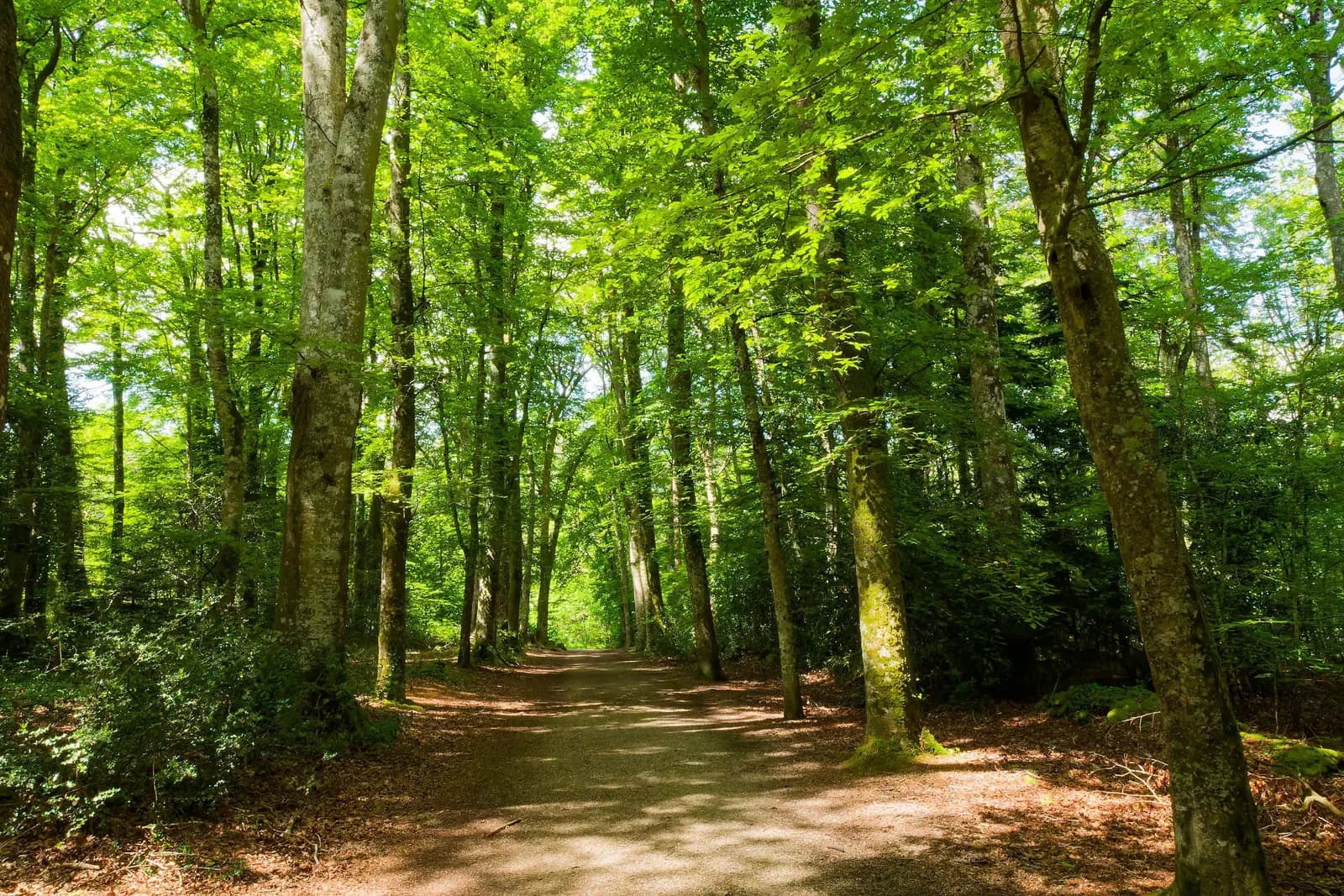
Look at the setting you will actually experience. A line of trees beside a main road may offer shade and something pleasant to look at, while leaving the traffic noise unchanged. A small park set back from the road may offer the quieter break you wanted. Neither needs to qualify as wilderness.
The California comparison makes noise and traffic sensible features to consider, although it did not prove that either caused the result. If your aim is relief from a busy environment, choose the part of a route that gives you that relief. A path requiring constant attention to crossings may feel quite different from one where you can look around comfortably.
There is a useful distinction between a walk you want to repeat and an outing you feel obliged to complete. If the only green route available feels unsafe, inaccessible or unpleasant, that changes its usefulness. Compare realistic alternatives: the quieter side street, a familiar park with benches, or an occasional longer trip when time allows. An impressive landscape is not necessary for a worthwhile break.
For a first attempt, fit the walk into time you already have. You might use part of a lunch break to reach a nearby green space, spend a few minutes there and return. Afterwards, ask something concrete: did that route feel more restful than the usual one, and was getting there worth the effort? Your answer helps with tomorrow's choice, even though it cannot establish a medical treatment effect.
The NHS advice on activity for mental health recommends activities you enjoy, small achievable goals and options that fit your health and abilities. It suggests noticing your surroundings outdoors. On a walk, that could mean looking at the trees or listening to birds for a moment; you do not need to follow a formal mindfulness programme.
Keep the purpose of the outing in view. If you want exercise as well as a break, walking pace and step count address a different part of the decision. A slow stroll and a brisk walk can both be enjoyable, but this nature research does not establish that they provide identical exercise benefits.
Does greenery add a benefit beyond walking?
A 2019 systematic review brought together 33 studies of short exposure to natural environments and depressive mood. Overall, it found a small improvement, but judged the evidence low or very low quality. Studies differed substantially, many had a high risk of bias, and the review could not explain those differences reliably. A reduction in a mood score also does not establish treatment for clinical depression.
The individual experiments help explain what that broad finding can mean in everyday life. Some compare a park with a busy road; others compare outdoor and indoor walking. They are testing different changes. Leaving a room introduces daylight and outdoor conditions as well as scenery. Replacing a traffic-heavy road with a park changes noise and the need to negotiate traffic.
So a favourable result supports the particular outing that was tested. It does not tell us that any path with trees has a fixed advantage over any street. The useful answer is that natural surroundings can make a walk feel more pleasant or restorative for some people, while the evidence does not establish a dependable extra effect for every setting or outcome.
For a person deciding where to spend a lunch break, that leaves room for preference. If a park feels restful and is easy to reach, choose it. If the journey consumes most of the break, the research does not supply a numerical benefit that makes the extra travel automatically worthwhile.
Separate the walk from the setting
The activity
Walking itself can be part of a useful routine.
The surroundings
Research asks what green space may add.
Can you feel refreshed without concentrating better?
A study published online in December 2025, with a March 2026 journal issue date, compared 15-minute nature and indoor walks in 28 adults aged 18 to 32. Each person did both walks on separate days, with the order randomised and counterbalanced.
Participants rated the nature walk more favourably for pleasure and perceived activation during and immediately after it. Activation describes how energised or aroused someone feels; it is not a score of mental performance. Both walks were rated as very light activity.
After each walk, participants completed a task requiring responses to some stimuli and withholding responses to others. Reaction time and accuracy did not differ between conditions. An electrical brain response called P3 was larger after the nature walk, but that difference did not translate into better performance on the task.
For someone seeking a pleasant break, the feeling ratings are relevant. A headline promising improved attention would go further than the behavioural results support. Our separate guide to daylight and the body clock covers another reason outdoor timing can matter; this short experiment did not separate the effects of light from those of scenery.
Did the brain-scan study show less negative thinking?
In a 2015 experiment, 38 healthy adults were assigned to a 90-minute walk through grassland and oak trees or beside a busy road in California. The routes were both about 5.3 kilometres long. Researchers analysed rumination questionnaires from 37 people and usable brain scans from 31.
Rumination means repeatedly dwelling on negative thoughts about yourself. Scores fell within the nature group, but the comparison of changes between groups did not reach the usual threshold for statistical significance: P=0.07. The study therefore did not clearly establish that nature reduced self-reported rumination more than the urban walk.
There was a significant difference in blood flow in the subgenual prefrontal cortex, a region associated with rumination. The scan estimated regional blood perfusion; it did not directly measure the content of someone's thoughts. That result offers a possible clue about the process, rather than proof that a brain change produced a useful clinical improvement.
This was one outing in healthy adults. The surroundings differed in traffic, noise and terrain as well as vegetation. It could not identify which feature mattered or establish that repeated walks would prevent or treat depression.
Why did another study find no advantage for the park?
A UK trial first published online in 2022 assigned 104 university students with sleep difficulties to 35-minute mindful walks each day for a week. Ninety-four participants were women. One group used a park; the other walked through an urban area of Edinburgh. Both received instructions to attend to their body, breathing and present experience.
Sleep quality and mood improved in both groups, without a demonstrated extra benefit from the natural setting. There was no group continuing without the walking programme, so the improvements cannot be attributed entirely to the walks. The study also ran during the pandemic, when the urban route was quieter and the park busier than usual.
This was a different comparison from the California experiment. It tested a week of guided attention during walking, used different questionnaires and recruited students with sleep problems. Those differences may help explain why results vary, but the studies did not isolate them as causes. The experiments measured different outcomes: an immediate brain response and a week's reported mood.
The practical implication is modest. A person who enjoys an urban walk has no reason to discard that experience because a park is supposed to be superior. Equally, a null average difference does not mean the surroundings are irrelevant to everyone's enjoyment.
Do you need two hours in nature each week?
The familiar 120-minute figure comes from a 2019 English survey involving 19,806 adults. People reporting at least two hours of recreational nature contact in the previous week were more likely to report good health and high wellbeing than those reporting none, after adjustment for several other factors.
This was an association measured at one point in time. Healthier or happier people may have been more able to get outdoors. The study could not establish that adding two hours caused the difference.
Time outdoors was also estimated from one selected visit multiplied by the number of visits, rather than a complete diary. People tended to report durations in rounded hours, which may partly explain the apparent threshold. Visits to participants' own gardens were excluded.
Two hours can be a personal planning target if it suits you. It is not an established minimum dose, and the finding does not mean that a ten-minute visit has no value. Nor can it tell someone who already spends two hours outdoors how much extra benefit a third hour will bring.
When a walk is not enough
Walking outdoors can be one activity alongside other support. If low mood lasts more than two weeks, you are struggling to cope or things you have tried are not helping, the NHS recommends seeking help. You do not need to wait two weeks if you need help sooner; the same page links to urgent support.
Choose a nature walk for the experience it offers you: somewhere pleasant to move, a break from a noisy road, or time outdoors that fits your day. The research gives some support to short-term mood benefits, with uncertain additional benefits over other walks. It does not require you to meet a timer or feel better after every outing.