PCOS hair loss: why it happens and what helps
Yes, PCOS can thin your hair on top. It’s slow, and minoxidil may help. But sudden handfuls in the shower can have another cause, one that usually grows back by itself.
On this page
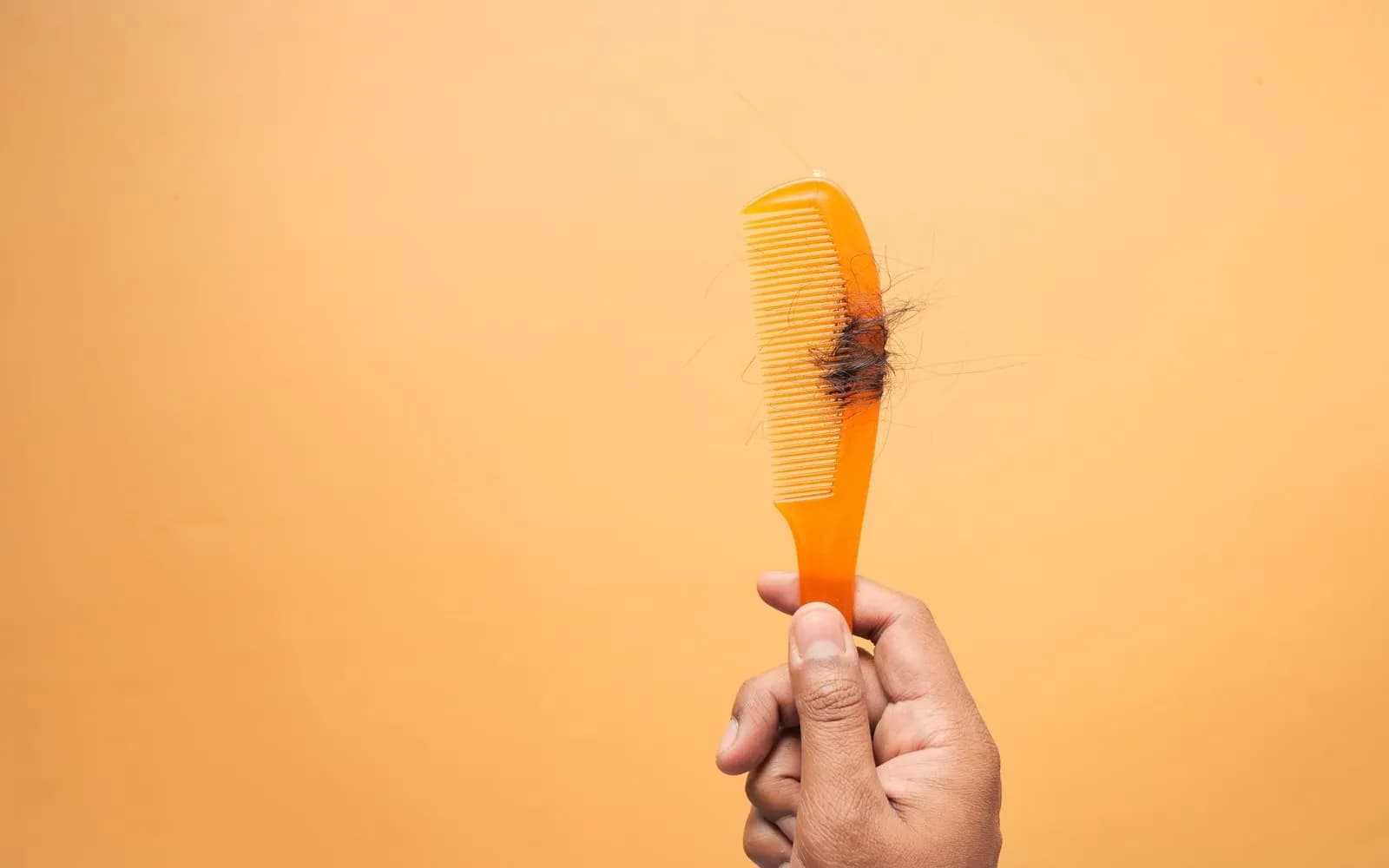
Can PCOS cause hair loss?
Yes. The NHS lists hair loss as one of the main symptoms of polycystic ovary syndrome (PCOS), now also called PMOS.
It usually shows as slow thinning on top of the head. Doctors call this female pattern hair loss.
Genes and hormones cause it. The BAD, the UK body for skin doctors, says it may come with conditions that raise male-type hormones (androgens), such as PCOS.
How pattern hair loss shrinks a hair
- 1
Thinner
Hairs on top grow finer than the rest.
- 2
Shorter
Each new hair stays shorter.
- 3
Lighter
The hairs get paler in colour.
- 4
Stops
In time the root shrinks and stops making hair.
Source: BAD
You’ll see a wider parting and thinning mainly on top. The front hairline often stays normal.
Thinning alone doesn’t mean PCOS. The international PCOS guideline calls it a fairly weak sign of high male-type hormones in the blood when there’s no extra face or body hair.
Also have irregular periods, acne or extra face or body hair? Ask your GP about PCOS. See which PCOS blood tests they may do.
Is it PCOS hair loss or something else?
| What you notice | What it may be | What happens next |
|---|---|---|
| Slow thinning on top and a wider parting. Front hairline normal. | Pattern hair loss, which can come with PCOS | No cure, but treatment may slow it. |
| Sudden shedding all over, about 3 months after crash dieting, stopping the pill, severe illness or birth | Shedding after a trigger (telogen effluvium) | Usually gets better by itself. Shedding lasts 3 to 6 months. |
| More hair on your brush, with tiredness, breathlessness or pale skin | May be low iron | A GP can check with a blood test. |
| Hair loss with tiredness, feeling cold and weight gain | May be an underactive thyroid | A blood test checks your thyroid. |
Sources: BAD: pattern loss; BAD: shedding; NHS: iron; NHS: thyroid
That second row is the twist from the top of the page. Sudden handfuls in the shower can be shedding after a trigger, called telogen effluvium. The BAD says it usually gets completely better without treatment.
This matters with PCOS. The NHS suggests losing weight if you’re overweight, and some people come off the pill. The BAD lists extreme dieting and coming off the pill as triggers.
Both types can turn up at the same time. Thyroid symptoms overlap with PCOS too. See PCOS or thyroid and stress hair loss.
Does PCOS hair loss grow back?
Not by itself. Pattern hair loss has no cure, says the BAD.
But it tends to move very slowly, over years to decades. Starting younger may mean it moves faster.
Minoxidil, a lotion you put on your scalp every day, may slow it and partly restore hair in some women.
Source: Cochrane
These trials were in women with pattern hair loss in general, not PCOS alone. Most didn’t see big regrowth.
Give it at least 6 months before you judge it. You may shed more in the first 4 to 6 weeks. This usually settles as new hairs grow.
Stop, and any gain fades. For how to use it, see hair loss treatment for women.
What is the best PCOS hair loss treatment?
Minoxidil has the most trial evidence. Only the 2% strength is licensed (approved) for women, and it’s not on the NHS. Your GP may also talk about hormone medicines.
| Treatment | What it may do | The catch |
|---|---|---|
| Minoxidil lotion (2%) | May slow thinning and partly restore hair. | Not on the NHS. Avoid if planning a pregnancy or breastfeeding. |
| Combined pill | The guideline’s first medicine for signs of high male-type hormones. | Not shown to regrow scalp hair. It’s also contraception. |
| Spironolactone, with the pill | Blocks male-type hormones on the scalp. May help a little. | Little evidence in PCOS. Not licensed for hair loss. Avoid in pregnancy and breastfeeding. |
| Low-dose minoxidil tablets | May work at least as well as the lotion, in certain cases. | Ask a prescriber whether you’re one of them. |
| Finasteride | No better than a dummy pill for women in small trials. | The NHS says women should not use it. |
Sources: BAD; PCOS guideline; Cochrane; NHS
Hair loss can be upsetting. So the guideline says spironolactone-type medicines with the pill could be tried, while admitting the evidence in PCOS is lacking.
These medicines can affect how a baby boy develops in the womb. So if you could get pregnant, the guideline says to use reliable contraception.
Every option works only while you keep using it. Never stop or change a prescribed medicine without your prescriber.
For periods, weight and other symptoms, see PCOS treatment. Thinking of oils? See rosemary oil against minoxidil.
What can I do myself?
Protect the hair you have, and avoid the things that trigger extra shedding. These steps come from the BAD.
Six ways to protect your hair
- Brush and comb gently.
- Use hairdryers, straighteners and curlers less.
- Skip bleaching and relaxers, and wear tight hairstyles less often.
- If you’re losing weight, avoid extreme diets, which can trigger shedding.
- Eat foods rich in iron and protein, plus fresh fruit and vegetables.
- Cover thin patches with sun block, a hat or a wig in the sun.
Sources: BAD: shedding; BAD: pattern loss
Smoke? Stopping may help, as cigarette smoke can worsen hair loss.
Fibre sprays can hide thinning while you wait for treatment to work. They may wash off in rain or when you swim.
Feeling low about it? Tell your GP. The NHS says they may help you get counselling.
When to speak to a GP
A GP may be able to tell the cause by looking at your hair. Book an appointment if:
- You’re worried about your hair loss, or symptoms are affecting your everyday life, work or relationships.
- Thinning comes with irregular periods, acne or extra face or body hair. These can be signs of PCOS.
- Shedding doesn’t get better.
- You feel tired, short of breath, notice your heartbeat or look paler than usual. These can be signs of iron deficiency anaemia.
- Signs like extra face or body hair are new and severe, or getting worse. The guideline says this needs more tests to rule out other causes, such as a hormone-making growth.
The NHS says to see a GP first, before you pay a hair clinic. See also our hair loss blood test guide and high testosterone in women.