Is my receding hairline normal?
In men, it’s most often pattern hair loss. About half of men over 50 have it, and it usually moves slowly. But a hairline that burns or takes your eyebrows with it is different.
On this page
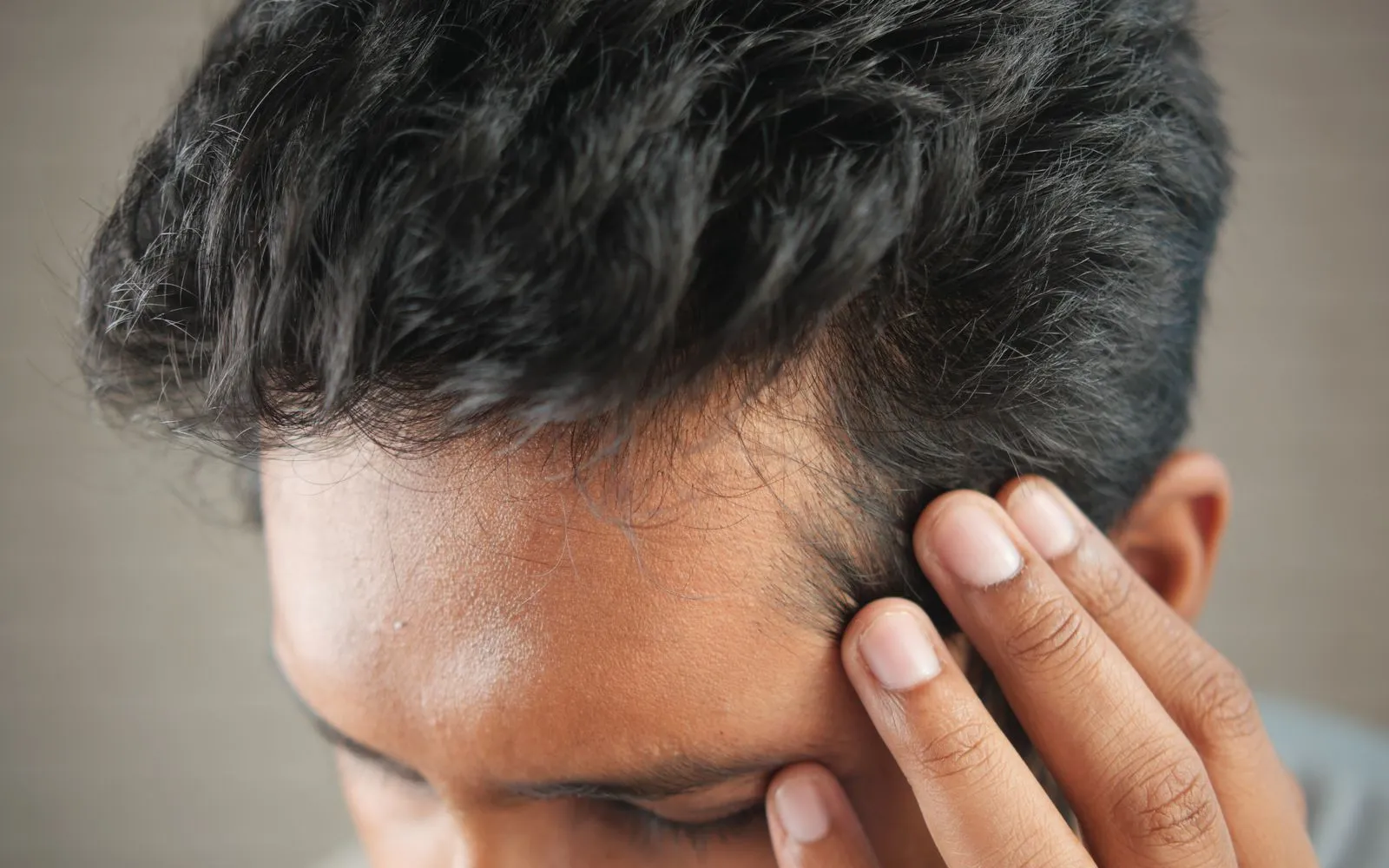
Is a receding hairline normal?
It’s very common. In men, a receding front hairline is part of the usual pattern of male pattern hair loss. The BAD, the UK body for skin doctors, calls it the most common type of hair loss in men.
About half of men over 50 have pattern hair loss, says Alopecia UK. It can start any time after puberty.
Your hairline also changes shape as you grow up. Hair surgeons describe it moving from a childlike look to an adult one, in men and women.
| Age | Men with moderate or more hair loss |
|---|---|
| 18 to 29 | 16% |
| 40 to 49 | 53% |
| All men aged 18 to 49 | 42% |
Source: Rhodes 1998
These were US men, in a study run by a drug maker. So treat the numbers as a rough guide, not UK figures.
Pattern loss usually moves over years to decades. So the useful question is how fast yours is moving. Take a photo of your hairline today, in the same light, to compare later.
Maturing hairline or balding: how to tell
Look at the hairs, not just the line. In pattern loss, the BAD says hairs in the affected area get thinner and shorter before they go. The sides and back stay full, and the scalp skin looks normal.
Family helps you guess. Pattern loss can come from either or both parents. A close relative with it raises your risk, but it doesn’t mean you’ll get it for sure.
| What you notice | What it may mean |
|---|---|
| Thinner, shorter hairs at the temples or front, with full sides and back | The usual start of male pattern hair loss. |
| Burning, soreness or itch in a band along the hairline, or redness and flaky skin around hairs | Possible frontal fibrosing alopecia (FFA). See a GP soon. |
| Smooth, pale or shiny skin where hair was, or thinning eyebrows | Possible FFA. See a GP soon. |
| Thin or broken hairs, or spots, where your hair is pulled tight | Possible traction hair loss from tight styles. |
| Losing 50 to 100 hairs a day | Normal. Most go unnoticed. |
Sources: BAD; BAD: FFA; Alopecia UK: FFA; Alopecia UK: traction; NHS
That burning, soreness or eyebrow loss is the warning from the top of the page. It can be a sign of FFA, a scarring hair loss. Once a hair goes, it won’t grow back in that spot.
Treatment may slow or stop it in some people, so Alopecia UK says to see a skin specialist promptly. Read more in our frontal fibrosing alopecia guide.
Can you stop a receding hairline?
You may slow it, but there’s no cure. The NHS says minoxidil and finasteride are the main treatments for male pattern baldness. They don’t work for everyone.
What slowing a receding hairline takes
- 1
See a GP first
Check the cause before you pay a hair clinic.
- 2
Pick a treatment
Minoxidil 5% on your scalp, or finasteride tablets on private prescription.
- 3
Wait 6 to 14 months
Minoxidil needs at least 6 months, maybe 12, before any benefit shows. Finasteride can take up to 14.
- 4
Keep going
Any benefit lasts only while you use it.
Sources: NHS; BAD; Alopecia UK
Starting sooner may help. Alopecia UK says early treatment is often more effective, especially in younger people with recent thinning.
Finasteride has risks. Lower sex drive and erection problems affect about 2% of men who take it.
The MHRA, which checks UK medicines, says to stop it and seek medical advice if you feel depressed or have suicidal thoughts. Otherwise, never stop or change a prescribed medicine without your prescriber.
Costs, side effects and other options are in our hair loss treatment guide for men.
Can a receding hairline grow back?
Sometimes, and often only partly. It depends on the cause.
| Cause | Can it grow back? |
|---|---|
| Male pattern hair loss | Partly at best. Medicines only partly reverse it, and only while you use them. |
| Traction hair loss | Not usually permanent if caught early. Long-term strain may make it permanent. |
| Frontal fibrosing alopecia | No, once a hair has gone. Treatment may slow or stop more loss in some people. |
Sources: Endotext; Alopecia UK: traction; BAD: FFA
A hair transplant moves hair from the back and sides to balding areas. Transplants are private only.
DHT is the hormone, made from testosterone, behind pattern loss. The BAD says the moved hair resists DHT better.
Wear your hair pulled back? Loosen it now. Alopecia UK says acting early increases the chance of full regrowth.
What to do about a receding hairline
- Take a photo of your hairline in the same light every 3 months.
- Check your eyebrows and the skin at your hairline for redness, flaking or shine.
- Loosen tight ponytails, braids and headbands that pull on the front.
- See a GP about the cause before you pay a hair clinic.
- Give minoxidil at least 6 months, and finasteride up to 14, before you judge it.
- Cover bald patches with sun block or a hat in the sun.
Sources: NHS; BAD; Alopecia UK
Thinking of shampoos or serums? See which hair loss products work.
Receding hairline in women
Women’s pattern loss usually spares the front. Alopecia UK says thinning spreads over the front and top, but the front hairline typically does not recede.
So a receding line in a woman is worth a GP check. FFA mostly affects white women after the menopause, but younger women, men and people of other ethnic groups can get it too.
Tight ponytails, braids, weaves, extensions and headbands can pull the front back too. That’s traction hair loss, and it can affect anyone who wears their hair pulled back tightly for long periods.
The NHS says women should not use finasteride, but minoxidil can be used. See hair loss treatment for women.
When to speak to a GP
A GP may be able to tell the cause by looking at your hair. Book an appointment if:
- You’re worried about your hairline, or it’s affecting how you feel.
- Your hairline burns, feels sore or itches in a band, the skin looks red, flaky or shiny, or your eyebrows are thinning. These can be signs of FFA.
- You’re a woman and your front hairline is moving back.
- You see thin or broken hairs, or spots, where your hair is pulled tight.
- You take finasteride and feel depressed or have suicidal thoughts. The MHRA says stop it and seek medical advice.
If hair loss is getting you down, your GP may be able to help you get counselling. Our hair loss blood test guide covers the checks a GP may suggest.