Do sleep masks help you sleep?
Yes, if light reaches your bed at night or at dawn. But in a UK trial, a mask didn’t change people’s sleep stages. The gain showed up the next morning, in two tests.
On this page
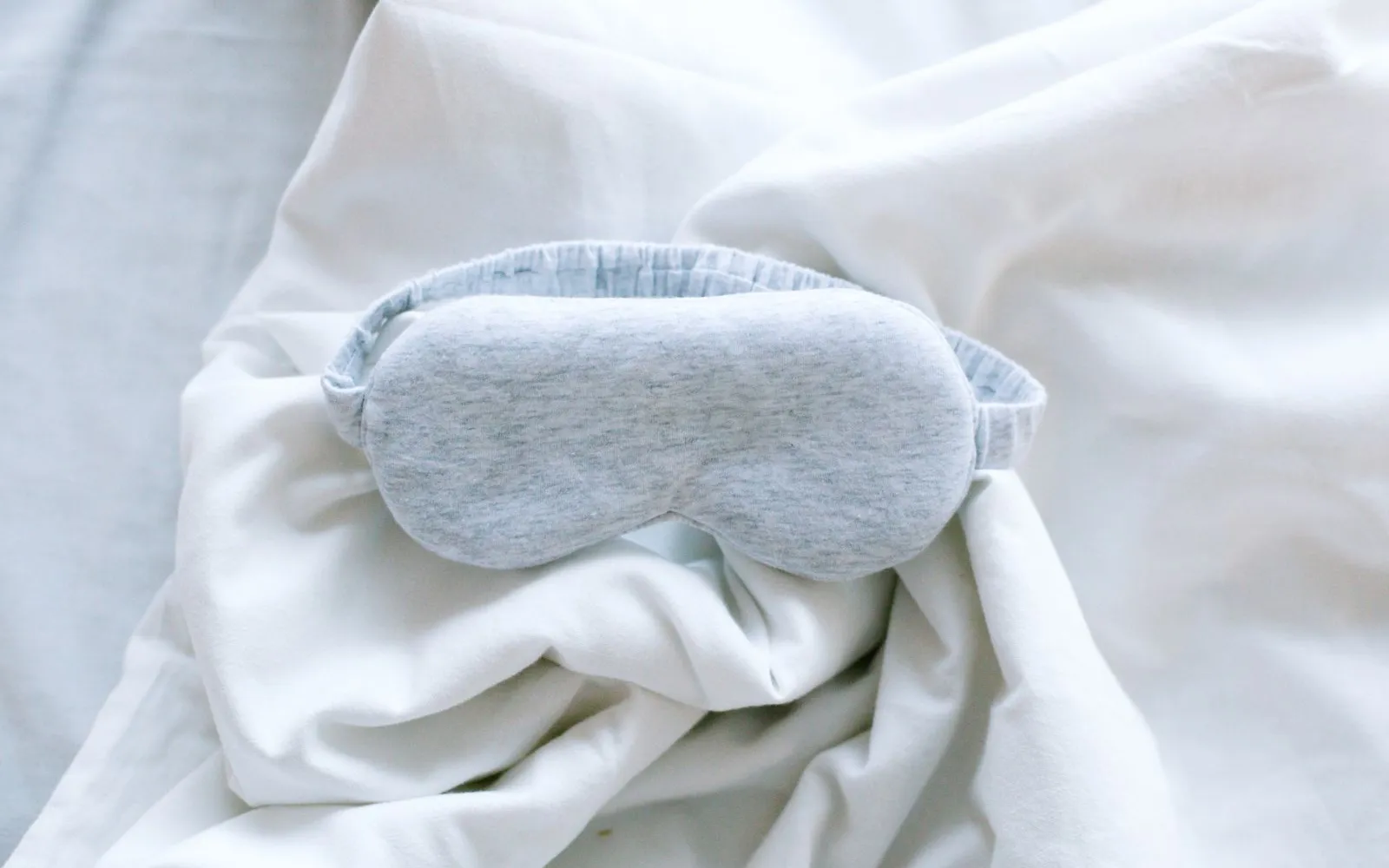
Do sleep masks help you sleep?
They can, if light is the problem. The NHS says to keep your bedroom dark and quiet, with curtains, blinds, an eye mask or ear plugs if needed.
Think of a mask as a pair of blackout curtains you wear. It works best when the light comes from things you can’t switch off: a street lamp, a partner’s phone, or a summer sunrise at 5am.
If your room is already pitch dark, a mask has little left to block.
Darken the room first. Then try a mask.
- 1
Close up
Fully close curtains or blinds.
- 2
Hide small lights
Clocks out of view, phone face down.
- 3
Still light?
Wear an eye mask.
- 4
Noisy too?
Add earplugs.
Sources: NHS Every Mind Matters; NHS: insomnia
The NHS says to try different things to find what works for you. Tonight, lie in bed with the lights off and look for any light that gets in.
What happens when you wear an eye mask to sleep?
The main trial comes from Cardiff. In summer, 94 people aged 18 to 35 wore an eye mask every night for a week. For another week, light wasn’t blocked.
The team picked summer because dawn came as early as 5am. Some people in the control week wore a mask with holes cut over the eyes, so comfort was the same.
A second group of 35 also wore a sleep tracker.
| Test | With the mask |
|---|---|
| Learning pairs of words | Better. |
| Alertness (a reaction-time test) | Better. |
| Learning a finger-tapping skill | No change. |
| Sleep stages (light, deep and dreaming sleep) | No difference. |
Source: Greco 2023, Sleep
So those two tests were memory and alertness.
In the tracker group, the memory gain came back. Its size was linked to time in deep sleep.
These were healthy young adults, so it may not hold for everyone. People wore the mask for 5 nights before testing. Give yours a week before you judge it.
Why does light matter when your eyes are shut?
Your eyelids are thin. An estimated 5 to 9% of light still gets through them.
In a lab study, 20 healthy young adults slept one night in near darkness. Half then slept a night with the overhead room light on.
| Measure | With the light on |
|---|---|
| Heart rate during sleep | Higher. |
| Insulin resistance next morning (the body handles sugar less well) | Higher. |
| Share of the night in deep and dreaming sleep | Less. |
| Melatonin, the sleep hormone | No difference. |
Source: Mason 2022, PNAS
That study didn’t test masks. Its authors say avoiding light while you sleep may be good for your heart and how your body handles sugar.
In 552 adults aged 63 to 84, light at night was linked to more obesity, diabetes and high blood pressure. A link doesn’t prove the light caused them.
In hospital intensive care, where wards stay bright and noisy, reviews found eye masks and earplugs helped sleep. Cochrane rated that evidence low quality. Most studies that used sleep tests found no benefit.
Want light to work for you instead? See daylight and your body clock.
Are weighted eye masks better?
Nobody knows yet. We searched the medical research and found no trial of a weighted eye mask.
So the evidence above is for blocking light, not for weight. If a weighted mask feels calming and blocks light well, it does the job a plain one does. Don’t pay extra expecting more.
If it presses on your eyes or feels hot, switch to a lighter one.
What’s the best eye mask for sleeping?
The best one is the one that blocks light and stays on all night. No study has ranked brands or fabrics, so judge it in your own bed.
Five checks for a sleep mask
- Check for light at the edges, especially by your nose.
- Pick a strap you can adjust, so it stays on without leaving marks.
- Choose a shape that doesn’t press on your eyes if that bothers you.
- Pick one you can wash, as it sits on your skin every night.
- Wear it for a week before you decide.
A mask won’t fix noise. The NHS suggests earplugs if noise is a problem, or background sounds like rainfall or white noise.
Sleep in the day after night shifts? A mask is one part of it.
See shift work and sleep. For the rest of the NHS habits, see sleep hygiene and how to fall asleep faster.
When to speak to a GP
A dark room helps, but it can’t fix every sleep problem. See a GP if:
- Changing your sleeping habits has not helped.
- You’ve had trouble sleeping for months.
- Poor sleep is affecting your daily life in a way that makes it hard to cope.
- Your breathing stops and starts while you sleep, you make gasping, snorting or choking noises, or you always feel very tired in the day. These are signs of sleep apnoea, where your airway closes again and again as you sleep.
If someone has seen you stop breathing in your sleep, it can help to bring them along. A GP may offer CBT for insomnia, a talking therapy that changes the thoughts and habits that keep you awake.
See also sleep apnoea and blood tests.