Fitness measurements
How accurate is your smartwatch VO2 max estimate?
On this page
Your watch has labelled your cardio fitness 'Low'. Before you plan harder workouts or assume something is wrong, you need to know what that label can actually tell you. Is it measuring your fitness, comparing you with other people, or estimating something from the walks you have recorded?
A smartwatch VO2 max estimate can be useful context, but it is not a laboratory measurement. Recent Apple Watch validation studies found substantial differences for individual users. A number labelled 'low' should prompt a sensible look at the information behind it, rather than an immediate conclusion that your fitness has deteriorated.
For Apple Watch, 'Low' is a comparison with people of your age and sex. It means the device estimates that your cardiorespiratory fitness falls in its low category for that comparison. It does not identify a heart or lung condition. Understanding the category, checking the setup and considering how you feel during activity are more useful than trying to correct the score yourself.
This guide focuses on Apple Watch because that is what the studies below tested. Their numerical errors should not be transferred to another brand or device that was not studied.
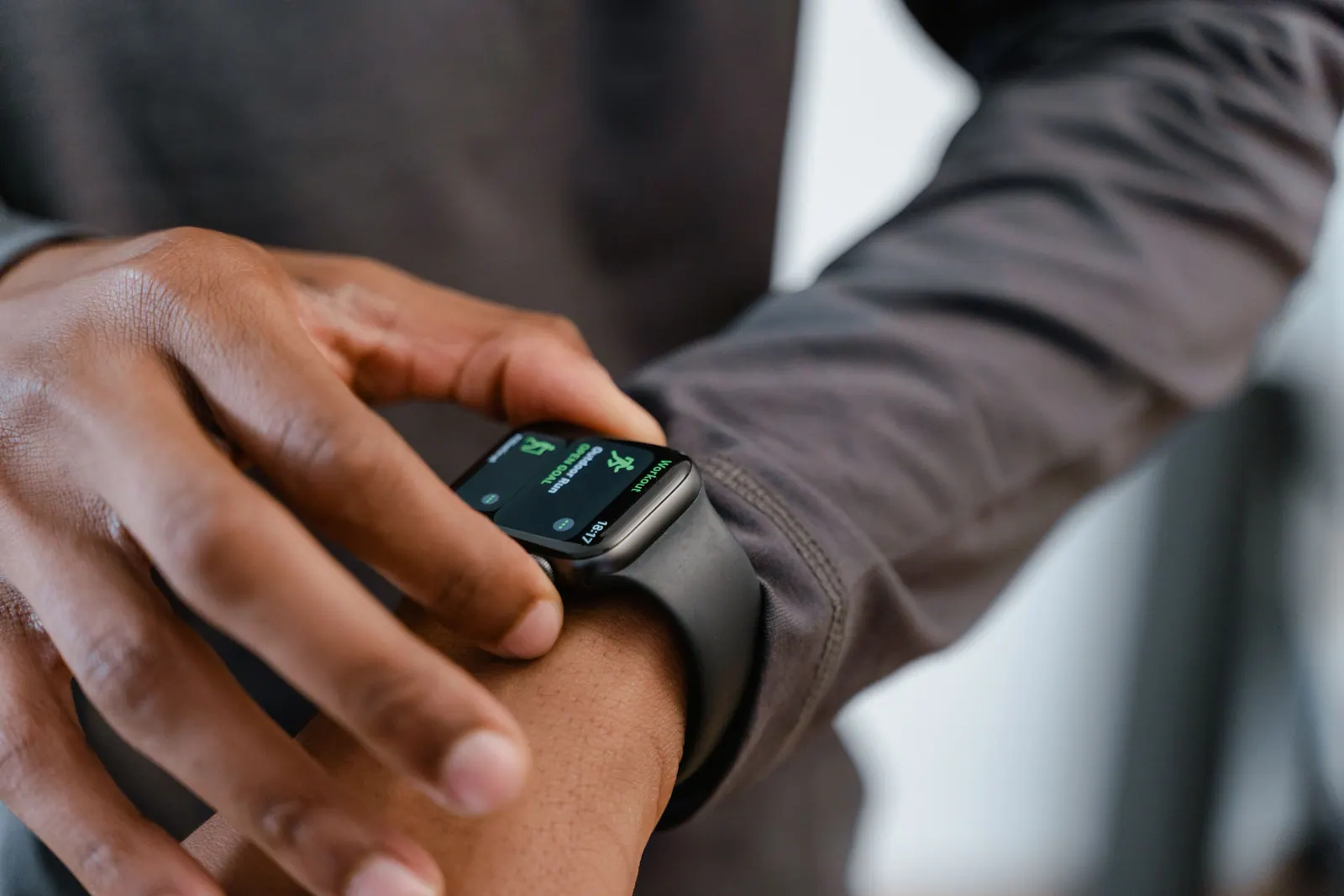
Start with the reading and how you feel
Start by identifying the result. Is it a new estimate, an average across several readings or a change in a comparison category? Note when it appeared and whether you changed device, software, profile information or the type of activity being recorded. Use the manufacturer's instructions to check setup rather than trying online tricks to raise the score.
Then ask about your experience. Are you completing the activities you intended? Has your usual route become noticeably harder? Are you asking about performance, motivation or a symptom? These are different questions, and the watch cannot resolve them simply by providing another estimate.
If you have new or persistent breathlessness or a marked change in exercise tolerance, seek medical advice on those symptoms. Do not dismiss them because the app looks reassuring, or assume that an unfavourable app label explains their cause. The clinical assessment may involve quite different information from your fitness graph.
Check the activities and information behind the estimate
Apple's September 2026 support guidance says estimates use heart and motion sensors during Outdoor Walk, Outdoor Run or Hiking workouts. Age, sex, height, weight and medicines affecting heart rate also enter the calculation. Indoor workouts do not contribute to this estimate. The age-and-sex comparison categories are available from age 20.
An initial result can require at least 24 hours of wear, several eligible workouts and passive measurements. Apple also describes updating earlier estimates when the Health app identifies that they could be more accurate. If a graph changes after an update, record that context instead of assuming all the change came from your body.
A useful setup check is therefore quite specific: are your profile details current, are relevant medicines recorded accurately, and have you completed eligible outdoor sessions? Keep a separate record of activities such as swimming or indoor cycling that may be absent from this particular calculation. Do not change a prescribed medicine to influence a fitness score.
An estimate and a laboratory test
Smartwatch estimate
Calculated from the information the device collects.
Laboratory assessment
Measures the response during a controlled exercise test.
What VO2 max actually describes
VO2 max is the maximum rate at which your body can use oxygen during intense exercise. It is commonly reported relative to body mass, in millilitres per kilogram per minute. A higher number in those units describes more oxygen use relative to body weight; it is not an oxygen saturation percentage like the reading from a finger pulse oximeter.
The usual number therefore contains a denominator as well as a numerator. As a purely mathematical illustration, 3,000 millilitres per minute divided by 75 kilograms is 40 mL/kg/min. Divide the same oxygen uptake by 70 kilograms and the result is about 42.9. That example does not recommend weight loss or predict what would happen to your exercise capacity. It shows why the units matter when comparing results.
The American Heart Association's scientific statement explains why fitness is worth assessing: it adds information about health and mortality risk, and physical activity can improve it. A watch's category is a rough entry into that conversation, rather than a personal risk calculation.
How far out were the watches in recent tests?
A 2026 study of Apple Watch Series 10 tested 40 healthy adults, but the accuracy analysis included 35. One did not meet the laboratory VO2 max criteria, and four did not produce a usable watch estimate. The analysed group averaged about 23 years of age;25 of 35 were at or above the 80th percentile in a reference fitness classification.
The watch underestimated laboratory VO2 max by 6.25 mL/kg/min on average. Individual differences varied widely: the limits of agreement ran from 18.23 units below the laboratory value to 5.73 above. Those limits describe the distribution of differences in this sample, not a guaranteed personal range around every reading. The study used watchOS 11 and did not establish how well the watch tracks improvement over time.
A 2025 PLOS One study recruited 30 people and analysed 28. The average underestimate was 6.07 mL/kg/min, with an average absolute percentage error of 13.31%. Twenty-one of the 30 recruited participants were classified as having Superior or Excellent laboratory fitness. That is a limited basis for deciding how a low-fitness user's estimate behaves.
In both papers, the group result helps describe a device's performance under the study conditions. The question you want answered at home is more specific: how close is this particular reading to your own capacity? The study average cannot supply that answer on its own.
Why you should not add six to your score
Suppose your watch shows 35. Adding 6.25 would produce 41.25, a result that looks impressively precise. But the average underestimate in a group does not establish your own error. You could have a smaller difference, a larger one or an error in the opposite direction.
Consider two fictional people wearing the same watch model. Both watches display 35. One person's laboratory result is 30, so the watch overestimates by 5. The other's laboratory result is 40, so the watch underestimates by 5. The average error is zero even though both individual readings differ from their comparison tests.
There is some direct evidence that error can vary with fitness. An earlier 2024 study of Series 7 included 19 people. The watch tended to overestimate in the poor-fitness subgroup and underestimate in the good and excellent groups. However, the poor-fitness group contained only three people, and the laboratory comparison used cycling while the watch estimate followed running. It is a small, qualified observation, not a rule for correcting your result.
The 2025 paper discusses that earlier finding; it did not establish the pattern through a large low-fitness subgroup of its own. If your display says Low, the sensible interpretation is therefore neither 'the watch must be wrong' nor 'my true number must be six higher'. Keep the original value as an estimate and use the category to consider your activity, symptoms and whether further assessment would be useful.
Is the trend more trustworthy than the number?
It is often suggested that the absolute value does not matter as long as the line moves in the right direction. It is a separate measurement question. Comparing a watch with a laboratory on one occasion does not establish how well it detects a real change in the same person months later.
For example, imagine an estimate changes from 35 to 37. The arithmetic change is two units. To interpret it as a two-unit improvement in actual VO2 max, you would need to know more about repeatability, the conditions of measurement and whether the estimation method changed.
You can still include the trend in your training notes. Keep it alongside a description of what you did, how the activity felt and any relevant changes in the device or circumstances. For example, a change of watch belongs beside the date of the new reading, while a change of training belongs beside the sessions you completed.
A useful distinction is between a graph change and a change you experience. A two-point dip after a software update calls for checking the measurement context. New difficulty completing your usual walk calls for attention to that symptom, whatever the graph says. Record both if they occur together rather than assuming one explains the other.
When would a laboratory test be useful?
A cardiopulmonary exercise test, often called CPET, measures the body's response as exercise becomes harder. Oxford University Hospitals describes monitoring breathing, oxygen use, heart rhythm and blood pressure during a supervised exercise-bike protocol. A specialist interprets the findings for the referring clinician. Protocols differ, so follow the instructions from the service providing your test.
That is more information than a single fitness score. Cambridge University Hospitals explains that CPET can help assess exercise capacity and investigate breathlessness, cardiac or respiratory conditions, or preparation for surgery. Whether it is appropriate depends on the question being investigated and the clinician's assessment.
If you are considering a private sporting assessment, ask what will be measured, how the result will be interpreted and what decision it will help you make. 'I want to know my number' is a different purpose from investigating symptoms or setting a training plan. Knowing the purpose helps you choose an appropriate service and avoid paying for precision you will not use.
Build your activity around more than the watch score
You can begin a suitable activity plan without obtaining a laboratory number first. NHS walking guidance says a brisk ten-minute daily walk contributes towards the weekly activity recommendation. Brisk walking means you can talk but would find singing difficult. If you have been inactive and can walk, start at a comfortable level and build the distance gradually.
Choose a repeatable opportunity: part of the journey to work, a lunchtime route or a walk after another regular appointment. Record the route and approximate duration. As it becomes familiar, you can consider a little more walking or a brisker section that remains suitable for you. The walking pace and step-count guide explains how those two measures answer different questions.
Judge the plan through more than the watch number. Did you complete the sessions you intended? Can you sustain the chosen route comfortably? Do you understand the effort you are aiming for? Those are practical observations to bring to an instructor or clinician, even when the estimated VO2 max has not changed. They are not a substitute laboratory test, but they help describe what is happening in daily life.
If you are choosing how hard an ordinary aerobic session should feel, our guide to heart-rate zones and the talk test explains the differences between watch zones and measured thresholds. Avoid suddenly making every walk or run strenuous simply to chase a better category. A repeatable activity plan gives you a clearer basis for decisions than repeated attempts to force the display upward.
Fitness is also only one part of cardiovascular health. If you already know that you have high blood pressure and that is your reason for taking up exercise, the relevant question is which activity supports that goal. The exercise and blood-pressure guide looks at that evidence directly. A VO2 max estimate cannot tell you what your blood pressure is doing.
Take the watch record to an instructor or clinician when it helps explain your question, alongside the activities you have been doing and any symptoms you have noticed.