How do I train for my first triathlon?
Ten weeks, 6 sessions a week, if you can already manage 30-minute sessions of swimming, cycling and running. But if your race swim is outdoors, pool laps aren’t enough. Cold water can steal your breath.
On this page
Triathlon training plan for beginners, week by week
This is endurance coach Steve Whittle’s 10-week sprint plan, written for a first ever triathlon. A sprint is roughly a 750m swim, 20km bike and 5km run. Distances vary a little by race.
Every session is set in minutes, not distance. So you never have to measure a route.
| Week | Mon to Fri (minutes) | Saturday |
|---|---|---|
| 1 | Swim 30, bike 30, run 30, swim 30, bike 45 | Bike 30, run 30 |
| 2 | Swim 30, bike 45, run 30, swim 30, bike 45 | Bike 30, run 30 |
| 3 | Swim 45, bike 45, run 30, swim 30, bike 45 | Bike 45, run 30 |
| 4 | Swim 30, bike 30, run 30, swim 30, rest | Bike 45, run 30 |
| 5 | Swim 30, bike 45, run 45, swim 30, bike 45 | Bike 30, run 30 |
| 6 | Swim 45, bike 60, run 45, swim 30, bike 45 | Bike 45, run 30 |
| 7 | Swim 30, bike 60, run 45, swim 45, bike 45 | Bike 45, run 30 |
| 8 | Swim 30, bike 30, run 30, swim 30, rest | Bike 60, run 30 |
| 9 | Swim 60, bike 45, run 45, swim 30, bike 45 | Bike 60, run 30 |
| 10 | Swim 30, bike 30, run 30, rest, bike 10 and run 5 | Race day |
Source: Steve Whittle, Coach magazine
Sunday is always a rest day.
Week 1 starts with 30-minute sessions.
Can’t run for 30 minutes yet? The free NHS Couch to 5K gets you there in 9 weeks or longer. See our Couch to 5K guide.
Next step: count 10 weeks back from your race and mark week 1.
How many hours a week is a beginner triathlon plan?
From about 3 to 5 hours. Our sums from the plan: week 1 is 3 hours 45 minutes. Week 9, the biggest, is 5 hours 15 minutes.
Weeks 4 and 8 are lighter. Friday becomes a rest day.
Week 10 drops to 1 hour 45 minutes before the race. Thursday is rest, and Friday is a 10-minute ride and 5-minute run.
Short on time? Pick your fixed weekly slots now, starting with the Saturday session.
What is a brick session?
Two sports done back to back. Triathlon coach Peter Bryan says to do a brick “back to back with no break”.
In Whittle’s plan, Saturday’s bike and run is that session. On race day, you go straight from one sport to the next.
Sprint triathlon, in race order
- 1
Swim
About 750m.
- 2
Transition
Change kit and get on the bike.
- 3
Bike
About 20km.
- 4
Run
About 5km to the finish.
Sources: Steve Whittle, Coach magazine; Peter Bryan, Nuffield Health
Bryan also says to learn British Triathlon’s race rules. They cover how you place your bike in transition and not following too close to another bike.
Read your race’s rules before week 5.
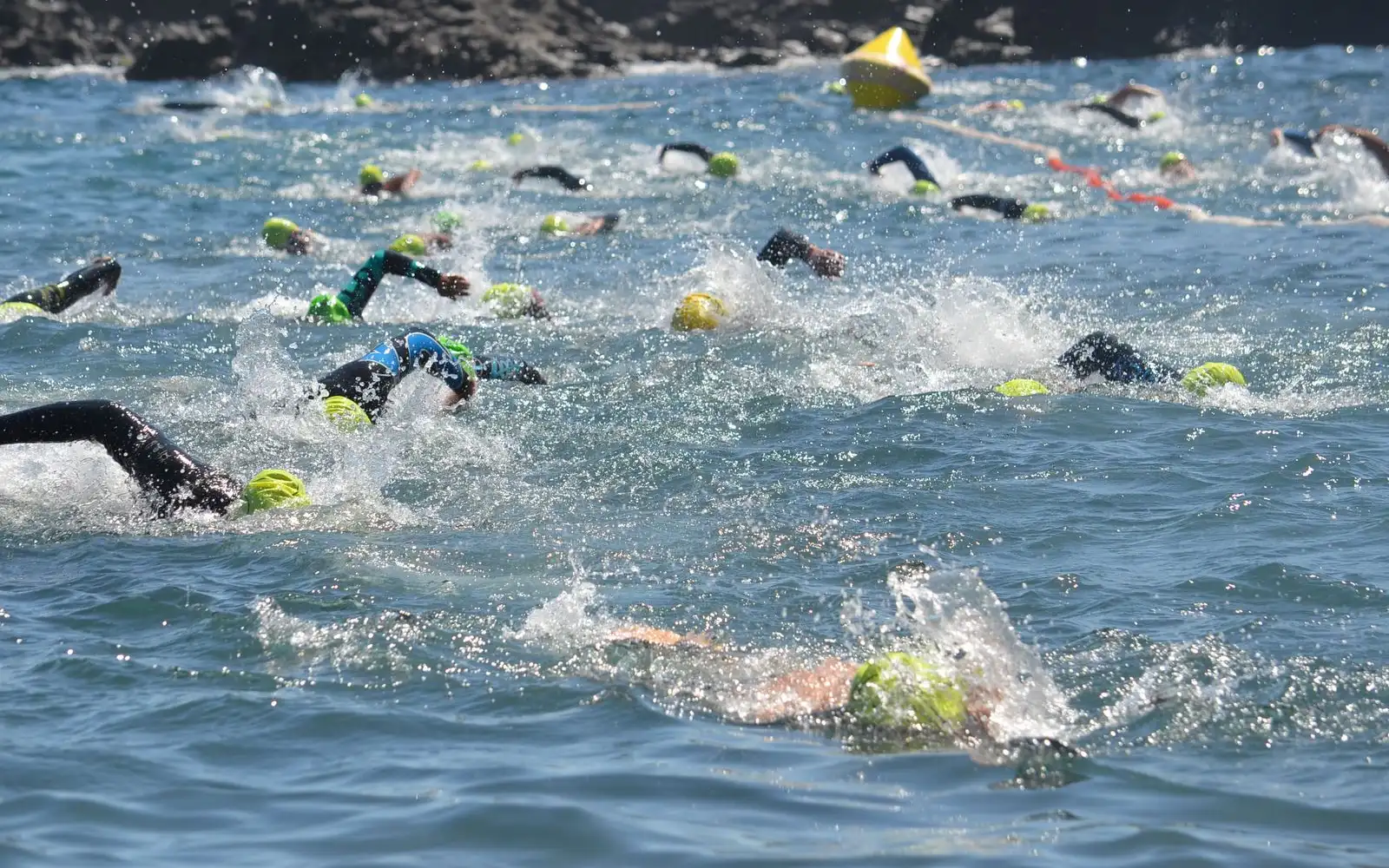
Why practise in open water before race day?
Cold water can make you gasp, panic and lose your stroke. That gasp is cold water shock.
Water of 15°C or below is cold enough to cause it. UK seas, lakes and rivers can stay that cold all year. The shock usually lasts up to 3 minutes.
A well-fitting wetsuit, a slow entry and repeat swims in cold water all cut the risk. A pool can’t give you that.
In a US study of races from 1985 to 2016, most sudden deaths and cardiac arrests (the heart stopping) happened during the swim. Of those examined after death, 44% had a heart problem, often one nobody knew about.
Before your first open water swim
- Choose a lifeguarded beach or supervised open water site.
- Swim with a friend or an organised group.
- Wear a wetsuit, a bright swimming cap and a float with a whistle.
- Get in slowly. Never jump in.
- Always swim sober.
- Practise floating on your back in a pool, ears under, arms and legs moving.
Source: National Water Safety Forum
That float is called Float To Live. Use it if cold water shock hits. Stay calm, breathe, then shout for help or swim to safety.
What if a week feels too hard?
Repeat it, and move your start date back a week. NHS running advice is to do a similar run at least 3 or 4 times before you go faster or further.
Don’t run if you’re in pain. Warm up with 5 to 10 minutes of brisk walking or gentle jogging, and cool down for 5 to 10 minutes.
Get running shoes fitted at a running shop. You don’t have to spend a lot.
For pace on easy days, see heart rate zones. For strength work alongside, see strength training for runners.
Pregnant? The NHS says it’s not recommended to start a new vigorous activity such as running. Ask your midwife what’s safe for you.
When to speak to a GP
Speak to a GP if:
- You haven’t exercised for some time, or you have medical conditions or concerns. The NHS says speak to your GP first.
- Your knee pain is severe or your knee is swollen: go straight away. Milder knee pain: stop running, and see a GP or physio if it hasn’t gone after a week.
- You get a sudden, sharp pain at the back of your ankle. Your Achilles tendon may have torn: see a GP straight away. Achilles pain that hasn’t gone after 2 to 3 weeks: see a GP or physio.
- You have chest pain that comes and goes, or that goes away quickly but you’re still worried.
Stop straight away if you feel any pain or become unwell. Call 111 if symptoms worry you or don’t go away.
Call 999 for sudden chest pain or discomfort that doesn’t go away. It can feel like squeezing, pressure, burning or indigestion.
Call 999 too for pain spreading to either arm, or your neck, jaw, stomach or back. Also call 999 for chest pain with sweating, feeling sick, light-headed or short of breath.