Why are my teeth yellow?
Usually stains, smoking or age. Whitening toothpaste may lift surface stains. Yellow from age is your teeth’s natural colour, and only whitening from a dental professional can lighten that. Worn enamel needs your dental team.
On this page
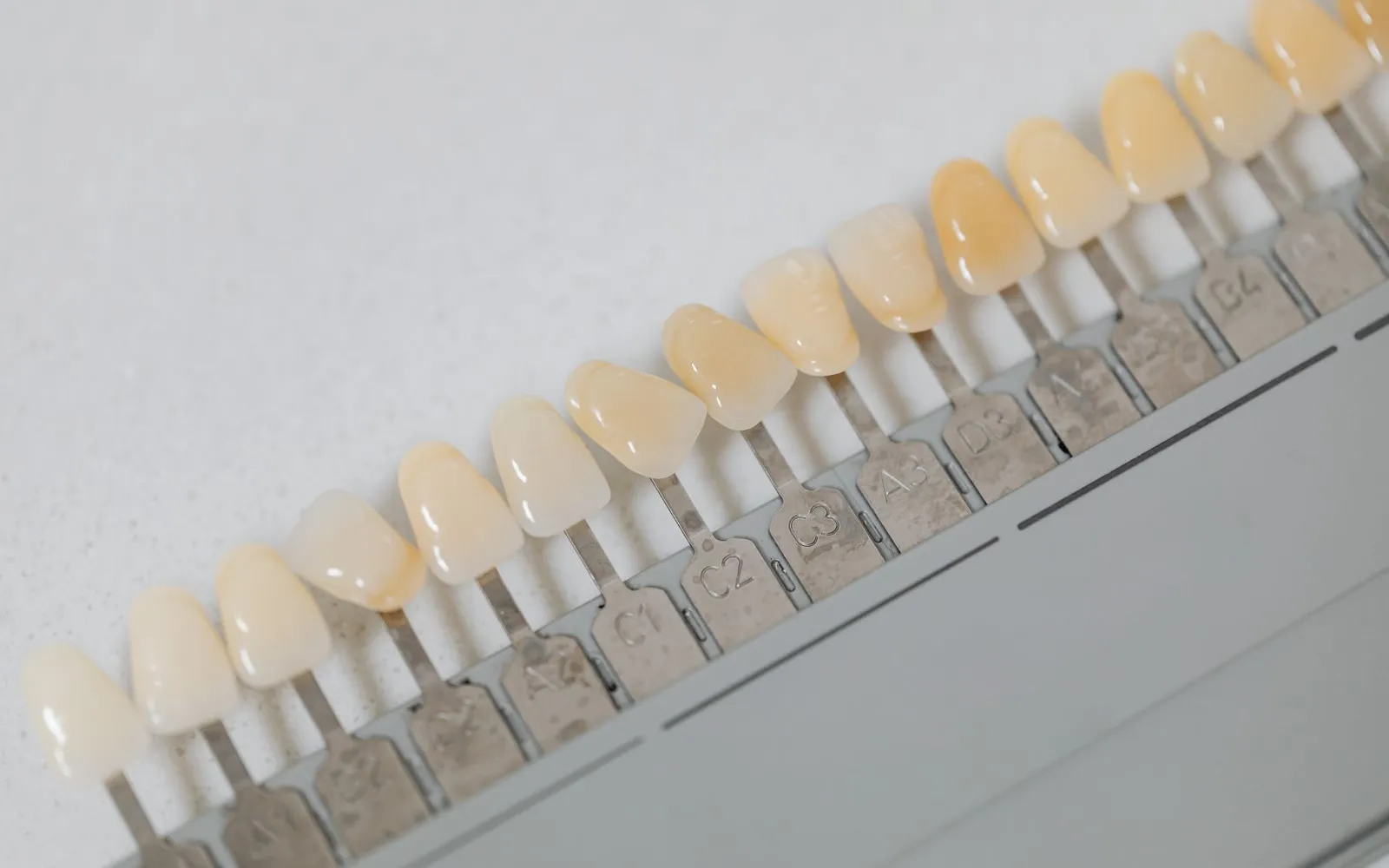
Why are my teeth yellow?
The NHS names three causes of stained or darker teeth: getting older, regularly drinking coffee, tea or red wine, and smoking. Tartar and worn enamel can add to it.
Some yellow is normal. Very few people have brilliant-white teeth, and teeth can get more discoloured with age.
A dental review sorts it by where the colour sits: on the surface, or inside the tooth.
| Cause | Where the yellow is | What helps |
|---|---|---|
| Tea, coffee, red wine, blackcurrant | On the surface | Whitening toothpaste may help, or a hygienist’s polish |
| Smoking | On the surface | A professional clean, and stopping smoking |
| Tartar (hardened plaque) | Hard deposits on the tooth | A hygienist removes it |
| Getting older | The tooth’s natural colour | Whitening from a dental professional |
| Worn enamel | The layer under the enamel shows through | Protect what’s left. Ask your dental team |
| Certain antibiotics, tiny cracks | Under the surface | Ask your dentist |
Sources: NHS; Oral Health Foundation; Oral Health Foundation; Oral Health Foundation
Yellow from age is your teeth’s natural colour. Whitening toothpastes don’t change it, but they may remove stains.
So start with the surface. Still yellow after a hygienist’s clean? Ask your dentist if whitening would help.
How do I get rid of yellow teeth?
Work from the surface in, and stop when you’re happy.
Clean the surface first, then lighten the tooth
- 1
Brush
A whitening toothpaste may lift surface stains.
- 2
Hygienist
Removes tartar and polishes away surface stains.
- 3
Whitening
A dental professional lightens the natural colour. Trays at home take around 2 to 6 weeks.
- 4
Veneers
For discoloured teeth that don’t respond to whitening.
Sources: Oral Health Foundation; Oral Health Foundation; NHS; Oral Health Foundation
Shop strips and gels usually don’t change your natural colour much. The NHS says kits from a pharmacy or online don’t work as well and may harm your teeth and gums.
Whitening isn’t on the NHS. It isn’t done if you’re 17 or younger, or have unhealthy teeth or gums, and isn’t recommended if you’re pregnant or breastfeeding. It only lightens natural teeth, not crowns, dentures or implants.
Whitening can make teeth sensitive to cold or sweet food and drink. It can also cause sore gums or throat, or white patches on your gums. You may get these for a short time.
Veneers mean removing a small amount of enamel, so treat them as a long-term choice.
Questions to ask your dentist:
- Is my yellow on the surface, or my teeth’s natural colour?
- Would a hygienist’s clean be enough?
- Are my teeth and gums healthy enough for whitening?
- Is acid wearing my enamel?
Compare your options in teeth whitening: dentist or home kit. Curious about baking soda or charcoal? See natural teeth whitening.
Keep yellow stains from coming back
- Cut down on foods and drinks that stain teeth, like tea, coffee and red wine.
- Stop smoking. Your dentist or doctor can help you find support.
- Brush twice a day with fluoride toothpaste. Spit, but don’t rinse straight after.
- See a hygienist to remove tartar and polish away surface stains.
- Keep acidic drinks to mealtimes, and use a straw.
- Wait at least one hour after eating or drinking before you brush.
Sources: Oral Health Foundation; Oral Health Foundation; NHS; Oral Health Foundation; Oral Health Foundation
For brushing in between, see interdental brushes and floss.
Yellow teeth from smoking or vaping
Tar and nicotine stick to the surface of your teeth. They can leave a dull, dirty look that brushing alone can’t remove.
| Habit | What it does to colour |
|---|---|
| Smoking | Yellow staining at first, dark brown over time |
| Vaping | No tar, but nicotine can still cause some yellowing over time. Research is still ongoing |
| Stopping smoking | Staining improves |
Sources: Oral Health Foundation; Oral Health Foundation
A dentist or hygienist can remove some of it with a clean. But the stains often return if you keep smoking.
Your dentist or doctor can help you find stop-smoking support. Our guide to nicotine patches covers one option.
Can thin enamel make teeth look yellow?
Yes. Acid can wear away enamel, the hard outer layer, so the softer layer underneath (dentine) shows. Teeth may look thinner or more yellow.
Acidic drinks include fizzy drinks (diet ones too), energy and sports drinks, fruit juice, smoothies, lemon water, wine and cider.
Worn enamel can also make teeth sensitive or painful. See sensitive teeth for what helps.
Can medicines stain teeth?
Some can. Chlorhexidine mouthwash can stain teeth, but the NHS says this isn’t permanent and goes when you stop. Keep brushing while you use it.
Certain antibiotics can cause staining under the surface.
Never stop or change a prescribed medicine without your prescriber. Ask your pharmacist or dentist if you think one is staining your teeth.
When to see a dentist or GP
- Your teeth change how they look, or you think acid is wearing them. Speak to your dental team.
- Side effects from whitening bother you. Talk to your dentist.
- You’ve injured a tooth. Get an urgent dental appointment or call NHS 111.
- Severe tooth or mouth pain affects your sleep or daily life and painkillers don’t help, or pain won’t go away. Get an urgent dental appointment or call NHS 111.
- A red or white patch, lump or swelling in your mouth is getting bigger or not going away, or a mouth ulcer hasn’t healed after 2 weeks or has got worse. Get an urgent dental appointment or call NHS 111.
NHS 111 may refer you to a GP for a lump, patch or ulcer.
Mouth, lips, throat or neck badly swollen, and struggling to breathe or open one or both eyes? Call 999 or go to A&E. Same for heavy bleeding from your mouth that won’t stop.
Gums bleed when you brush? See bleeding gums: what to do.