What’s the best breakfast for weight loss?
Protein, fibre and about 100 fewer calories. All three come from NHS advice. But breakfast itself won’t make you lose weight. In a 16-week trial, eaters and skippers lost about the same.
On this page
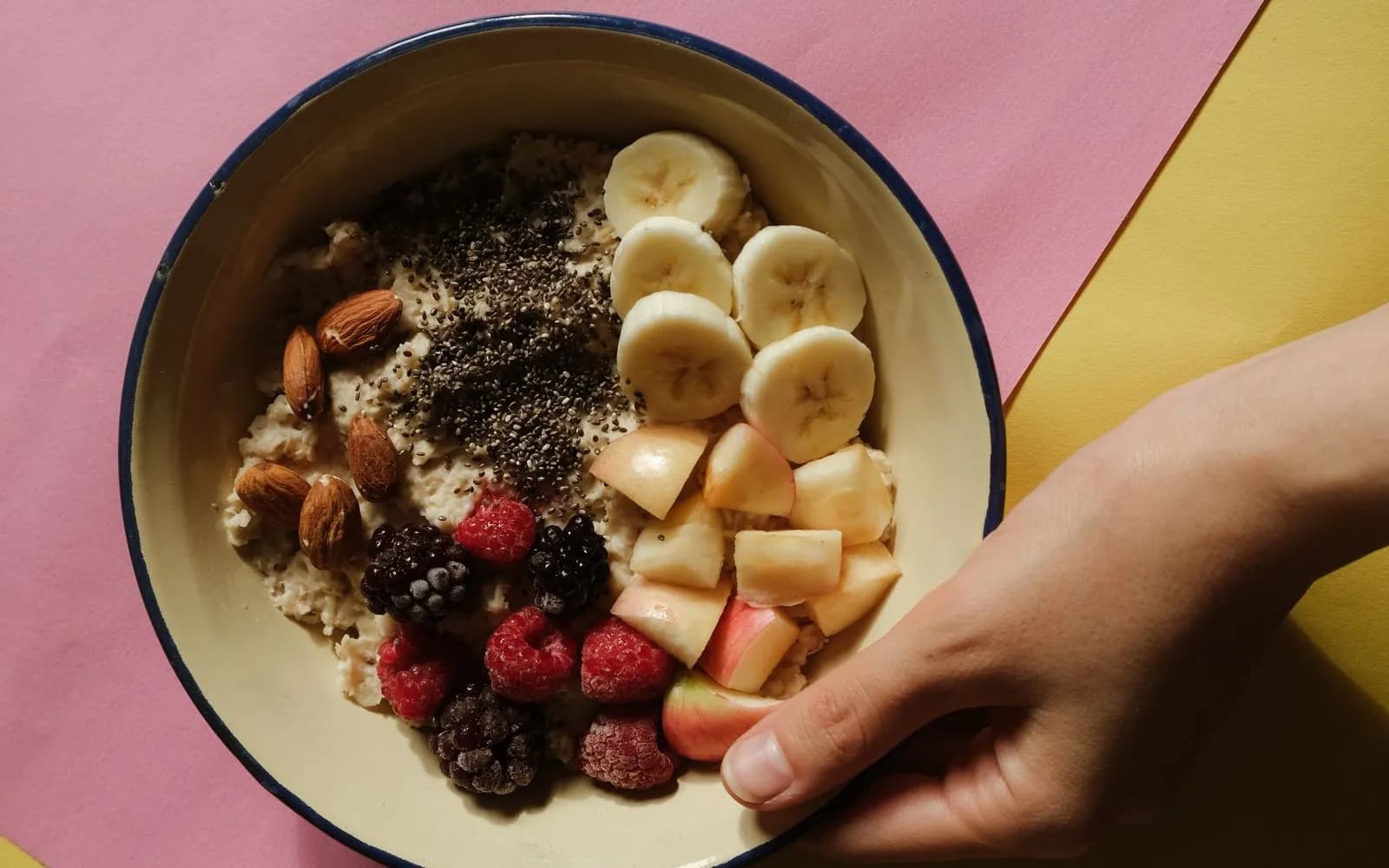
What is the best breakfast for weight loss?
One with some protein and fibre, low in sugar, and a little smaller than your usual. No single food does the work.
Start with protein. The NHS says protein in each meal, like beans, fish or eggs, can help you feel full for longer.
Then add fibre from oats, wholemeal bread or plain wholegrain cereal. Two slices of wholemeal toast with peanut butter and an orange give about 8.3g of fibre. Adults should aim for 30g a day.
| Breakfast | Some protein from | Fibre from |
|---|---|---|
| Egg on wholemeal toast | Egg | Wholemeal bread |
| Beans on wholemeal toast | Beans | Beans and wholemeal bread |
| Porridge made with semi-skimmed milk, topped with sliced banana | Milk | Oats and banana |
| Plain natural yoghurt with chopped fruit | Yoghurt | Fruit |
| Plain wholegrain cereal with semi-skimmed milk and fruit | Milk | Wholegrain cereal and fruit |
| Wholemeal toast with peanut butter, then an orange | Peanut butter | Wholemeal bread and orange (about 8.3g in total) |
Sources: NHS: healthy eating to lose weight; NHS: cut down on sugar; NHS: fibre
Pick one you’d enjoy and have it most mornings this week. For more ideas, see high-protein breakfast ideas and quick healthy breakfasts.
How many calories should breakfast be for weight loss?
The NHS gives no calorie number for breakfast. Its advice is to eat around 600 calories a day less than you do now.
In its example, only about 100 of those come off breakfast. Lunch and dinner do more of the work.
| Meal | Cut | NHS tip |
|---|---|---|
| Breakfast | About 100 | Weigh your cereal. Stay away from jam and chocolate spreads. |
| Lunch | About 200 | Check labels on shop-bought food. Drink water or sugar-free drinks. |
| Dinner | About 200 | Have fewer ready meals and takeaways. Cook from scratch. |
| Snacks | About 100 | Swap crisps and chocolate for fruit or plain popcorn. |
Source: NHS: calorie counting
Tomorrow, pour your usual cereal into a bowl on the kitchen scales. Then you know where you’re starting from.
For the rest of the day, see our 7-day meal plan for weight loss.
Which breakfast foods are high in sugar?
The NHS says many breakfast cereals are high in sugar. You can’t tell from the front of the box. Turn it over and find sugars per 100g.
- 5 g per 100g or belowLow in sugar.
- Above 5 up to 22.5 g per 100gMedium.
- Above 22.5 g per 100gHigh in sugar.
Source: NHS: food labels
Six NHS tips for a lighter breakfast
- Weigh your cereal instead of pouring it by eye.
- Stay away from jam and chocolate spreads.
- Swap sugary cereal for plain wheat biscuits, plain shredded wholegrain or plain porridge.
- Top porridge with sliced banana or a few chopped dried apricots instead of sugar.
- Add an egg or beans for protein, to help you feel full for longer.
- Keep fruit juice and smoothies to 150ml a day in total.
Sources: NHS: calorie counting; NHS: cut down on sugar; NHS: healthy eating to lose weight; NHS: eight tips
Not ready to drop your usual cereal? The NHS suggests sugary and plain cereals on alternate days, or mixing both in the same bowl.
See how much sugar a day is too much.
Do I need to eat breakfast to lose weight?
No. Breakfast alone doesn’t make you lose weight.
In a 16-week trial, 309 otherwise healthy adults with overweight or obesity were trying to lose weight. Being told to eat or skip breakfast made no clear difference to weight loss.
A 2019 review of trials found breakfast eaters ate about 260 calories a day more. The trials were short and mostly low quality.
So what matters is your day’s total. The NHS says eat fewer calories than you do now.
The NHS still says don’t skip breakfast. A healthy one can help you get the nutrients you need.
If you skip it, get your fibre and fruit at other meals.
When to speak to a GP
Your BMI (body mass index) is a measure of your weight for your height. The NHS says to see a GP if it is in the overweight or obese range and:
- you want help to lose weight
- your waist is more than half your height
- you have pre-diabetes (blood sugar higher than normal, but not diabetes), diabetes, high blood pressure, high cholesterol, joint pain, sleep apnoea (breathing that stops and starts while you sleep) or heart or circulation disease
- obesity runs in your family, or you have, or think you may have, an eating disorder such as binge eating
Losing weight without trying? See a GP if you keep losing weight without changing your diet or exercise.