What’s a high-protein breakfast without eggs?
Cottage cheese, beans, tofu or fish. Each portion gives about 10 to 20 g protein. Two eggs give about 13 g. But egg hides in some foods. One highlighted word on the pack shows it.
On this page
What’s a high-protein breakfast without eggs?
Pick one protein food and eat a proper portion. A medium egg has about 6.4 g of protein, so two give about 13 g. Most of these match it or come close.
| Breakfast | Portion | Protein |
|---|---|---|
| Mackerel on toast | 100 g grilled mackerel | About 20 g |
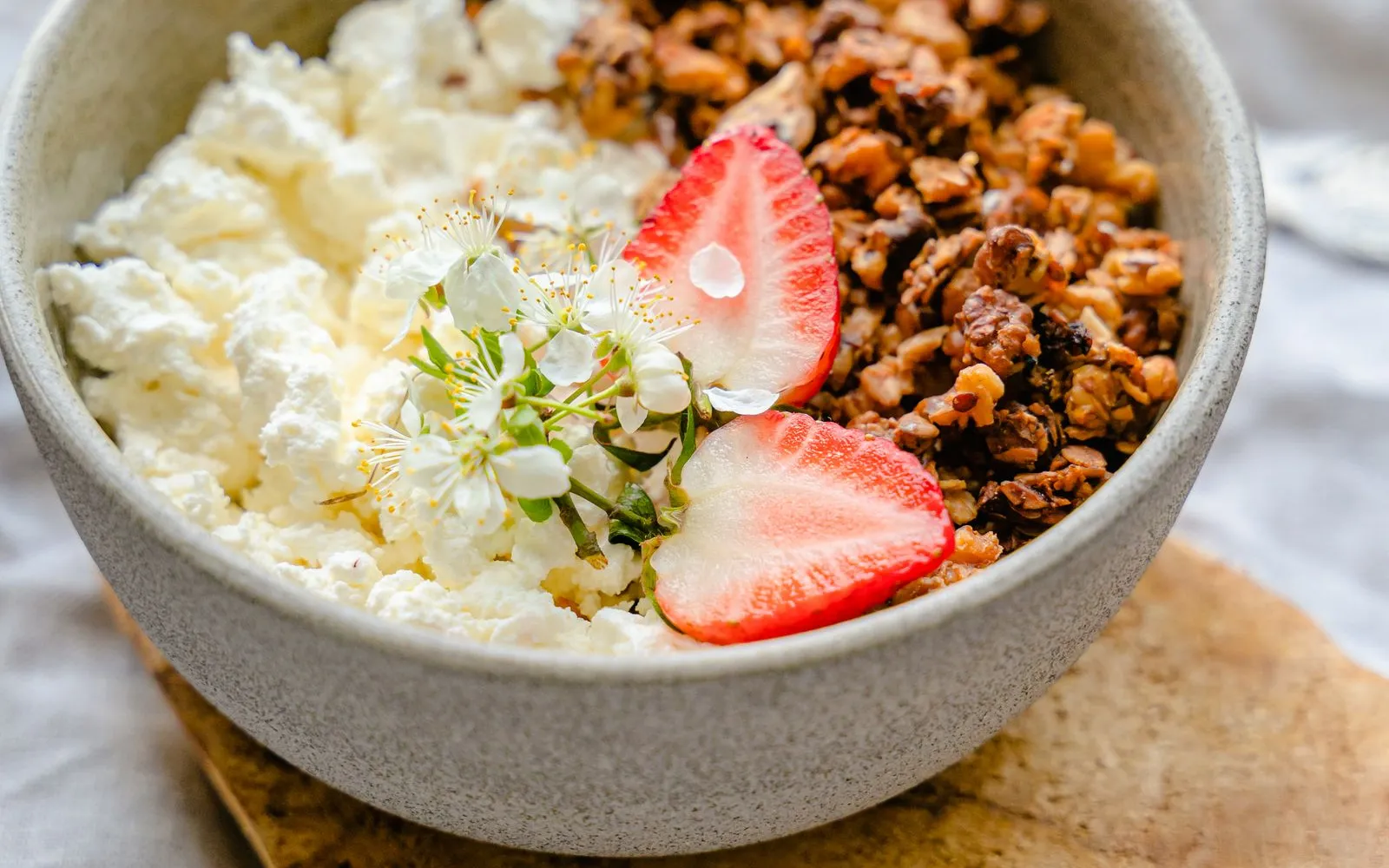
| Cottage cheese on toast | 150 g cottage cheese | About 14 g |
| Tofu scramble | 150 g tofu | About 12 g, often more with firm tofu |
| Yoghurt bowl | 200 g plain Greek-style yoghurt | About 11 g |
| Beans on toast | Half a 415 g tin of baked beans | About 10 g |
| For comparison: eggs | 2 medium eggs | About 13 g |
Sources: British Nutrition Foundation; British Egg Information Service
These figures are for the protein food only. The toast adds a few grams more.
Packs differ, so check yours once. Firm tofu and strained yoghurt, like skyr, often list more protein than the figures here.
Pick the one you have in the fridge or cupboard, and make it tomorrow.
Which breakfast foods hide eggs?
More than you might think. Anaphylaxis UK lists many foods that can contain egg, and several turn up at breakfast.
| Breakfast food | Where the egg is |
|---|---|
| Pastries, cakes and muffins | In the mix |
| Glazed buns and pastries | In the shiny glaze |
| Pancakes | In the batter |
| Sausages and other meat products | In some recipes |
| Mayonnaise and dressings | In the recipe |
| Breadcrumbed or battered foods | In the coating |
Source: Anaphylaxis UK
That highlighted word is egg. It’s one of the 14 main allergens in the UK, so labels must make it stand out in the ingredients list, in bold for example.
It may be called egg protein, dried egg white or egg lecithin. It’s still highlighted.
Eating out? Ask staff if egg is in the dish, or could get in by mistake.
Allergic to hen’s eggs? Avoid duck, goose, quail and other birds’ eggs too.
If you have an allergy, read the ingredients every time you shop.
How much protein should breakfast have?
There’s no set amount for breakfast. UK advice is for the whole day: 0.75 g per kg of body weight.
That’s about 56 g a day for a 75 kg man and 45 g for a 60 kg woman. On average, UK men eat about 85 g and women about 67 g. So most of us get enough.
Some people may need more, such as athletes and older adults. If you train in the morning, the British Nutrition Foundation says 20 to 25 g after a workout seems enough for muscle building. Your daily total still matters more.
Source: British Nutrition Foundation
So if one food feels small, add a second. For your full day, see how much protein you need a day.
What if I don’t eat dairy either?
Tofu and beans need no dairy. Nuts, seeds and nut butters add protein too, so try peanut butter on toast with seeds on top.
Your choice of drink matters most for porridge and overnight oats.
| Drink | Protein per 100 ml |
|---|---|
| Semi-skimmed cow’s milk | About 3.5 g |
| Soya or pea drink | Close to cow’s milk |
| Oat drink | Around 1 g |
| Coconut or nut drink | Around 0.5 g or less, unless protein is added |
Sources: British Nutrition Foundation; British Dietetic Association
So pick a soya or pea drink if you want the protein. For more ideas, see dairy-free protein and vegan protein sources.
How do I keep an egg-free breakfast healthy?
Bacon and sausages are the usual fry-up without eggs, but some sausages contain egg, so check the label. Both count as processed meat, so watch how much you have.
Six swaps for a healthy egg-free breakfast
- If you eat more than 90 g of red or processed meat a day, cut down to no more than 70 g.
- Choose reduced-fat milk, cheese and yoghurt.
- Have beans, lentils or chickpeas more often.
- Compare salt and sugar on tins of baked beans, not just protein.
- Pick a soya or pea drink if you skip cow’s milk.
- If you have an egg allergy, read the ingredients every time you shop.
Sources: British Nutrition Foundation; British Dietetic Association; Anaphylaxis UK
Mackerel on toast counts towards the two portions of fish a week UK advice suggests, one of them oily.
Short on time? See quick healthy breakfasts. If you do eat eggs some days, see high-protein breakfast ideas.
When to speak to a GP
A food allergy is often mild, but can be very serious for some people. Speak to a GP if:
- You think you or your child may have a food allergy.
- Your child had symptoms after egg, even mild ones. Anaphylaxis UK says it’s important to get a referral.
- You want to cut a food out of your diet. The NHS says speak to a GP first.
Call 999 if lips, mouth, throat or tongue suddenly swell, or the throat feels tight or it’s hard to swallow.
Also call 999 if someone is breathing very fast or struggling to breathe (very wheezy, choking or gasping). The same goes if their skin, tongue or lips turn blue, grey or pale. On black or brown skin, check the palms or soles.
Call 999 if someone suddenly gets very confused, drowsy or dizzy, or faints and can’t be woken. The same goes if a child is limp, floppy or not responding like normal. Don’t drive yourself to A&E.
Have an adrenaline auto-injector or nasal spray? Use it straight away, then call 999, even if you feel better. Never stop or change a prescribed medicine without your prescriber.