How many calories should I eat to lose weight?
About 600 fewer than you eat and drink now. On an average 2,000, that’s 1,400. On 2,500, it’s 1,900. But your ‘now’ may be bigger than you think. Rice can be double the packet portion.
On this page
How many calories should I eat to lose weight?
About 600 a day fewer than you eat and drink now. The NHS says a cut of around 600 a day is a safe and sustainable way to lose weight.
To stay at a healthy weight, the NHS gives 2,000 calories a day for women and 2,500 for men on average. Yours could differ with your age, weight, height and how much exercise you do.
Source: NHS Better Health
Treat 1,400 and 1,900 as starting points, not your number. If you’re overweight, the NHS says you might be eating and drinking more than you need. Then your 600 comes off a bigger total.
So your first step is to count what you eat now. One typical day is enough.
How do I count my calories?
Add up one typical day of food and drink. With that total, the NHS says you can see exactly where to cut around 600.
The free NHS Weight Loss Plan app is the NHS calorie counter. It gives you a 12-week plan. You can set a weight loss goal and a daily calorie target.
Source: NHS Better Health
That’s how your ‘now’ ends up bigger than you think. Labels usually show calories (as kcal) per 100g, per 100ml or per portion. And the maker’s portion may differ from yours.
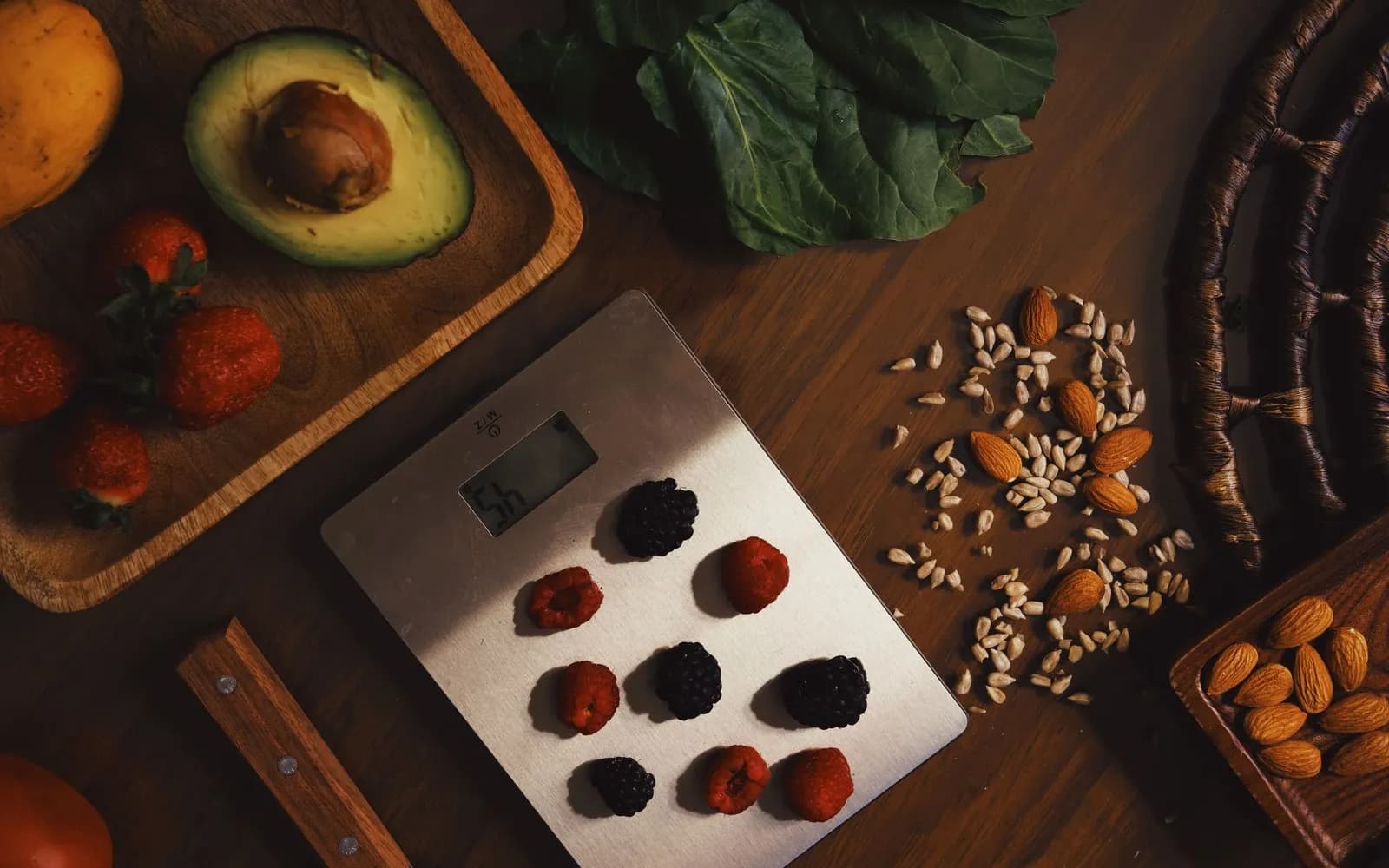
So weigh food before you cook it while you learn your portions. The NHS says you don’t have to do this forever.
| Count | For example |
|---|---|
| Drinks | Alcohol, fizzy drinks and juices |
| Cooking fats | The oil and spreads you cook with |
| Toppings | Cheese or yoghurt on top or on the side |
| Sauces | Mayo and ketchup |
Source: NHS Better Health
The NHS says alcohol is high in calories. If you drink, see the lowest calorie alcoholic drinks.
Where do I cut 600 calories a day?
Spread it across the day. You don’t have to change everything at once, the NHS says.
| Meal | Cut | How |
|---|---|---|
| Breakfast | About 100 | Weigh cereal. Skip jam and chocolate spreads. |
| Lunch | About 200 | Check labels on shop-bought food. Drink water or sugar-free drinks. |
| Dinner | About 200 | Limit ready meals and takeaways. Cook from scratch. |
| Snacks | About 100 | Swap crisps and chocolate for fruit or plain popcorn. |
Source: NHS Better Health
Pick the meal where your diary shows the most room. For ideas, try the 7-day weight loss meal plan or these high protein, low calorie meals.
Is 1,200 or 1,500 calories too low?
The NHS gives a cut, not one number for everyone. But NICE, which writes guidance for the NHS, draws a line at 1,200.
NICE calls 800 to 1,200 a day a low-calorie diet. It says to consider one only with long-term support from a specialist weight service (or a service for long-term conditions like type 2 diabetes). It’s for adults living with obesity, or with overweight and type 2 diabetes.
- Below 800 calories a dayNICE: very low calorie. Specialist service only.
- 800 up to 1200 calories a dayNICE: low calorie. Specialist support, 12 weeks at most.
- Above 1200 calories a dayNHS: about 600 less than you eat now.
Sources: NICE NG246; NHS Better Health
Under 800 is very low calorie. NICE keeps it for people living with obesity whose doctor has checked they need to lose weight fast, such as to make surgery safer.
If cutting 600 would take you to 1,200 or less, ask a GP or dietitian first. See is a 1,200 calorie plan safe.
Why has my weight loss slowed down?
Partly because you use less energy as you get lighter. Researchers say the old ‘3,500 calories per pound’ rule ignores how the energy you use changes, both at rest and when you move.
In their computer model, a 100 kg man who moved little cut 480 calories a day. He lost weight more and more slowly. It took about a year to lose half of what he’d lose in total, and he levelled off at about 75 kg.
But in the model, that slowing took years. The same researchers say a stall after 6 to 8 months is more likely because eating has crept back up. So if your weight stops falling, count a typical day again.
That’s a model of one inactive man, not a promise. The NHS says to aim for 0.5 to 1 kg a week and weigh yourself regularly. See how much weight you can lose in a month.
Your calorie counting checklist
- Count one typical day of food and drink, including drinks, oils, toppings and sauces.
- Cut around 600 calories a day from that total.
- Weigh food before you cook it while you learn your portions.
- Check labels for calories (as kcal) per 100g, per 100ml or per portion.
- Weigh yourself regularly. Aim to lose 0.5 to 1 kg a week.
- If your weight stops falling, count a typical day again.
Sources: NHS Better Health; NHS
When to speak to a GP
Talk to a GP before you start if you have a medical condition or a special diet for your health. The same goes if you have an eating disorder, or have had one. Also book an appointment if:
- Your BMI (your weight compared with your height) is overweight or obese and you want help to lose weight, your waist is more than half your height, or obesity runs in your family. See what your BMI means.
- Your BMI is overweight or obese and you have pre-diabetes, diabetes, high blood pressure, joint pain, high cholesterol, sleep apnoea (breathing that stops and starts as you sleep) or heart and blood vessel disease.
- You want to try 1,200 calories a day or less.
- You keep losing weight without changing your diet or exercise. See a GP as soon as possible if you also have other symptoms.
- You have, or think you may have, an eating disorder, such as binge eating. Signs include eating very little food or exercising too much. See a GP as soon as you can. The Beat helpline is 0808 801 0677.
A GP can refer you to weight management programmes, medicines or surgery. Compare options in weight loss programmes. Never stop or change a prescribed medicine without your prescriber.
Pregnant with a BMI of 30 or above? The NHS says do not try to lose weight during your pregnancy.