High protein low calorie meals and foods
Build each meal on white fish, prawns or skinless chicken breast. Each gives over 20 g of protein per 100 calories. But peanuts and cheddar give only 5 or 6, despite being high in protein.
On this page
Which foods are high in protein and low in calories?
White fish, prawns, tuna in brine, skinless chicken or turkey breast and egg whites. Each gives over 20 g of protein for every 100 calories, worked out from the UK food tables.
Protein per 100 calories works like the price per kilo on a shelf label. It lets you compare a tin of tuna with a bag of peanuts fairly.
| Food | In 100 g | Protein per 100 calories |
|---|---|---|
| Egg white, boiled | 13 g protein, 52 calories | 25 g |
| Cod, baked | 23.9 g protein, 100 calories | 24 g |
| King prawns, cooked | 16.2 g protein, 68 calories | 24 g |
| Tuna in brine, drained | 24.9 g protein, 109 calories | 23 g |
| Turkey breast, grilled | 35 g protein, 155 calories | 23 g |
| Chicken breast, grilled, no skin | 32 g protein, 148 calories | 22 g |
| Quark | 14.6 g protein, 74 calories | 20 g |
| Quorn pieces | 14 g protein, 73 calories | 19 g |
| Extra lean beef mince, cooked | 24.7 g protein, 137 calories | 18 g |
| Reduced fat cottage cheese | 10.6 g protein, 68 calories | 16 g |
Source: CoFID (UK food tables)
Lowest calorie protein? Egg whites. 100 g gives 13 g of protein for just 52 calories.
Put two foods from the list on this week’s shopping list. Seven meals built on them, all under 350 calories, are further down. For the portion that gives about 20 g of each, see high protein meals for weight loss.
Which protein foods are higher in calories?
The ones with more fat. On UK labels, fat counts as 9 calories a gram and protein as 4. So a little fat adds up fast.
| Food | In 100 g | Protein per 100 calories |
|---|---|---|
| Chicken breast, grilled, with skin | 28.9 g protein, 173 calories | 17 g |
| Tinned pink salmon in brine | 23.6 g protein, 138 calories | 17 g |
| Tuna in sunflower oil, drained | 25.4 g protein, 159 calories | 16 g |
| Tofu, steamed | 8.1 g protein, 73 calories | 11 g |
| Whole egg, boiled | 14.1 g protein, 143 calories | 10 g |
| Edamame beans, boiled | 12.2 g protein, 142 calories | 9 g |
| Red lentils, boiled | 8.1 g protein, 102 calories | 8 g |
| Baked beans | 5 g protein, 81 calories | 6 g |
| Cheddar | 25.4 g protein, 416 calories | 6 g |
| Peanuts, plain | 25.8 g protein, 564 calories | 5 g |
Source: CoFID (UK food tables)
That’s the catch: peanuts and cheddar are high in protein, but not low in calories.
Two easy swaps: tuna in brine, not oil, saves about 50 calories per 100 g. Taking the skin off chicken breast saves about 25.
None of these are bad foods. The NHS says beans and lentils are low in fat and a good swap for meat. It also advises at least 2 portions of fish a week, including 1 of oily fish, like salmon.
Plain Greek-style yoghurt is another one. UK tables give it 5.7 g of protein and 133 calories per 100 g. Fat-free pots differ, so check the label.
Easy low calorie high protein meals
Each meal gives about 30 g of protein or more. That’s the at least 25 to 30 g a meal a review of weight-loss studies suggests.
| Meal | What’s in it | Rough total |
|---|---|---|
| Breakfast: quark and raspberries | 200 g quark, 100 g raspberries | About 175 calories, 30 g protein |
| Breakfast: egg white omelette | 2 medium eggs (about 100 g), 100 g egg white, 80 g spinach, no oil | About 210 calories, 29 g protein |
| Lunch: tuna jacket potato | 180 g baked potato, 100 g tuna in brine, 100 g lettuce and cucumber | About 295 calories, 30 g protein |
| Lunch: prawn salad | 150 g cooked king prawns, 100 g lettuce and cucumber, 1 slice wholemeal bread | About 200 calories, 29 g protein |
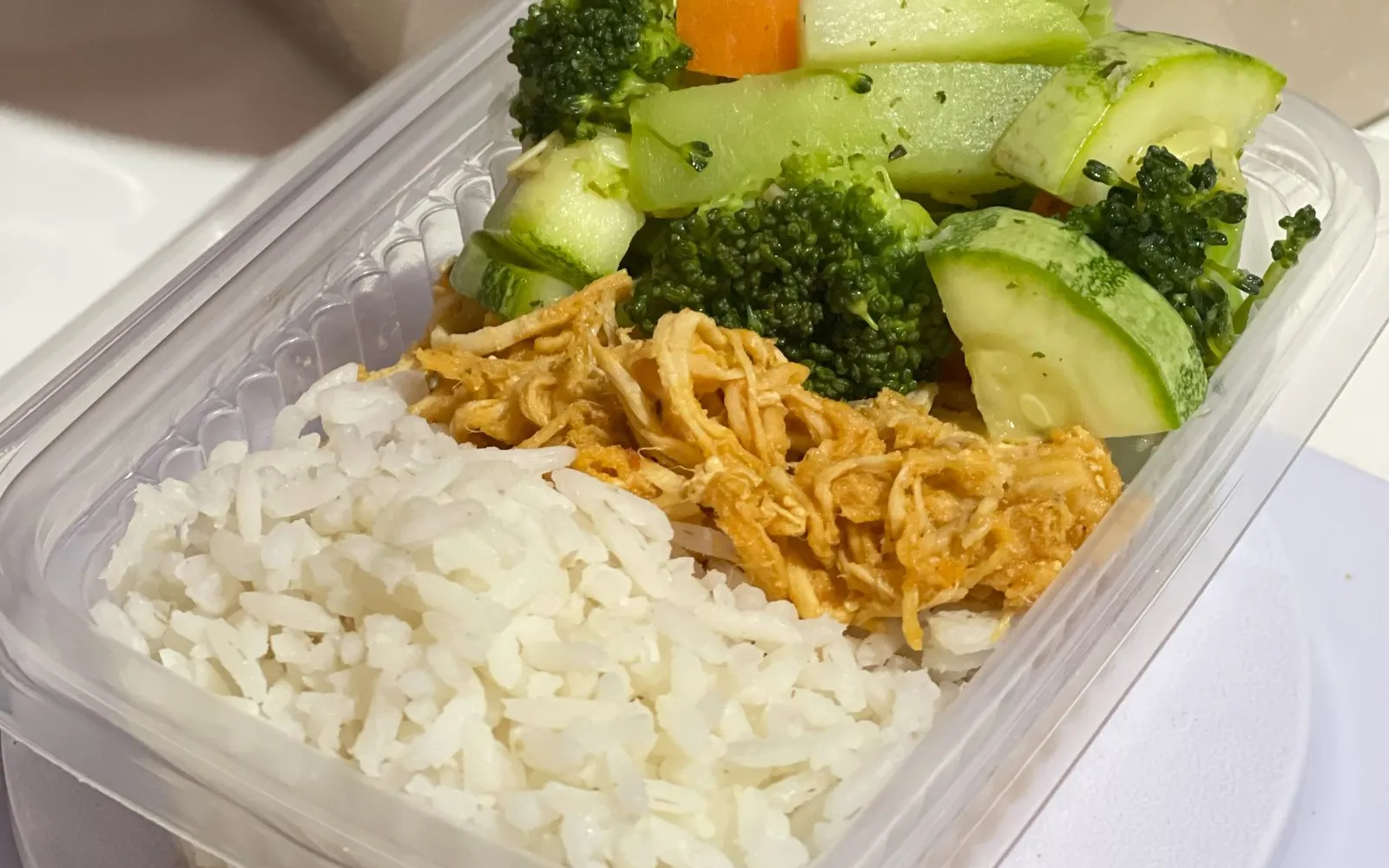
| Dinner: chicken and rice | 100 g grilled chicken breast, 150 g broccoli, 100 g cooked brown rice | About 320 calories, 41 g protein |
| Dinner: baked cod | 150 g baked cod, 200 g new potatoes, 100 g green beans | About 310 calories, 42 g protein |
| Dinner: Quorn and lentil chilli | 100 g Quorn pieces, 200 g cooked red lentils, 200 g tinned tomatoes, 50 g onion | About 330 calories, 33 g protein |
Source: CoFID (UK food tables)
Totals leave out oil, butter, mayo and sauces. Cook with little or none, and add them to your count if you use them.
For a snack, 150 g of reduced fat cottage cheese gives 16 g of protein for about 100 calories.
Pick one breakfast, one lunch and one dinner, and shop for three days. More ideas are in high protein lunches for work and high protein breakfasts.
How much protein and how many calories do I need?
To stay a healthy weight, the NHS gives an average of 2,000 calories a day for women and 2,500 for men. To lose weight, it says cut around 600 calories a day.
Where the NHS suggests finding your 600 calories
- 1
Breakfast
Cut about 100. Weigh your cereal.
- 2
Lunch
Cut about 200. Check labels, drink water.
- 3
Dinner
Cut about 200. Cook from scratch more.
- 4
Snacks
Cut about 100. Swap crisps for fruit.
Source: NHS
For protein, the UK reference is 0.75 g per kg of body weight a day. That’s about 56 g a day for a 75 kg man and 45 g for a 60 kg woman. On average, we already eat more.
While cutting calories, a review suggests 1.2 to 1.6 g per kg. In trials on the same calories, more protein gave 0.79 kg more weight loss over about 12 weeks. The authors called it modest.
Work out your own grams in how much protein to lose weight.
How do I make a high protein low calorie diet plan?
Start with your plate. The BDA (British Dietetic Association) says fill half with vegetables or salad. Split the rest between protein and starchy carbs.
Six steps for a high protein low calorie diet plan
- Build each meal around one food from the low calorie protein list.
- Fill half your plate with vegetables or salad, and serve smaller portions of everything else.
- Take the skin off chicken and turkey, and grill rather than fry.
- Choose tuna in brine, not oil.
- Swap some meat for beans, lentils or Quorn, and count their calories.
- Check the calories per 100 g on the label, not just the word protein.
Sources: BDA; NHS meat; NHS Eatwell; NHS labels; CoFID
Why the label? A food can say high protein if at least 20% of its calories come from protein. So a 250 calorie bar with 13 g of protein qualifies.
See how to pick a protein bar.
Healthy food still counts too. The NHS says eating more calories than you need, even from healthy foods, can make you gain weight.
When to speak to a GP
Speak to a GP or your care team if:
- You keep losing weight without changing your diet or exercise routine. The NHS says see a GP.
- You’re losing weight without trying and have other symptoms. See a GP as soon as possible.
- You have kidney disease. NICE says advice on calories, salt and other nutrients should match how severe it is, so ask your kidney team first.
- You want to eat only 800 to 1,200 calories a day. NICE says consider this only with long-term support from a specialist weight service. See the 1,200 calorie plan guide.
NICE also advises against restrictive diets that are nutritionally unbalanced. They don’t work in the long term and can be harmful.