Short bouts of exercise
Exercise snacks: can short bursts improve fitness?
On this page
Twenty seconds of stairs sounds easier to fit in than a workout. But in the study behind that headline, people warmed up first, recovered afterwards and repeated the climb across the day for six weeks. The hard seconds were only part of the commitment.
An exercise snack can be a useful way to fit training into a busy day, but the name tells you little about the exercise. Twenty seconds of vigorous stair climbing, a minute of squats and a gentle walk place different demands on the body. The result depends on the activity, effort, frequency and person doing it.
For someone struggling to find an uninterrupted hour, the useful question is what can fit into smaller opportunities while still providing appropriate exercise. It does not have to involve racing up stairs.
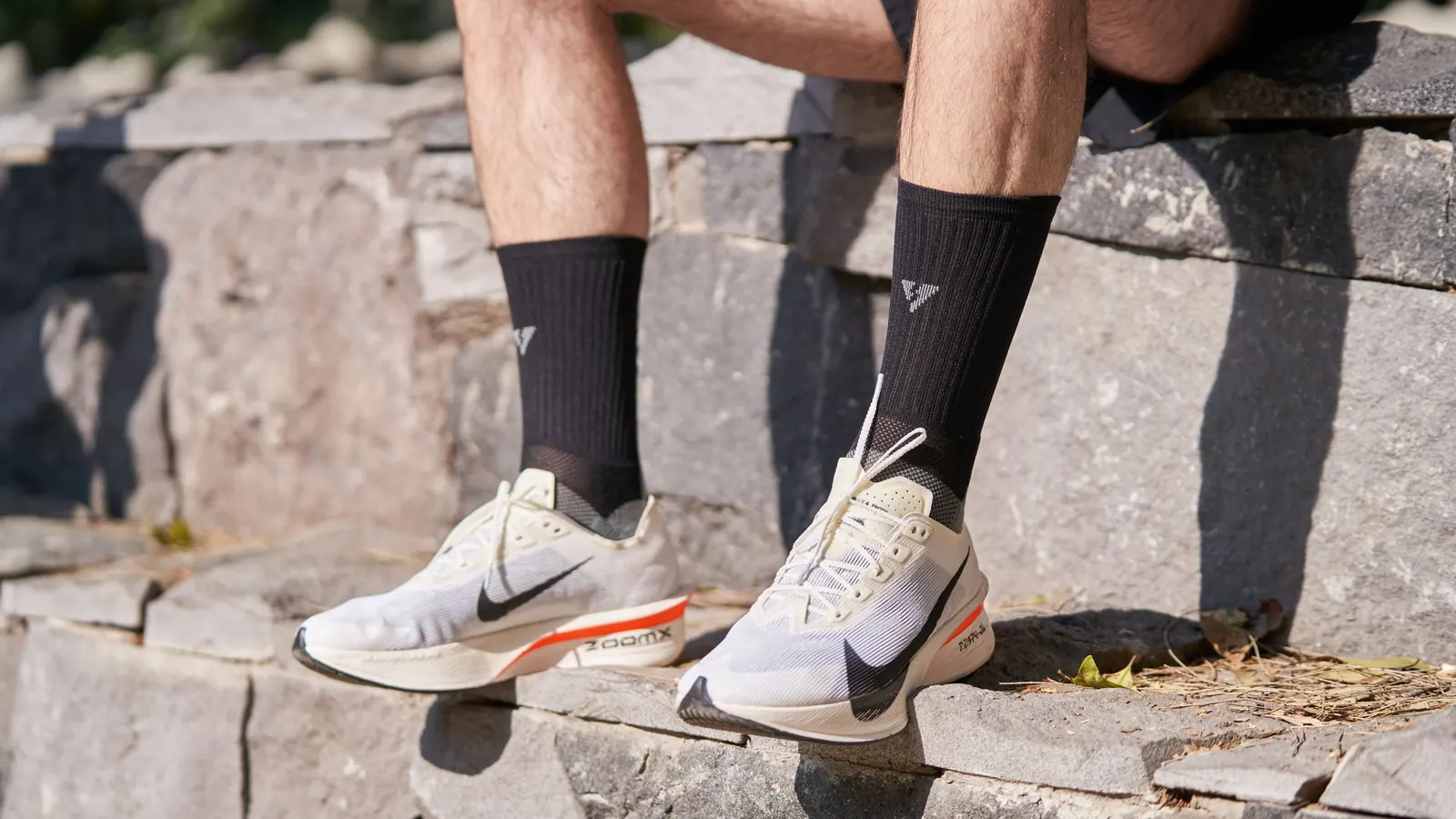
What could you fit into a normal day?
The NHS walking guide says a daily ten-minute brisk walk can build stamina and contributes to the recommended weekly activity. People who are less active should increase walking distance gradually. This offers a more accessible starting point than copying the vigorous staircase experiment.
Suppose you already walk comfortably and have a reliable lunch break. You could choose a familiar, level route and allow time to start comfortably, include a brisk section and finish without rushing back to work. Use the talk test to describe the effort. This is an example of organising official walking advice, not a tested new protocol or a promise of the stair trial's 5% gain.
Record what actually happened: 'Ten brisk minutes on Monday, Wednesday and Friday; talking possible, singing difficult; enough time to return.' That tells you more than 'three snacks'. If interruptions meant only one walk happened, the first problem to solve is the opportunity, rather than the speed.
If the arrangement works, you can plan how it contributes to the rest of the week. Three ten-minute walks amount to thirty minutes; they do not by themselves meet the adult target of 150 moderate minutes or 75 vigorous minutes. The NHS recommendations also include strengthening the major muscle groups on at least two days. Aerobic minutes do not automatically cover that requirement.
Our guide to aerobic intensity explains how to use effort and the talk test without treating a watch's zone label as a diagnosis. For organising resistance work across the week, the two-day strength guide provides a separate framework. It is not the one-minute programme from the studies discussed later.
Does a movement break count as training?
Some experiments examine a single day rather than adaptation over several weeks. In two crossover experiments, researchers compared nine hours of sitting with a day containing eight hourly stair bouts lasting fifteen to thirty seconds. Twelve healthy-weight young men and eleven adults with overweight or obesity took part in separate experiments.
In the latter group, total insulin response was about 16.5% lower during the stair-break day, but total glucose response was not significantly different. The healthy-weight experiment found no significant differences in the measured metabolic outcomes. This was an acute response to activity and meals, not evidence of lasting fitness improvement or diabetes prevention.
The July 2026 UK Chief Medical Officers' update reinforces the value of moving from inactivity to some activity, including light movement. You can therefore have a good reason to leave your chair without calling the break a complete workout.
At the same time, an activity need not be exhausting to count as aerobic exercise. The NHS describes moderate intensity as effort that raises breathing and heart rate while allowing you to talk, but not sing. Vigorous activity leaves room for only a few words between breaths. Being able to converse does not make a walk pointless for fitness.
Short efforts and movement breaks are different
Exercise snacks
Brief bouts that can be deliberately demanding.
Movement breaks
Opportunities to interrupt sitting and move around.
What did the 20-second stair study really involve?
The 2019 stair-climbing trial involved 24 healthy, inactive young adults. Twelve trained by climbing 60 steps vigorously three times a day, with one to four hours between climbs, on three days a week for six weeks. The average ascent took 22 seconds in the first week and 20 in the sixth.
The sessions were supervised and participants had familiarisation. Before each climb they did ten jumping jacks, ten air squats and five lunges per side; afterwards they walked on level ground for a minute. The advertised twenty seconds described the climb, not the whole session.
Peak oxygen uptake rose from 1,834 to 1,918 millilitres per minute in the training group, roughly 5%, while the control group's average fell. Peak oxygen uptake measures the body's capacity to use oxygen during demanding exercise. This was a modest training-group gain in a small, young sample, rather than a promised benefit for anyone taking the stairs.
The preparation and spacing matter when interpreting the headline. Three supervised climbs spread through a day for six weeks are a different exposure from one hurried flight on the way to a meeting.
Why did another short-bout programme fail to improve fitness?
In a 2025 trial, 77 inactive adults, averaging 54 years old, followed online bodyweight-exercise or stretching videos for twelve weeks. They were asked to complete at least three bouts a day on at least three days a week.
The exercise menu included marching, step-ups, jumping jacks, lunges, squats, mountain climbers and squat thrusts. Bouts lasted sixty seconds in weeks one to four, forty-five in weeks five to eight and thirty in weeks nine to twelve as the intended difficulty increased. Participants chose their pace.
Despite the intended vigorous effort, average reported exertion was only three out of ten. The exercise group had no clear advantage in aerobic fitness: the difference in change in relative peak oxygen uptake was 0.4 mL/kg/min, with a 95% confidence interval from −0.6 to 1.4. Blood markers did not show an advantage either.
Insufficient effort is a plausible explanation, but the trial did not isolate it as the cause. Compared with the stair trial, age, activity, supervision and dose also differed. The result does not establish that bodyweight exercise inherently fails.
For a reader, this distinction prevents an easy mistake: counting completed bouts as if that also measured improvement. Following a routine is one outcome. Becoming fitter is another. Both deserve attention, particularly when a convenient programme is being sold with a specific health promise.
How much work did the newer programmes add up to?
A July 2026 trial studied a programme in adults with type 2 diabetes who were not using insulin. Sixty-nine participants started four one-minute bouts a day on at least five days a week for twelve weeks, or a mobility-and-stretching comparison. Exercises included squats, lunges and step-ups, adapted to limitations, with support calls.
The main purpose was to establish feasibility. A secondary result favoured exercise by 1.9 repetitions on a thirty-second sit-to-stand test, with a 95% confidence interval of 0.3 to 3.4. Changes in HbA1c and estimated aerobic fitness did not show an advantage. The physical-performance result was preliminary; several secondary outcomes were tested without adjustment for multiple comparisons.
A September 2026 trial assigned sixty inactive women aged eighteen to twenty-five to resistance-exercise snacks or their usual lifestyle. The programme lasted eight weeks and totalled seventy-five minutes a week: eleven one-minute bouts on weekdays and ten on weekend days, separated by at least thirty minutes, at a target effort of seven out of ten or higher.
The movements included squats, jumping jacks, wall sits, squat jumps and lunges. Squat repetitions to failure rose from about 28 to 33 in the exercise group, compared with about 26 to 28 in controls, with a statistically significant difference in the pattern of change. Other strength and endurance tests also improved. The study was retrospectively registered and involved a narrow population.
That is a considerable amount of repeated work, despite its division into one-minute pieces. It helps explain why an occasional squat and a structured programme should not inherit the same claim. The studies measured particular fitness and performance outcomes; they did not test whether exercise snacks extend life.
Choose the activity, then make room for the whole session
Before adding more bouts, decide what you want them to achieve. An interruption to sitting can be short and comfortable. An aerobic plan needs appropriate effort and accumulated activity. A strength plan needs suitable movements, resistance and progression. Giving each activity a purpose makes it easier to judge whether the week contains what you intended.
Do not count only the hard seconds when planning your diary. Preparation, learning a movement and recovery take time too. If a research programme required supervised practice or repeated support, those details belong in your assessment of whether it is realistic at home.
NHS activity guidance advises speaking to a GP first if you have been inactive for some time or have medical conditions or concerns. Match activity to your fitness. Someone using insulin cannot take a trial that excluded insulin users as their personal exercise or medication plan.
Stop for concerning symptoms rather than trying to complete a target. NHS chest-pain advice says to call 999 for sudden chest pain that does not go away, pain spreading to an arm, neck, jaw, stomach or back, or chest pain with sweating, sickness, light-headedness or breathlessness.
Keep longer walks, swims or gym sessions that already suit you. Small bouts are most useful when they make appropriate activity possible in time you otherwise struggle to use. The name matters less than the exercise you actually do.