Starting strength training
Strength training at home: how to organise your first two sessions
On this page
A chair, a wall and a dumbbell can leave you with the same question as a fully equipped gym: what should I actually do? This guide gives you one session to repeat twice in your first week, with instructions for each movement and a way to judge when it is getting too easy.
The routine covers pushing, pulling, legs, hips and trunk control. Start by learning the movements, then add resistance and working sets as they become familiar.
This is an introductory example for a generally healthy adult. If an injury, operation or medical condition limits exercise, use the plan agreed with your treating professional.
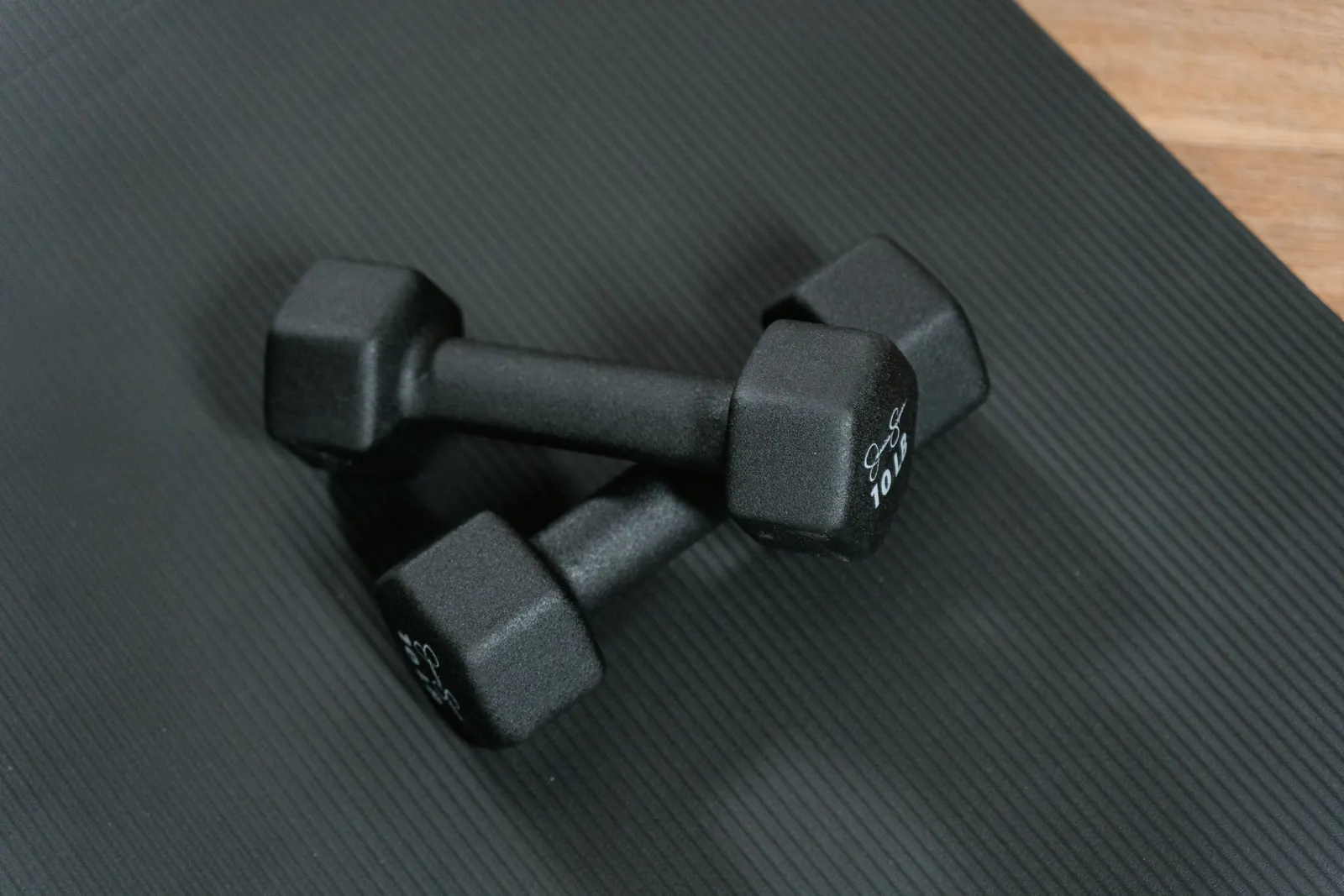
Your first home strength session
Work through these movements in this order on both days:
- Chair sit-to-stand for the legs.
- Wall press-up for a pushing movement.
- Dumbbell row for a pulling movement.
- Bridge for the hips.
- Beginner bird dog for trunk control.
- Supported calf raise if you want to include direct calf work.
On your first exposure, practise one easy set of each suitable movement. Five controlled repetitions is a workable rehearsal for the chair rise, press-up, row and calf raise; try three comfortable bridge holds and one arm or leg lift on each side for bird dog. Use these counts to organise practice; reduce them if you cannot keep the movement comfortable and controlled.
Once the movements are familiar, build towards two working sets of the chair rise, press-up and row. An example working range is eight to twelve controlled repetitions per set. For the bridge and bird dog, begin with the short holds described below and repeat only while you can maintain the position and breathe normally. Their purpose here is learning control; do not force them into a repetition target designed for lifting weights.
Allow about one to two minutes between working sets as an initial practical arrangement, extending the break if you need it to repeat the movement well. Take longer when you need it. Finish the exercise before moving on, rather than turning the whole session into a race against a timer.
Set up the space and choose your days
NHS adult activity guidance recommends strengthening the legs, hips, back, abdomen, chest, shoulders and arms on at least two days each week. Aerobic activity remains part of the recommendation too. Strength sessions complement walking, cycling or swimming rather than replacing them.
For example, choose Monday and Thursday. Mayo Clinic's weight-training guidance advises avoiding strength work for the same muscles on consecutive days and beginning with five to ten minutes of aerobic warm-up. Walking or another familiar easy activity can provide that warm-up.
Reserve roughly half an hour to forty-five minutes for this session, including learning the movements and resting. That is a planning allowance, not an exercise target. Your first attempt may take longer because you are reading instructions; a later session may fit comfortably into a shorter appointment.
Set out a firm chair without wheels, a clear wall, a light dumbbell and a comfortable floor space or mat. Check that the chair cannot slide and that you can get down to the floor and stand again safely. Watch the linked demonstrations before starting, rather than trying to follow a tiny moving image while holding a weight.
From your first session to your next
- 1
Learn the movements
Use an easy rehearsal to practise control.
- 2
Repeat the same session
Keep the exercise and equipment consistent.
- 3
Record what happened
Note each set and the next small decision.
How to do each exercise
Chair sit-to-stand and wall press-up
For the chair rise, sit near the front with feet about hip-width apart. Lean slightly forward, stand under control, then sit slowly. For the press-up, place your hands on a wall at chest height, keep your back straight, bend your arms with elbows beside you, then press back. The NHS illustrated guide shows both movements and provides gentle starting counts.
A wall press-up may already be challenging, while another person's bodyweight version may be very easy. Treat that difference as information about the starting exercise. If you finish the whole working range with many repetitions still available, you will eventually need more resistance or a suitable harder variation rather than merely repeating an effortless task.
Dumbbell row
Mayo's row demonstration shows a standing position with knees slightly bent and a forward hinge at the hips. Keep the abdomen engaged and spine neutral. Let the weight hang below the shoulder, draw the elbow back until it is just below shoulder level and parallel with the spine, then lower slowly. Avoid rolling the shoulder forward.
Perform the same chosen number on each side. Pick a light weight while learning the position, and keep the movement controlled instead of swinging the weight upward. If you cannot comfortably maintain the standing hinge, ask for an appropriate supported alternative; do not improvise support on furniture whose stability you have not checked.
This is the pulling movement missing from many home routines made entirely of squats, press-ups and curls. Keep it in the session rather than replacing it with extra curls simply because those feel more familiar. The arm bend is only one part of what the exercise asks you to control.
Bridge and beginner bird dog
For the bridge, lie on your back with knees bent. Keep the back neutral, engage the abdomen and lift the hips until knees, hips and shoulders line up. Hold for three deep breaths, then lower. For beginner bird dog, start on hands and knees with a neutral back and head. Lift one arm, hold for three deep breaths, then lower; practise with the other arm and each leg separately. Mayo's illustrated core guide shows these positions and a harder bird-dog version lifting opposite arm and leg together.
For this introductory session, repeat the bridge three times and work once through each individual limb lift, resting as needed. You can add another controlled round when that is comfortable. These holds are practice for learning the position. Keep breathing rather than turning a brief hold into a prolonged strain.
If floor work is impractical, the NHS strength page includes a standing backward leg lift while holding a chair. It is a possible starting exercise to discuss, not an exact substitute for all the hip and trunk work above. Choose an accessible plan instead of repeatedly attempting an unsafe transfer to the floor.
Supported calf raise
Hold a stable chair and slowly lift and lower both heels. The NHS guide begins with five repetitions. Keeping support available is sensible when learning; making a strength movement less stable is not the only way to develop it. If steadiness is a separate concern, the balance-practice guide addresses that directly.
How demanding should a working set feel?
The 2026 ACSM position stand brings together 137 reviews covering more than 30,000 participants. It recommends at least two sets per exercise, while acknowledging uncertainty about the optimum. Training to momentary failure did not improve the reviewed outcomes; the authors propose about two or three repetitions in reserve as one way to achieve enough effort.
In ordinary terms, finish a familiar working set when it is demanding but you estimate you could still complete two or three more repetitions with the same technique. This is a judgement, not a measurement. You do not have to attempt the extra repetitions to establish that the set counted.
Use the cue after you have learned the movement. At the first session, remembering the position may be the main challenge. As familiarity improves, distinguish an exercise that requires concentration from one that also makes the muscles work hard. A light rehearsal can be useful without being the long-term working dose.
If you can comfortably complete twelve repetitions and could do many more, keep the movement controlled and make a note to adjust the challenge. If you cannot reach eight without losing control, use an easier suitable version or less weight for this example. The range helps organise a decision; it does not overrule discomfort or poor technique.
What changes at the second session?
Repeat the same menu with the same equipment. If the first session was mainly rehearsal, the next can establish which movements are ready for working sets. You might perform two sets of chair rises and rows while continuing to practise the bridge with a few holds. Different exercises can progress at different rates.
Write down the actual result, including each set. For example: row, same dumbbell, eight repetitions on each side in the first set and seven in the second; stopped because the position became difficult to maintain. That entry points to repeating or adjusting the current work. Writing only 'sixteen rows' would hide what happened.
Once both sets reach the top of your range with consistent technique and a little capacity remaining, reproduce that performance on another occasion before trying a small increase in resistance. Return towards the bottom of the range with the new weight. Our guide to adding repetitions or weight explains that practical progression rule, including what to do when the next available dumbbell is too heavy.
For bodyweight movements, record the exact variation. 'Press-up, wall version' and 'press-up, floor version' are different exercises for comparison purposes. Do not silently change the movement and interpret a lower repetition count as lost fitness. If you want help choosing a harder variation, a specific technique question is more useful than asking for an entirely new programme.
Make the third session easy to return to
A missed session does not require doubling the next one. Move the appointment to another suitable day or resume your usual schedule. If the sessions repeatedly fail to fit, shorten the setup or choose better times before buying more equipment. The question is whether this routine can become part of a normal week.
Mayo's technique advice recommends controlled movement, continued breathing and stopping an exercise that causes pain. Do not count painful repetitions as successful progression. If an exercise repeatedly causes difficulty, get advice on that movement rather than abandoning every form of strength work.
Soreness is also a poor target for planning the next session. Record it if it affects normal activity, but judge the routine through the work you can repeat and gradually develop. The separate guide to soreness and training progress explains what soreness can and cannot tell you.
After the first two sessions, keep the exercise list somewhere you will use it. Beside each movement, write the equipment, the result and the next small decision. That is enough information to return to the third session with a plan, while leaving room to adjust the routine as your strength and confidence grow.