Flaxseed oil: what’s in it, and does it work?
About 7 g of plant omega-3 per tablespoon. But none of it is the kind in fish. And in trials, the oil didn’t lower cholesterol. Something else from the same plant did.
On this page
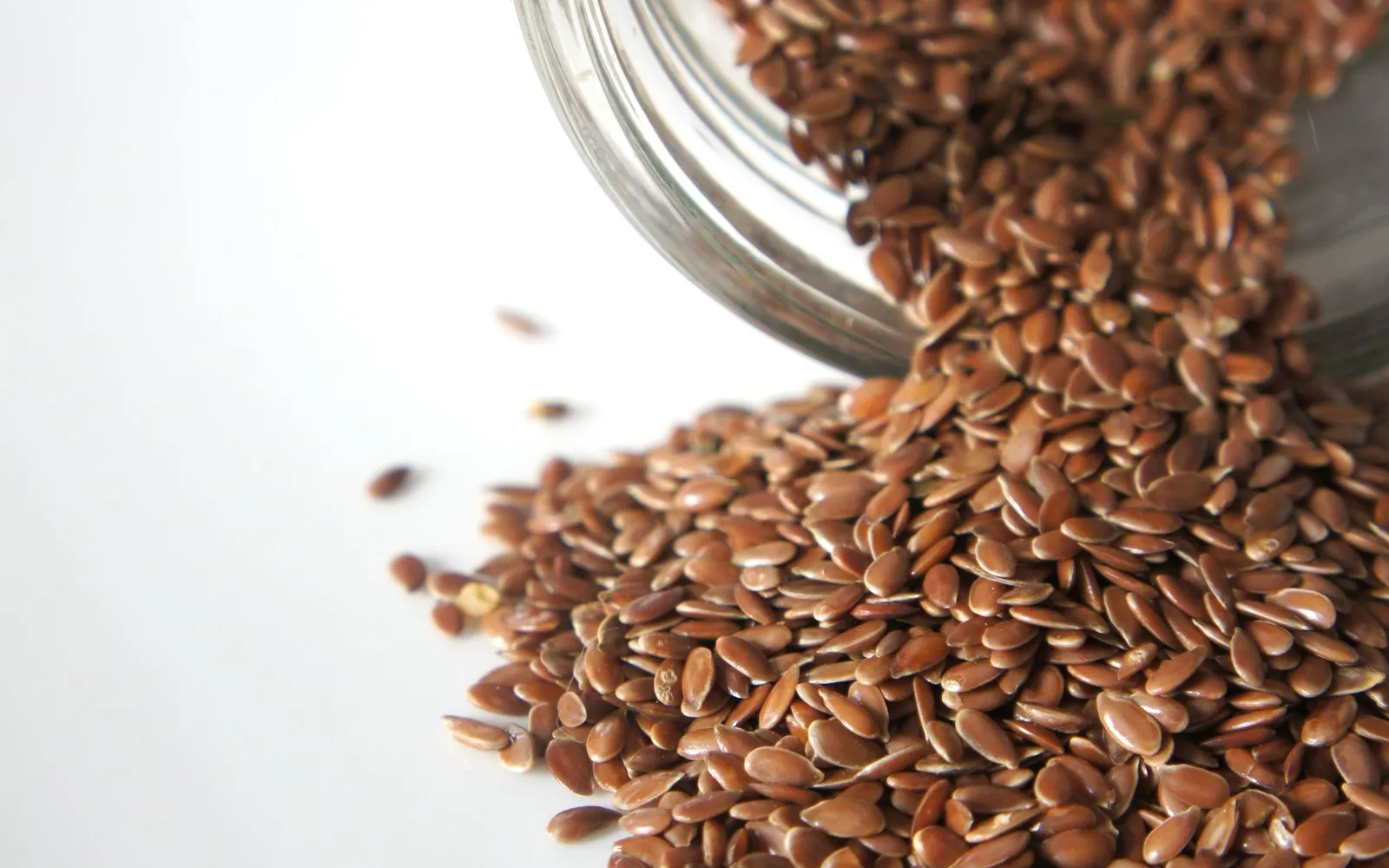
How much omega-3 is in flaxseed oil?
A lot. One tablespoon of flaxseed oil, also called linseed oil, has about 7.3 g of omega-3, going by US food records.
All of it is ALA, the plant kind. The same records list no EPA or DHA, the two kinds found in oily fish.
| Food | Serving | Plant omega-3 (ALA) |
|---|---|---|
| Flaxseed (linseed) oil | 1 tbsp | About 7.3 g |
| Walnuts | 28 g (about 7 nuts) | About 2.5 g |
| Ground flaxseed | 1 tbsp | About 1.6 g |
| Rapeseed oil | 1 tbsp | About 1.3 g |
Sources: USDA: flaxseed oil; USDA: walnuts; USDA: ground flaxseed; USDA: rapeseed oil
These are US figures, worked out per serving. A tablespoon of the oil is also about 120 calories.
The NHS lists flaxseed (linseed) oil as an omega-3 source for vegetarians. So it’s a fair way to get plant omega-3. Just know what kind you’re buying.
For other plant and fish sources, see omega-3 foods.
Is flaxseed oil as good as fish oil?
No, not gram for gram. Your body can turn some ALA into EPA and DHA, but the BHF says only in small amounts. The BDA says it happens slowly.
From flax oil to the fish kinds, each step makes less
- 1
ALA
What flax oil gives you.
- 2
EPA
Your body makes some. Limited in men, more in women.
- 3
DHA
Very little gets this far.
Sources: BHF; Burdge and Calder 2005
Think of ALA as money in a foreign currency. Your body can change it, but at a poor rate. So 7 g of ALA does not buy you 7 g of fish omega-3.
The NHS says plant omega-3 may not have the same benefits for heart risk as oily fish. If you take an omega-3 supplement, the BHF says to aim for about 450 mg a day of EPA and DHA. Flax oil has none, so it doesn’t count towards this.
Want the fish kinds? See omega-3 supplements, or vegan omega-3 for algae oil if you don’t eat fish.
Does flaxseed oil lower cholesterol?
Not in trials. A review of 28 trials found whole flaxseed cut total and bad (LDL) cholesterol a little. Flaxseed oil did not.
That’s the twist. The part that worked was the seed, not the oil.
| Flax product | Total cholesterol | Bad (LDL) cholesterol |
|---|---|---|
| Whole flaxseed | Down 0.21 mmol/L | Down 0.16 mmol/L |
| Flaxseed extract (lignan, a natural compound in the seed) | Down 0.28 mmol/L | Down 0.16 mmol/L |
| Flaxseed oil | No clear change | No clear change |
Sources: Pan 2009, 28 trials; Ahmadi-Khorram 2026, 36 trials
A newer review of 36 trials of the oil agrees. It found no clear effect on total or LDL cholesterol, and a small fall in triglycerides, another blood fat.
Flaxseed’s cholesterol-lowering effect was bigger in women, mainly after the menopause, and in people with high cholesterol to begin with. Cholesterol your reason? Read foods that lower cholesterol first.
What else is flaxseed oil good for?
Less than the claims suggest. Here’s what the evidence says for each claim you’ll see.
| Claim | What trials found |
|---|---|
| Heart health | More plant omega-3 may slightly cut heart and circulation problems. Probably little or no effect on deaths. |
| Blood pressure | Mixed. 5 trials in people with metabolic syndrome (a group of heart risk factors) found a fall. A wider review found none. |
| Weight loss | Flax oil doesn’t seem to help, says a US health agency. |
| Taking omega-3 as a supplement | Omega-3 supplements aren’t needed unless your doctor prescribes them, says the BHF. |
Sources: Cochrane 2020; Mahmudiono 2022; McNabb 2024; NCCIH; BHF
The heart finding comes from a Cochrane review of trials lasting a year or more. It covers plant omega-3 from any food, not flax oil alone. The evidence was low certainty.
In those 5 trials, top blood pressure fell by about 4 points (mmHg). A wider review of olive and flax oil in healthy and at-risk adults found no clear effect.
So use flax oil as a food you enjoy, not as a cure.
Is flaxseed oil safe?
It may be, in small amounts and for a short time. The US health agency NCCIH says flax oil may be safe in the short term, up to 6 months.
Higher doses may cause bloating, fullness and diarrhoea. It may also, in theory, clash with blood thinners (anticoagulant or antiplatelet medicines).
Eating the seeds? NCCIH says don’t eat raw or unripe flaxseeds, as they may contain harmful compounds.
Six ways to use flaxseed oil sensibly
- Count it as plant omega-3, not a swap for oily fish.
- If cholesterol is your reason, know that whole flaxseed lowered it in trials and the oil did not.
- Keep to small amounts, as higher doses may cause bloating, fullness and diarrhoea.
- Take blood thinners or any other medicine? Talk to your doctor before you start.
- Pregnant or breastfeeding? Little is known about its safety, so ask your midwife or GP first.
- Add the calories to your day: about 120 in each tablespoon.
Never stop or change a prescribed medicine without your prescriber. Wondering about other seed oils? See are seed oils bad for you.
When to speak to a GP
Get help if any of these apply:
- Call 999 if your lips, mouth, throat or tongue suddenly swell, or your throat feels tight. Call if you’re breathing very fast, or struggling to breathe or swallow. Call if your skin, tongue or lips turn blue, grey or pale. Call if you suddenly feel very confused, drowsy or dizzy, someone faints and can’t be woken, or a child is floppy or not responding like normal. Have an adrenaline pen or nasal spray? Use it straight away.
- You think you or your child may have a food allergy.
- You take blood thinners or any other medicine and want to try flaxseed oil. NCCIH says to talk to your doctor first.
- You’re pregnant or breastfeeding and thinking of taking it, as little is known about its safety.
Never stop or change a prescribed medicine without your prescriber.