How do I fix forward head posture and a neck hump?
Exercise it, little and often. In trials, exercise moved the head back and may ease neck pain. But some humps need a GP, not a stretch. Lost height is one clue.
On this page
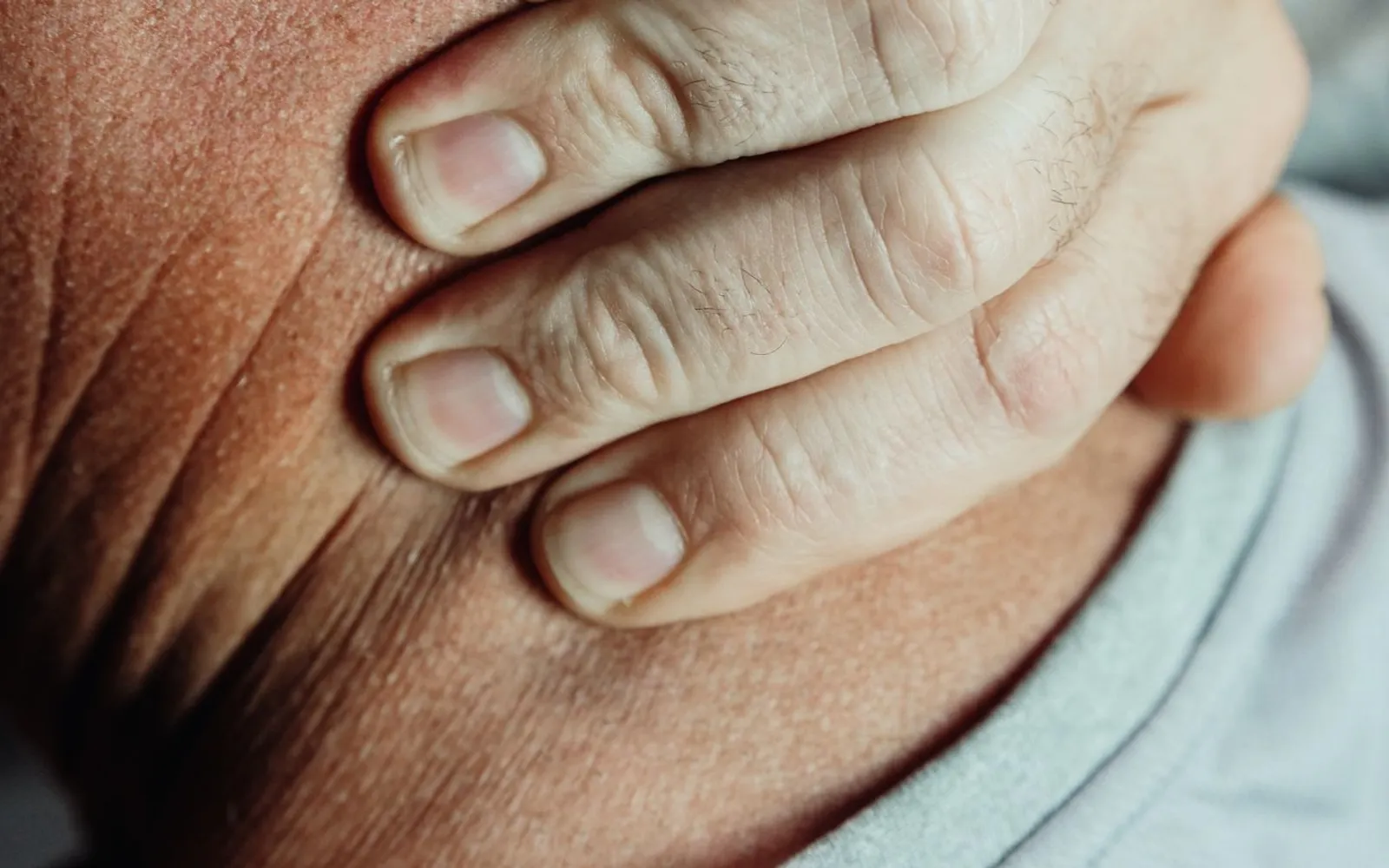
Can you fix forward head posture?
Exercise can help. Forward head posture means your head sits in front of your shoulders, so your neck tips forward.
A review pooled 7 trials in 627 people. Exercise made large changes in neck angle, the angle that shows how far your head pokes forward. The evidence for that was strong.
Exercise may also ease neck pain a moderate amount. That evidence was weaker.
| What trials measured | What exercise did | How sure |
|---|---|---|
| Neck angle (how far the head pokes forward) | Large change | Strong evidence |
| Neck pain | Moderate change | Moderate evidence |
| Angle of the head itself | No clear change | Moderate evidence |
Source: Sheikhhoseini 2018
Treat it like brushing your teeth: a little, often. NHS physios use the same rule, little and often.
Start with the chin tuck below, a few times a day.
What causes a hump on the back of the neck?
A rounded upper back is called kyphosis. The NHS says it’s often caused by bad posture or by the shape of your spine.
| Cause | What happens | Who or clue |
|---|---|---|
| Posture | Usually from bad posture. The most common type. | Often teenagers. |
| Wedge-shaped spine bones (Scheuermann’s) | The back of each bone grows quicker than the front. | Children. May get worse until they stop growing. |
| Broken spine bones (osteoporosis) | Weak bones squash down and stay that shape. | Lost height, back pain, a stoop. |
| Extra fat (Cushing’s syndrome) | Too much of the hormone cortisol. It’s rare. | Round red face, easy bruising. |
Sources: NHS: kyphosis; Royal Osteoporosis Society; NHS: Cushing’s
One clue is lost height. Some older people get a stooped posture when bones in the spine have broken, often from osteoporosis.
These breaks don’t always hurt, and the bones heal in their new, squashed shape. A stretch can’t undo that. A GP can check your bones, and medicines can lower the risk of more breaks.
Cushing’s is more likely if you take high doses of steroid medicines for a long time. Never stop or change a prescribed medicine without your prescriber. See high cortisol symptoms.
Neck hump and forward head posture exercises
These moves come from NHS physio sheets. A 2024 review of people with this head-forward, round-shouldered pattern found a mix of strength, stretching and shoulder work may help.
Five moves for your neck and upper back
- Chin tuck: sit up, squeeze your shoulder blades together and gently pull your chin in, eyes ahead. Hold 2 seconds, 10 times.
- Chin tuck and look down: keep your chin tucked and bend your head forward until you feel a stretch behind your neck. A mild to moderate dull ache is normal at first. Severe pain means you’ve gone too far.
- Chair stretch: sit on a high-backed chair and gently lean back over the top of it.
- Towel roll: lie on a rolled towel between your shoulder blades, hands behind your neck, and let your elbows open towards the floor.
- Posture reset: tuck your chin in, lift your chest bone up and forwards, and relax your shoulders.
Sources: NHS neck sheet; CUH NHS; UHS NHS
Do the neck moves little and often through the day. A mild to moderate dull ache is normal at first. Severe pain means you’ve gone too far.
For more upper-back strength, add rows from back strengthening exercises and moves from shoulder exercises.
Can exercise fix a hunched back (kyphosis)?
It may ease the pain and stiffness, but don’t expect the curve to vanish. The NHS says physio exercises help back pain and stiffness but will not improve the curve or stop it getting worse.
One trial found a small shift in adults aged 60 and over with a curve of 40 degrees or more. They did 1-hour classes with a physio 3 times a week for 6 months. Their curve ended 3 degrees smaller than in a group who had health talks instead, and they felt better about how they looked.
In adults 45 and over with a rounded upper back, a review found 8 of 13 studies saw at least one posture measure improve. The NHS also says strengthening your core can help.
What may happen if you see a GP about kyphosis
- 1
Specialist
A GP may refer you to a bone specialist.
- 2
Back check
They look at your back while you bend forward.
- 3
Scans
You may have an X-ray and an MRI scan.
- 4
Treatment
Physio and pain relief. Surgery if severe, worse or very painful.
Source: NHS: kyphosis
New to exercise, or not done any for a while? The NHS says to speak to a health professional first.
Does bad neck posture cause pain?
It’s linked, but not proven. Adults with neck pain had more forward head posture than adults without it. In teenagers, there was no clear link.
NHS physios at Cambridge say there’s no clear evidence bad posture causes pain, and no perfect posture. What matters most is how long you stay in one position.
So move often. The NHS says don’t keep your neck in one position for a long time at a desk. Sit upright, roll your shoulders back gently and bring your neck back.
At night, use a low, firm pillow and don’t sleep on your front. For a stiff back, try back exercises.
When to speak to a GP
Don’t try to work out the cause yourself. The NHS says to see a GP if you think you or your child might have kyphosis. Also book if:
- You’ve lost height, or have back pain you can’t explain or a curve that’s new. These can be signs of broken spine bones.
- Your back has changed shape, has a lump, or hurts between your shoulders. The NHS says see a GP.
- Neck pain hasn’t gone after a few weeks, or you get pins and needles or a cold arm. The NHS says see a GP.
- You have more fat on your neck and upper back plus a round red face or easy bruising, especially on steroids. These can be signs of Cushing’s.
Back pain and you feel hot, cold, shivery or unwell, or the pain is severe and started suddenly, or it’s getting worse fast? Call 111 or ask for an urgent GP appointment.
Call 999 or go to A&E if back pain comes with chest pain or starts after a serious accident. The same goes for pain, tingling, weakness or numbness in both legs. Or for numbness around your genitals or bottom, bladder or bowel changes, or changes in how sex feels, erections or orgasm.
Worried about your bones? See bone health blood results.