What are the best shoulder exercises with dumbbells?
Start with an overhead press, using dumbbells, water bottles or body weight, plus a side raise. One study found a standing dumbbell press worked shoulders hardest, with one catch. Shoulder hurts? Start gentle.
On this page
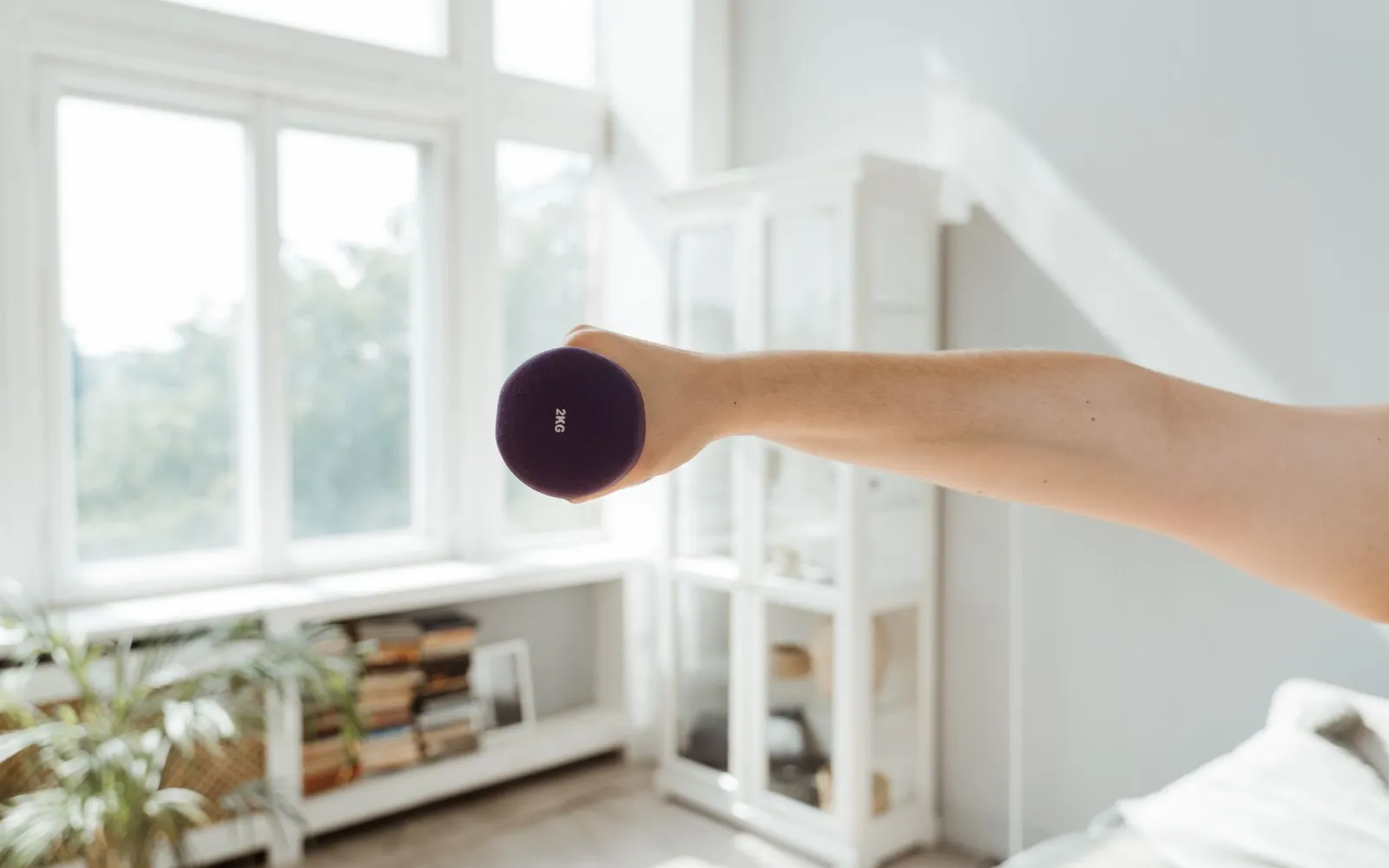
Which dumbbell shoulder exercises work best?
Three moves cover the whole shoulder. A press over your head, a raise out to the side and a raise for the back.
The NHS says adults should work all major muscles, including the shoulders, on at least 2 days a week.
| Move | What you feel | How |
|---|---|---|
| Overhead press | Your shoulders | Stand with the weights in front of your shoulders. Press up until they’re in line with your ears. Pause, then lower slowly. |
| Side raise (lateral raise) | The outside of your shoulders | Arms by your sides. Raise them out to the side without shrugging. |
| Prone T raise (lying face down) | The muscles around your shoulder blades | Lie face down, chest just off the end of a bench. Pull your shoulder blades back and lift your arms out into a T. |
Sources: The Prehab Guys; The Prehab Guys; The Prehab Guys
On the press, The Prehab Guys, physio educators, say don’t arch your lower back or swing the weights up. Keep your elbows from flaring out wide.
On the T raise, keep your chin tucked so your neck doesn’t arch. Try all three moves on 2 days this week.
Seated or standing: which shoulder press is best?
Standing with dumbbells, if you want the most shoulder work. In one study, 15 healthy men pressed dumbbells and a barbell, seated and standing.
| Press | Shoulder muscle work | Most they could lift once |
|---|---|---|
| Standing, dumbbells | The highest of the presses tested | The lowest: about 7% below a standing barbell, about 10% below seated dumbbells |
| Seated, dumbbells | Side of the shoulder about 15% lower, back about 24% lower than standing | More than standing dumbbells |
| Standing, barbell | Front of the shoulder about 15% lower than dumbbells | More than standing dumbbells |
Source: Saeterbakken 2013
That catch: it was the press they could lift least on. The authors say standing with dumbbells needs the most steadiness, and it got the most shoulder work.
The study measured muscle activity in one session, at 80% of their max. It didn’t measure growth.
So stand when you have a light pair of dumbbells. Sit when you want to lift heavier.
How can I do shoulder exercises at home with no weights?
Use filled water bottles. The NHS suggests them as light weights for its home arm exercises, and you can use them for the three moves above.
No kit at all? Press your body weight. NASM, a US trainer body, calls the pike push-up an advanced move, so build up to it.
Build up to a pike push-up: move up a step when 10 good reps feel easy
- 1
Incline push-up
Hands on a sturdy table edge. Body straight, lower your chest towards it.
- 2
Push-up
Hands on the floor, body straight from heels to head.
- 3
Pike push-up
Hips high, body in an upside-down V. Bend your elbows to lower your head towards the floor.
Source: NASM
NASM suggests 3 sets of 5 to 12 pike push-ups. The 10-rep step is a simple rule of thumb, not a study finding.
More push-up steps are in our chest exercises guide. Prefer bands? Try these resistance band exercises.
How many sets for bigger shoulders?
Hard sets, at least 2 days a week, and a few more sets over time.
Light weights can still build muscle. A review of 21 studies found light loads (60% or less of your one-lift max) built similar muscle to heavy ones. Every set went on until they couldn’t do one more rep, and heavy loads did more for strength.
More sets tend to grow more muscle. In a review of 15 studies, each extra weekly set was linked to about 0.37% more gain.
- Below 5 sets a weekUnder 5: the lowest group.
- 5 to just under 10 sets a week5 to 9: the middle group.
- 10 sets a week or above10 or more: a trend to the most growth, not proven.
Source: Schoenfeld 2017, J Sports Sci
Count every shoulder move.
Your two-day shoulder week
- Train your shoulders on at least 2 days a week.
- Do an overhead press, standing or seated, for 3 sets.
- Add a side raise and a prone T raise, 3 sets each.
- Keep each set going until you need a short rest before the next.
- When 10 good reps feel easy, add a rep, a heavier weight or the next step.
- Got shoulder pain? Don’t make up your own hard exercises or use heavy gym kit.
Sources: NHS: physical activity guidelines; Schoenfeld 2017; NHS: shoulder pain
Adding weight: progressive overload for beginners. A full week: the two-day strength routine. Sore for days: muscle soreness and progress.
Which shoulder exercises help shoulder pain at home?
Gentle ones, and keep moving. The NHS says to stay active and gently move your shoulder. Stopping using it completely can stop it getting better.
It suggests shoulder exercises for 6 to 8 weeks to stop pain returning. The NHS says self-care like this usually takes 2 weeks before pain starts to ease. Don’t do things that seem to make it worse.
Three moves from the physio videos the NHS links to
- 1
Wall climb
Face a wall, hand on it. Walk your fingers up as high as you can, then back down.
- 2
Angled raise
Light weights, thumbs up, shoulders down and back. Raise your arms at 45 degrees, up to shoulder height.
- 3
Side-lying turn-out
On your side, elbow bent at 90 degrees, towel under your arm. Rotate your forearm up to lift the weight, body still.
The physio body behind them advises getting advice from a physio or health professional first. If any of them worsen your pain, it says to seek urgent medical advice.
In many areas you may be able to get physio from NHS muscle and joint (MSK) services without a GP referral. Back pain too? See back exercises.
When to speak to a GP
You can usually ease shoulder pain yourself, but some needs a check. Get help if:
- You haven’t exercised for some time, or you have medical conditions or concerns. The NHS says speak to your GP first.
- Shoulder pain is getting worse or doesn’t improve after 2 weeks, or it’s very hard to move your arm or shoulder. See a GP.
- You have sudden or very bad shoulder pain, can’t move your arm, or your arm or shoulder has changed shape or is badly swollen. Ask for an urgent GP appointment or get help from NHS 111.
- You have pins and needles that don’t go away, no feeling in your arm or shoulder, or it’s hot or cold to touch. The same urgent advice applies.
- The pain started after an injury or accident, like a fall, you have severe pain in both shoulders, or you feel feverish or unwell. Get urgent help too.
The NHS says these can be signs of something serious, like a broken or dislocated bone, or a torn ligament or tendon.