Which foods have healthy fats?
Olive and rapeseed oil, nuts, seeds, avocados and oily fish. Good fat has the same calories as the fat in butter. It can help when it takes butter’s place, not when it’s added on top.
On this page
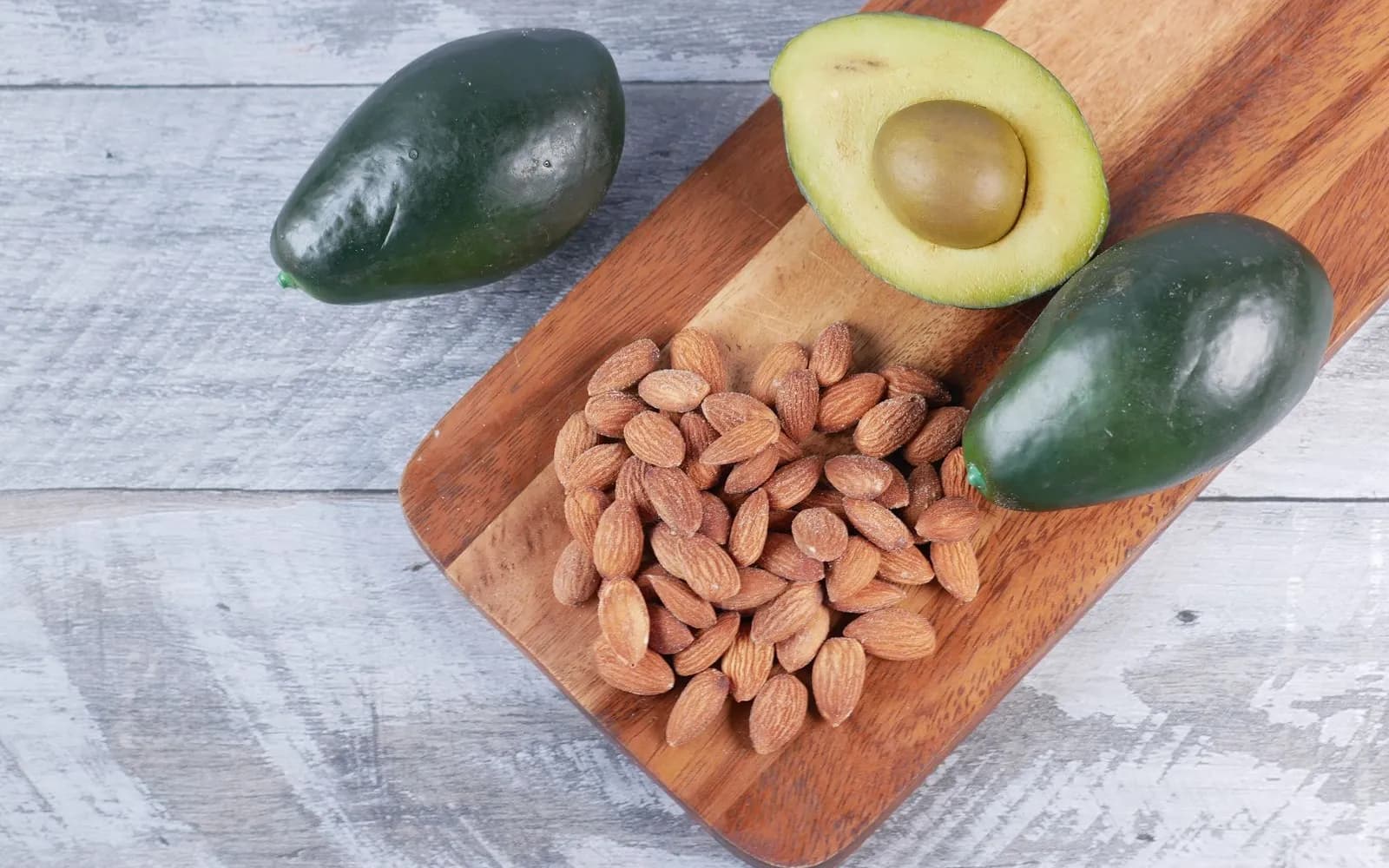
Healthy fats list: which foods have good fats?
The good fats are the unsaturated ones. The NHS says they’re mostly found in oils from plants and fish. They come in two kinds, monounsaturated and polyunsaturated.
The fat to cut is saturated fat. It’s mostly in meat and dairy foods like butter, and in coconut and palm oil.
| Food | Examples | Rich in |
|---|---|---|
| Oils and spreads | Olive and rapeseed oil, and spreads made from them | Monounsaturated fat |
| Avocados and olives | Fresh avocado, olives | Monounsaturated fat |
| Nuts and nut butters | Almonds, hazelnuts, peanuts, cashews, Brazil nuts, pistachios | Monounsaturated fat |
| Sesame | Sesame seeds and tahini (sesame paste) | Monounsaturated fat |
| Oily fish | Salmon, mackerel, sardines, trout, herring, kippers, pilchards | Omega-3 |
| Plant omega-3 | Walnuts, flaxseed (linseed) and its oil, rapeseed oil | Omega-3 |
| Other plant oils | Sunflower and corn oil, and spreads made from them | Omega-6 |
Omega-3 and omega-6 are both polyunsaturated fats. Your body can’t make some types, so you need small amounts from food.
Most foods hold a mix of fats. If a food has more saturated than unsaturated fat, the BHF calls it high in saturated fat.
Swapping some saturated fat for unsaturated fat can help lower your cholesterol, the NHS says. Pick one food from the list to use in place of butter this week.
Which oils and spreads are good fats to eat?
For everyday use, the BHF suggests olive, rapeseed or sunflower oil.
| Fat or oil | Saturated fat (%) | Unsaturated fat (%) |
|---|---|---|
| Rapeseed oil | 7 | 88 |
| Sunflower oil | 12 | 84 |
| Olive oil | 14 | 81 |
| Lard | 40 | 53 |
| Butter | 52 | 24 |
| Ghee | 58 | 31 |
| Coconut oil | 87 | 8 |
Source: BHF
Rapeseed oil also has some omega-3, about 10% of it. Coconut oil is often called healthy, but the BHF says there’s no scientific evidence for that. Use it, like butter, sparingly.
Does the swap matter for your heart? A large review of trials found cutting saturated fat for at least 2 years cut the risk of heart and circulation problems by 17%.
It made little or no difference to deaths. Swapping to polyunsaturated fat or to carbs looked useful. For monounsaturated fat, like olive oil, the effect was unclear.
Heard sunflower oil is bad for you? Read are seed oils bad for you before you bin it.
How much fat should I eat a day?
UK advice sets upper limits, not a daily amount of good fat. Most people in the UK eat too much saturated fat.
| Fat | Women | Men |
|---|---|---|
| All fat | About 70 g, if you eat 2,000 calories a day | About 95 g, if you eat 2,500 calories a day |
| Saturated fat | No more than 20 g | No more than 30 g |
| Trans fat | No more than about 5 g | No more than about 5 g |
Trans fat is found in small amounts in meat and dairy, and in partially hydrogenated vegetable oil. Like saturated fat, it can raise your cholesterol.
Already have heart disease, or at high risk of it? The BHF says you may need to eat less than this.
- 3 g per 100 g or belowLow fat.
- Above 3 up to 17.5 g per 100 gNeither low nor high.
- Above 17.5 g per 100 gHigh fat.
Source: NHS
Nuts and oils will always read high in fat. So check the saturates line too. More than 5 g per 100 g is high in saturated fat.
Lower fat doesn’t always mean fewer calories. The NHS says the fat is sometimes replaced with sugar. So check the calories and sugar lines too, not just the fat.
Are healthy fats good for weight loss?
Not on their own. Good fat and bad fat have the same calories.
| In 1 gram of | Calories |
|---|---|
| Fat, saturated or unsaturated | 9 |
| Carbohydrate | 4 |
| Protein | 4 |
Source: NHS
So swap, don’t add. A spoon of olive oil on top of your usual meal adds calories. The same spoon in place of butter swaps a worse fat for a better one, for about the same calories.
The NHS Eatwell Guide says to eat even unsaturated oils in small amounts. In trials of people not trying to lose weight, those eating less fat ended about 1.6 kg lighter than those on their usual diet.
In 86 trials, nuts didn’t raise body weight. Some authors had funding from nut groups.
Measure oil with a spoon instead of pouring from the bottle. For more on losing weight, see how to lose belly fat.
How do I eat more healthy fats?
Six healthy fat swaps to try this week
- Swap butter, lard and ghee for olive or rapeseed oil, or spreads made from them.
- Have at least 2 portions of fish a week, with 1 of them oily, like salmon, mackerel or sardines.
- Snack on a few unsalted nuts instead of biscuits or cakes.
- Add avocado or sesame seeds to a salad in place of cheese.
- Cook with rapeseed, olive or sunflower oil, and use coconut oil sparingly.
- Check the saturates line on labels. More than 5 g per 100 g is high.
A portion of fish is around 140 g. Tuna, fresh or canned, doesn’t count as oily fish.
Girls and women who haven’t been through the menopause should have no more than 2 portions of oily fish a week. That includes women trying for a baby, pregnant or breastfeeding. Men can have up to 4.
Don’t eat fish? Walnuts, flaxseed oil, rapeseed oil and eggs with added omega-3 are vegetarian sources. See omega-3 foods for more.
When to speak to a GP
Too much saturated fat can raise your cholesterol, which does not usually cause symptoms. Speak to your GP surgery if:
- You’ve never had a cholesterol test and you’re over 40, overweight, or high cholesterol or heart problems run in your family. Ask for a test.
- Your BMI (your weight compared with your height) is in the overweight or obese range, and you want help to lose weight or your waist is more than half your height.
- You have a medical condition, a special diet for your health, or an eating disorder now or in the past. Talk to a GP before changing what you eat.
- You’re pregnant or trying for a baby. Avoid fish liver oil supplements unless your GP advises otherwise.
Got your cholesterol back? See cholesterol results explained and foods to avoid with high cholesterol.