Food and digestion
High-fibre foods: how to add more without changing every meal
On this page
Changing a two-slice sandwich from one white loaf to its wholemeal counterpart can add about 4 g of fibre. Half a tin of lentils can provide nearly 6 g, and a serving of peas about 4.5 g. Those are useful contributions from ordinary foods, without replacing every meal you enjoy.
The details below show the actual portions and sources behind those figures. They also explain a common counting mistake: replacing a food adds only the difference between the old and new choices, not the new food's entire fibre content.
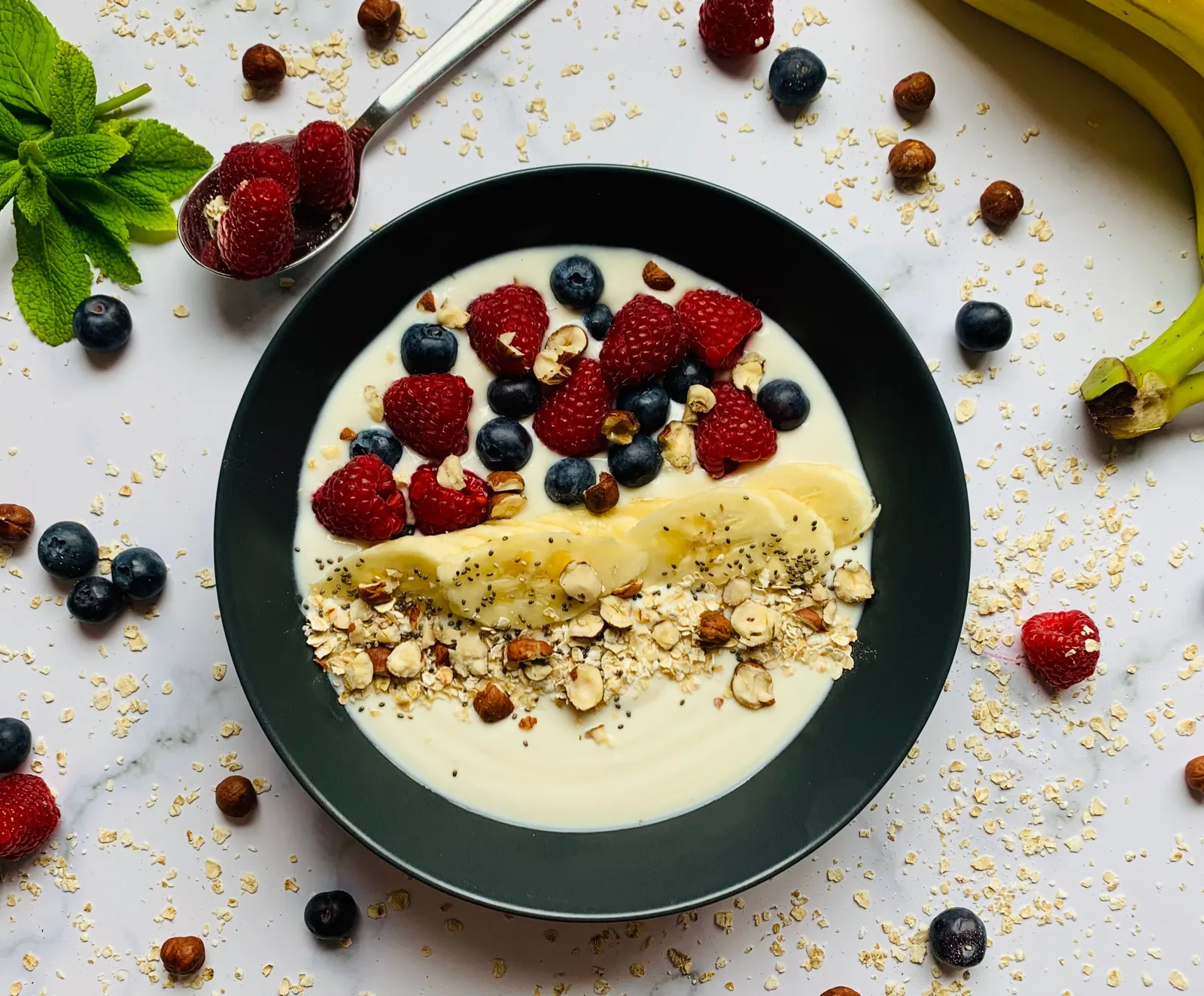
How much fibre are you aiming for?
The UK adult recommendation is 30 g of fibre daily within a balanced diet. That is grams of fibre, not grams of a fibre-containing food. A 30 g bowl of cereal is not 30 g of fibre.
The National Diet and Nutrition Survey for 2019–2023, published in 2025, estimated an average of 16.4 g a day among adults aged 19–64. Only 4% of adults met the recommendation. The survey changed its dietary measurement method, so these figures cannot establish a decline from earlier surveys.
For the 19–64 group, the arithmetic gap from 16.4 to 30 is 13.6 g. Your own intake may be different. A few ordinary changes can nevertheless be substantial compared with that average gap, as the food examples show.
Our existing guide covers the UK daily fibre target and fibre's relationship with cholesterol. This page concentrates on the food quantities, comparisons and meals that make an intake figure usable in a kitchen.
What could 30 g look like in food?
Here is an illustration using the portions detailed in the food sections that follow. It counts selected fibre-containing foods, rather than prescribing a complete menu or calculating every nutrient you need.
- Breakfast: 50 g dry oats and a medium banana supply about 6.2 g fibre together.
- Lunch: two slices of the named wholemeal bread, half a tin of the named kidney beans and a medium apple supply about 15.1 g.
- Dinner: the medium baked potato and 80 g boiled peas supply about 9.5 g.
The arithmetic total is approximately 31 g. Add whatever other foods make these into meals that suit you; their fibre would be additional. This shows how several familiar portions can reach the general recommendation without a special fibre product. It is not a suggestion to jump immediately from a much lower intake to this day.
For a smaller first change, the white-to-wholemeal sandwich swap adds about 4 g. Adding half a tin of lentils and the pea portion on top of existing meals adds about another 10.4 g. Together that is roughly 14.4 g, provided the lentils and peas really are additions rather than replacements for other fibre foods.
Add fibre through practical changes
- 1
Start with a familiar meal
Choose one place where a higher-fibre food fits.
- 2
Make a manageable swap
Increase gradually rather than changing everything.
- 3
Notice how it suits you
Adjust the pace to comfort and individual advice.
Keep the sandwich, change the bread
Warburtons Wholemeal 800 g lists 2.9 g fibre per 44.8 g slice. Two slices provide about 5.8 g. Its Medium Toastie white loaf lists 0.9 g per 40.3 g slice, giving about 1.8 g for two.
For those particular products, replacing a two-slice white sandwich with two wholemeal slices adds roughly 4 g. The slices differ in weight; an equal-weight comparison is 6.4 versus 2.3 g fibre per 100 g. Both comparisons are useful, but they answer slightly different questions.
If your sandwich currently has a different bread, use its label. 'Brown', 'seeded' and 'wholemeal' are not interchangeable numerical values. Likewise, a thick slice and a small slice can have different contributions even when cut from the same loaf.
You can retain the filling and change only the bread. That makes the extra fibre easy to understand. If you change the whole sandwich, include any other differences rather than crediting the bread with the entire result.
Oats: count the dry portion
Tesco Scottish Oats list 8.4 g fibre per 100 g, or 4.2 g in a 50 g dry portion. The calculation is 8.4 multiplied by 50, then divided by 100. It is a real label example, checked in October 2026; other products can differ.
That 50 g refers to dry oats. Cooking them with water increases the porridge's weight without changing the amount originally supplied by the oats. Applying a dry-oat figure to 50 g of cooked porridge would give the wrong estimate.
Make the porridge in the way you normally enjoy it, then count any fruit or other toppings separately if you want a fuller total. Do not automatically count a manufacturer's 'prepared serving' if it includes ingredients or quantities you did not use.
The same distinction applies to dry pasta, rice and dried pulses. Look for the words beside the number: dry, cooked, drained or as prepared. They tell you what was measured, and prevent much larger errors than rounding a portion to the nearest gram.
Add pulses to a meal you already cook
Tesco Green Lentils in Water provide 5.9 g fibre in the labelled half-tin portion of 118 g drained. The tin's net weight is 390 g, but the drained lentils weigh 235 g. The liquid is not another 155 g of lentils.
Tesco Red Kidney Beans provide 7.3 g in half a tin, labelled as 120 g drained. The 400 g tin contains 240 g drained beans. These are values for canned beans, not instructions or nutrient values for dry uncooked beans.
For a two-person tomato sauce, draining and adding the whole lentil tin gives each portion approximately the half-tin contribution. If the sauce becomes four portions, each gets about 3 g from those lentils. That is still a contribution, but a recipe's mention of lentils does not tell you how much each person receives.
If you normally make a meat sauce, using some lentils alongside the other ingredients is one way to try them. If you already use beans, replacing them with lentils is a comparison between two fibre-containing foods; count the difference rather than treating the lentils as entirely additional.
Our Mediterranean meal ideas include a chickpea dish and a lentil pasta sauce, with quantities and preparation suggestions. They offer starting points for using a tin, rather than leaving it in the cupboard because its label looks promising.
Potatoes, fruit and peas count too
The British Dietetic Association's fibre factsheet gives approximate everyday values: a medium cooked baked potato weighing 180 g provides about 5 g fibre, and a medium apple or banana about 2 g. Its boiled-pea figure works out at about 4.5 g for an 80 g portion. These are estimates; fruit size and the food itself vary.
A baked potato with its skin can therefore be a useful staple rather than something to remove automatically when improving a diet. Plan its filling and accompanying foods as part of the meal. The potato's fibre number alone does not describe the whole lunch.
Peas can go beside a meal you already cook. If you use frozen peas, cook them according to the packet. Our fresh-versus-frozen vegetable guide explains why storage and cooking matter more than assuming that only fresh produce counts nutritionally.
Fruit is another opportunity: adding a medium apple is different from replacing a banana with an apple, since both contribute fibre. That distinction sounds small but becomes important when calculating the supposed benefit of several swaps.
Build up gradually if you are eating less fibre now
The BDA explains that fibres differ in their physical properties and in how gut bacteria break them down. A single total does not make every food interchangeable. It also advises increasing intake gradually to reduce gas and bloating. You can start with one of the changes above and see how it suits you before adding another.
The NHS constipation guidance also recommends enough fluid alongside gradual dietary change. Follow any prescribed fluid restriction. If symptoms worsen, look at the food and amount you changed rather than assuming that all fibre is unsuitable or that discomfort must be endured.
If a change gives you symptoms, note which food and roughly how much you ate. It can also make a conversation with a dietitian more specific if you need help adjusting the foods you tolerate.
Could kiwifruit help with constipation?
A 2023 randomised crossover trial involved 184 people, including healthy controls and people with functional constipation or constipation-predominant IBS. Participants tried two peeled green kiwifruits daily and 7.5 g psyllium daily, each for four weeks, separated by a four-week washout. Each supplied about 6 g fibre; treatment order was randomised.
Among the two constipation groups combined, complete spontaneous bowel movements increased by 1.69 per week from baseline with kiwifruit and 0.90 with psyllium. The difference in this change was statistically significant. Separate constipation-group comparisons did not establish a significant difference between treatments. Both interventions could help; this was not universal superiority for fruit.
A complete spontaneous bowel movement means one without laxative use and with a feeling of complete emptying, using the usual clinical definition. It is more specific than simply counting toilet visits.
Participants knew which intervention they received, and there was no placebo comparison. Zespri was the principal sponsor and some authors had company links. The study addresses particular bowel symptoms, not whether two kiwifruits improve every aspect of gut health or are necessary for everyone.
When general higher-fibre advice needs adapting
Some bowel conditions and procedures require a temporary or longer low-fibre approach. UCLH's low-fibre guidance describes specific uses, including when bowel narrowing makes certain foods unsuitable. If this applies to you, follow your team's advice and ask when the restriction should be reviewed.
See a GP for constipation that recurs or fails to improve, blood in your stool, unexplained weight loss, a sudden bowel-habit change or ongoing abdominal pain. The NHS lists these as reasons for assessment. A new symptom needs attention in its own right, even when your shopping list could also use more fibre.