Everyday meals
Mediterranean-style meals: a practical starting plan
On this page
Mediterranean-style eating can start with tinned chickpeas, tomatoes, a bag of frozen spinach and the bread you already buy. The pattern gives vegetables, fruit, pulses, wholegrains, nuts and unsaturated oils a regular place, while reducing reliance on meat-heavy meals and foods high in salt, sugar or saturated fat.
You do not need to replace every familiar dish. A lentil curry, bean stew or vegetable-filled rice dish can share the same useful features. What matters is the recurring pattern and whether the meals work in your household.
The three days below use ordinary ingredients in repeatable combinations. The quantities for the cooked dinners are starting amounts for two adults, not a calorie-controlled prescription. Add or adjust food for appetite, activity and individual needs; the aim is a practical menu, not making every eater use an identical portion.
What to buy for three days
Check the cupboard before buying. The dinners can use two tins of tomatoes, a tin each of chickpeas and lentils, tinned mackerel, potatoes, wholegrain pasta, onions, a carrot, frozen peas and spinach. Add bread, oats, fruit, plain yoghurt or a fortified alternative, eggs and seasonings for breakfasts and lunches.
The number of fish tins depends on their drained contents. For pulses, 'one 400 g tin' describes the unopened product weight, including liquid; it does not mean 400 g of drained chickpeas. Read the label when comparing value or planning how many people the tin will feed.
Choose a few vegetables you enjoy rather than buying a large aspirational assortment. Frozen options can be used across several meals, and the frozen-versus-fresh guide explains the nutritional comparison. Keep lemon, garlic, pepper, paprika or your usual spices available to make the repeated ingredients taste different.
Nuts can be a regular addition where appropriate, but they are not compulsory in every meal. Check allergies and use an alternative that fits your needs. A change in eating pattern should leave you with enough food and useful variety, rather than a growing list of exclusions.
Day one: mackerel, potatoes and peas
For breakfast, try porridge made with your usual milk or fortified alternative, topped with a sliced banana. If you prefer cold food, combine plain yoghurt, oats and fruit. Use a breakfast you will repeat; the style of bowl is not the health intervention.
Lunch could be wholegrain toast with eggs and tomatoes. Keep it simple enough for the available time. If work makes that impractical, a sandwich with a familiar filling and vegetables may be easier to carry.
For dinner for two, use about 280 g drained tinned mackerel, 400 g potatoes and 200 g frozen peas. Cook the potatoes and peas until ready, following their instructions. Drain the fish if needed, then serve it with the vegetables, lemon juice and black pepper. Add a little olive or rapeseed oil if wanted, allowing for oil already present in the fish product.
Check the fish label before adding salt: its sauce or packing liquid may already contribute it. Lemon, pepper and herbs give other ways to adjust flavour. If you are considering a lower-sodium salt substitute, read about its ingredients, kidney-health considerations and medicine interactions before using it in a shared meal. That is a separate decision from simply using less ordinary salt.
This dinner is an example of putting an oily fish, a familiar staple and vegetables together. If mackerel is not appealing, sardines or salmon offer another oily-fish option. You can change the ingredient without abandoning the structure of the meal.
Build meals from familiar ingredients
- 1
Vegetables and pulses
Choose ingredients you enjoy and can use regularly.
- 2
Add the rest of the meal
Combine with suitable grains and other protein foods.
- 3
Make it repeatable
Use a shopping list and a few practical combinations.
Day two: chickpeas, tomatoes and spinach
Breakfast can repeat day one, or use toast with an egg and fruit. Repetition reduces preparation decisions. For lunch, a baked potato with beans and a side vegetable gives another use for ingredients that keep well.
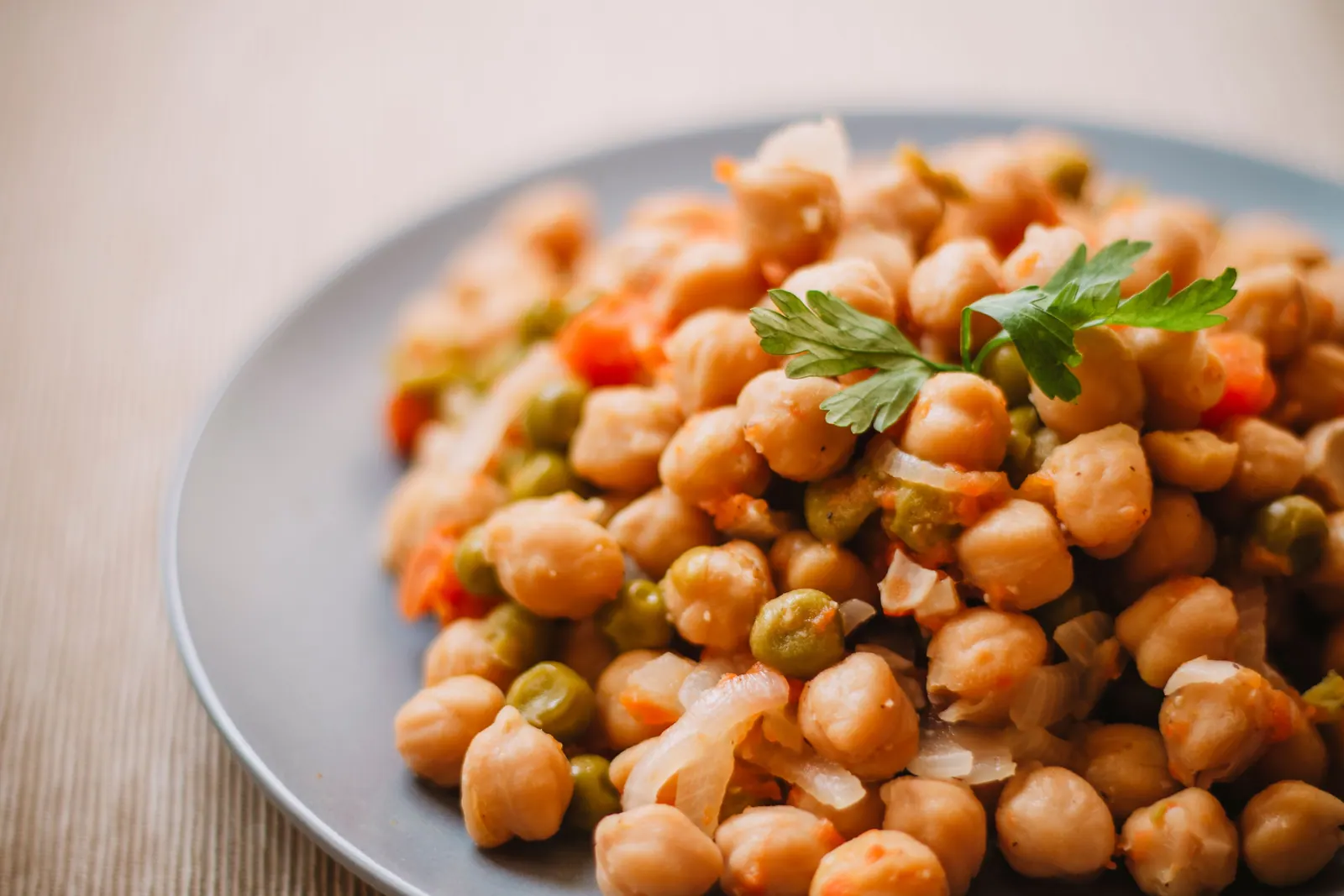
For a two-person dinner, take one 400 g tin of chickpeas, drained and rinsed; one 400 g tin of chopped tomatoes; one onion; two generous handfuls of frozen spinach; and a tablespoon of olive or rapeseed oil. Add garlic, paprika or cumin if you enjoy them, and serve with bread or another staple.
Soften the chopped onion in the oil, add the seasoning, then the tomatoes and chickpeas. Simmer until the onion is tender and the dish is hot, adding the spinach and cooking it fully according to the packet. Loosen with water if needed. Taste before adding extra salt, then serve with enough bread or other accompaniment to make a satisfying dinner.
Use the seasonings you enjoy and already have. Cumin and chilli take it towards one familiar combination; garlic and herbs take it towards another. If a whole chickpea texture is the obstacle, mash some into the sauce.
While cooking, check what remains for tomorrow. A planned use for the open vegetables is more helpful than buying another set because a menu says every day should look different.
Day three: lentil and tomato pasta
Choose the breakfast that was easiest. If neither worked, the protein-breakfast examples offer other ordinary combinations. For lunch, use a sandwich, soup or safely stored leftovers according to the equipment available where you eat.
For dinner for two, use 150 g dry wholegrain pasta, one 400 g tin of lentils drained and rinsed, one 400 g tin of chopped tomatoes, an onion, a grated carrot and a tablespoon of oil. Garlic, oregano or another familiar seasoning can finish the sauce. The pasta amount is a starting quantity, with appetite and the rest of the meal determining what you need.
Soften the onion and carrot in the oil, add the tomatoes and lentils, then simmer until the vegetables are tender and the sauce is hot. Cook the pasta separately according to its instructions and combine. Add a vegetable alongside if wanted, or include one in the sauce.
If this is a large change from a usual meat sauce, try the lentil version on one regular evening first. The purpose is to find a pulse-based meal you enjoy often enough to repeat. A dish that only works when you have an unusually free evening is less useful than a simpler one that fits ordinary life.
What makes these meals Mediterranean-style?
In a British Dietetic Association article, registered dietitian Tai Ibitoye suggests two or three meat-free days weekly, at least two fish portions including one oily, and plenty of vegetables, fruit, pulses and wholegrains. Moderate dairy or fortified alternatives can fit, with smaller amounts of foods high in saturated fat, salt and sugar. Olive, rapeseed and sunflower oils are named options in small amounts.
This is a useful frequency framework rather than an instruction to buy imported ingredients. Keep rice, chapatti, potatoes or the bread you enjoy, and think about the accompanying vegetables and protein food. A mixed dish can contain all those elements without being arranged as separate sections of a plate.
Olive oil is one familiar choice for cooking or dressing. If another unsaturated oil fits your budget and cooking better, the BDA article includes alternatives. Compare the actual prices where you shop; rapeseed oil is not guaranteed to be cheaper everywhere, and substituting it is not a claim that it reproduces an olive-oil trial.
For fish, NHS guidance recommends two portions weekly, one oily, with about 140 g cooked fish as a portion. Mackerel, sardines and salmon count as oily fish; tuna does not. The NHS page also gives specific advice for pregnancy and other groups, so use those instructions where they apply.
What does the heart-health evidence actually show?
The corrected PREDIMED trial report followed 7,447 Spanish adults at high cardiovascular risk without established cardiovascular disease. Participants received Mediterranean-diet support with extra-virgin olive oil or nuts, or advice to reduce dietary fat. Foods and structured dietary support were provided.
Over a median 4.8 years, heart attack, stroke or cardiovascular death occurred in 3.8% of the olive-oil group, 3.4% of the nut group and 4.4% of controls. Those raw proportions differ by 0.6 and 1.0 percentage points. Adjusted analyses gave hazard ratios of 0.69 and 0.72, or about 31% and 28% lower relative hazards. Those adjusted comparisons are not calculated simply by dividing the raw percentages.
The original report was withdrawn and republished after allocation problems were identified; revised analyses addressing them retained the main finding. This was sustained, supported eating in a high-risk population. It supports the pattern's cardiovascular relevance without proving that this three-day menu, or adding oil alone, reproduces the outcome.
Can this way of eating protect memory?
MIND combines Mediterranean eating with DASH, short for Dietary Approaches to Stop Hypertension. In a 2023 three-year trial, 604 older adults without cognitive impairment received either MIND-diet guidance or comparison-diet support. Both groups had counselling and mild calorie restriction. Cognitive scores improved in both, but the between-group difference was not statistically significant; brain-imaging comparisons also showed no significant advantage.
That trial measured cognitive performance, with selected participants who had a family history of dementia and a suboptimal starting diet. It did not demonstrate that the MIND programme prevented dementia. Nor does improvement in both groups prove both diets caused it: repeated testing and shared support complicate that interpretation.
Choose the meals for the practical and nutritional pattern they offer. A heart-health finding should not quietly become a promise about every brain outcome, and a meal plan does not need such a promise to be worth using.
Store leftovers safely and choose the meals to repeat
The Food Standards Agency's chilling guidance says to cool cooked food and refrigerate it within one to two hours, using smaller containers to help cooling. Eat leftovers within 48 hours or freeze them. Put unused contents of opened tins into a covered container in the fridge and follow product instructions.
Its cooking guidance says to reheat food only once, until steaming hot throughout. Follow stirring and standing instructions for microwaved food. Frozen vegetables that require cooking should be cooked even if you intend to eat the finished dish cold.
At the end of the three days, keep the meal that was easiest to repeat and note what went unused. Buy less of a rejected ingredient, simplify an awkward preparation or choose a frozen alternative. Build the next week around what worked rather than extending a shopping list the household does not enjoy.
The menu is alcohol-free; there is no need to add wine. Adapt it to allergies, prescribed diets and individual nutritional needs. The useful next step is a repeatable meal and a realistic shopping list, not a complete reinvention of the kitchen.