What’s a good kettlebell workout for beginners?
Six slow moves, twice a week, with one light bell. Together they work every major muscle. The swing everyone films comes later. One of the six teaches it.
On this page
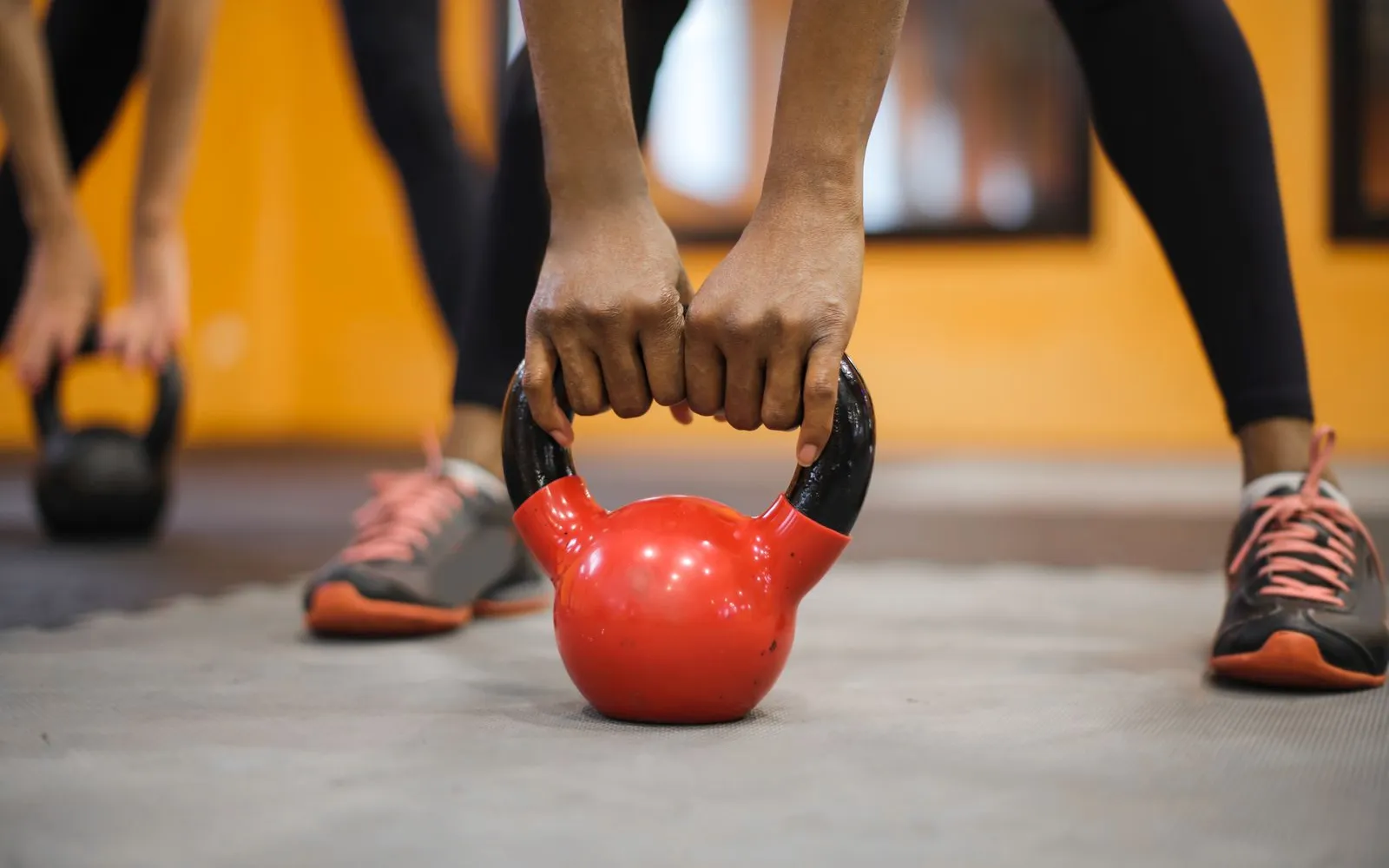
Which kettlebell exercises should a beginner do?
Pick one move for each muscle group the NHS lists: legs, hips, back, tummy, chest, shoulders and arms. Do them on at least 2 days a week.
One bell covers all of those but your chest. Press-ups do that, with no bell at all.
| Move | How to do it | Works |
|---|---|---|
| Deadlift | Bell between your feet. Bend at the hips, grip it, push the floor away and stand tall. | Hips and legs |
| Goblet squat | Hold the bell close to your chest and squat. | Legs |
| Split-stance row | One foot forward, bell in the other hand. Lean a little and pull it to your side. | Back and arms |
| One-arm press | Bell at your shoulder. Push it straight up, without arching your lower back. | Shoulders and arms |
| One-arm carry | Bell in one hand. Walk tall, shoulders level. | Tummy and grip |
| Press-up | Hands on the floor, or on a wall or table to make it easier. | Chest and arms |
Sources: NHS; The Prehab Guys
The cues come from The Prehab Guys, a team of physiotherapists. Their videos show the deadlift, goblet squat, row, press and carry.
Do 2 to 3 sets of each (each side for the row, press and carry). A review of 14 weight-training studies, in beginners and trained people, linked 2 to 3 sets with 46% bigger strength gains than 1 set.
Same moves with dumbbells? See our full body dumbbell workout. Then put two sessions in your diary this week.
What weight kettlebell should a beginner use?
Light. The Prehab Guys tell beginners to start with a light kettlebell and add weight once the moves feel right.
There’s no official starting weight. In one study of young adults, women swung 8 kg and men 16 kg. That was the researchers’ pick, not a rule.
So judge by effort. The NHS says to work to the point where you need a short rest before you go again. If your last reps feel easy, add reps, then weight.
Your beginner kettlebell plan
- Do all six moves on at least 2 days a week.
- Do 2 to 3 sets of each move.
- Keep each set going to the point where you need a short rest.
- Start with a light kettlebell.
- If your last reps feel easy, add reps, then weight.
- Add swings only once your deadlift feels smooth.
Sources: NHS; UK CMOs; The Prehab Guys; Krieger 2009
Our progressive overload guide shows how to step up each week.
When should you add kettlebell swings?
Once your deadlift feels smooth. The Prehab Guys’ beginner list has the deadlift and the carry, and no swing.
The one of the six that teaches it is the deadlift. Both start with the same bend at the hips, back flat. The swing just does it fast.
From deadlift to swing
- 1
Deadlift
Bend at the hips, back flat, and stand up with the bell.
- 2
Hike it back
Bell about half a metre in front. Hike it back between your legs.
- 3
Drive with your legs
Swing it to shoulder height with your legs, not your arms.
- 4
Check your arms
Shoulders or chest working hard? Use your legs more.
Their main swing fault: don’t arch or round your back, and don’t lift with your arms.
Swings can build strength. In 21 young men, six weeks of swings twice a week did about as well as jump squats. Across both groups, squat strength rose about 10%.
Try 30 seconds of swings, then 30 seconds of rest, as in that study. Start with a few rounds.
Is a kettlebell workout good for your core?
Yes, for the muscles that hold you upright. A one-arm carry makes you use your core to stand straight while the bell pulls you sideways.
Picture walking with one heavy shopping bag. Your tummy muscles stop you tipping over.
One trial gave 40 adults in jobs where neck, shoulder and back pain are common kettlebell training 3 times a week for 8 weeks. Lower-back strength rose and pain eased, compared with people who didn’t train.
Their tummy and shoulder strength didn’t rise. And a review of 99 kettlebell studies rated confidence in the results as low to very low.
So keep the carry in, and add moves done lying down from our core exercises guide.
Does a kettlebell workout count as cardio?
Partly. Swings push your heart rate up a lot. But your body uses less oxygen than the heart rate suggests.
| Study | What they did | What they found |
|---|---|---|
| 10 young men | Swings with 16 kg for 12 minutes | Heart rate 87% of their maximum, oxygen use 65% of their maximum |
| 13 young adults | Swings vs running at the same felt effort | Similar heart rate. Running was 25% to 39% higher for oxygen use and calories. |
| 40 workers | Kettlebell training 3 times a week, 8 weeks | Fitness (oxygen use) didn’t change |
Sources: Farrar 2010; Hulsey 2012; Jay 2011
Aerobic exercise keeps your heart and lungs working hard for a while. The NHS says strength work is not always aerobic, so do it as well as your 150 minutes of aerobic activity a week.
Want short, hard sessions too? See our HIIT at home guide.
When to speak to a GP first
The NHS asks some people to speak to a GP before they start. Book an appointment if:
- You haven’t exercised for some time.
- You have medical conditions or health concerns.
- You get chest pain that comes and goes, or that goes away quickly but still worries you.
- You’re pregnant and new to weights. The NHS lists gym strength training if you do this already. Ask your midwife first.
The NHS also says not to start a new vigorous activity in pregnancy. Swings push your heart rate high, so ask your midwife before you start them.
Call 999 if you get sudden chest pain or discomfort that doesn’t go away. It can feel like squeezing or pressure inside your chest, burning or indigestion.
The same goes for pain that spreads to your arm, neck, jaw, stomach or back. Or chest pain with sweating, feeling sick, light-headed or short of breath.