How do I meal prep for weight loss?
Cook once, then freeze half. The Food Standards Agency says to eat fridge leftovers within 2 days. So a Sunday cook can’t feed you until Friday from the fridge. The freezer can.
On this page
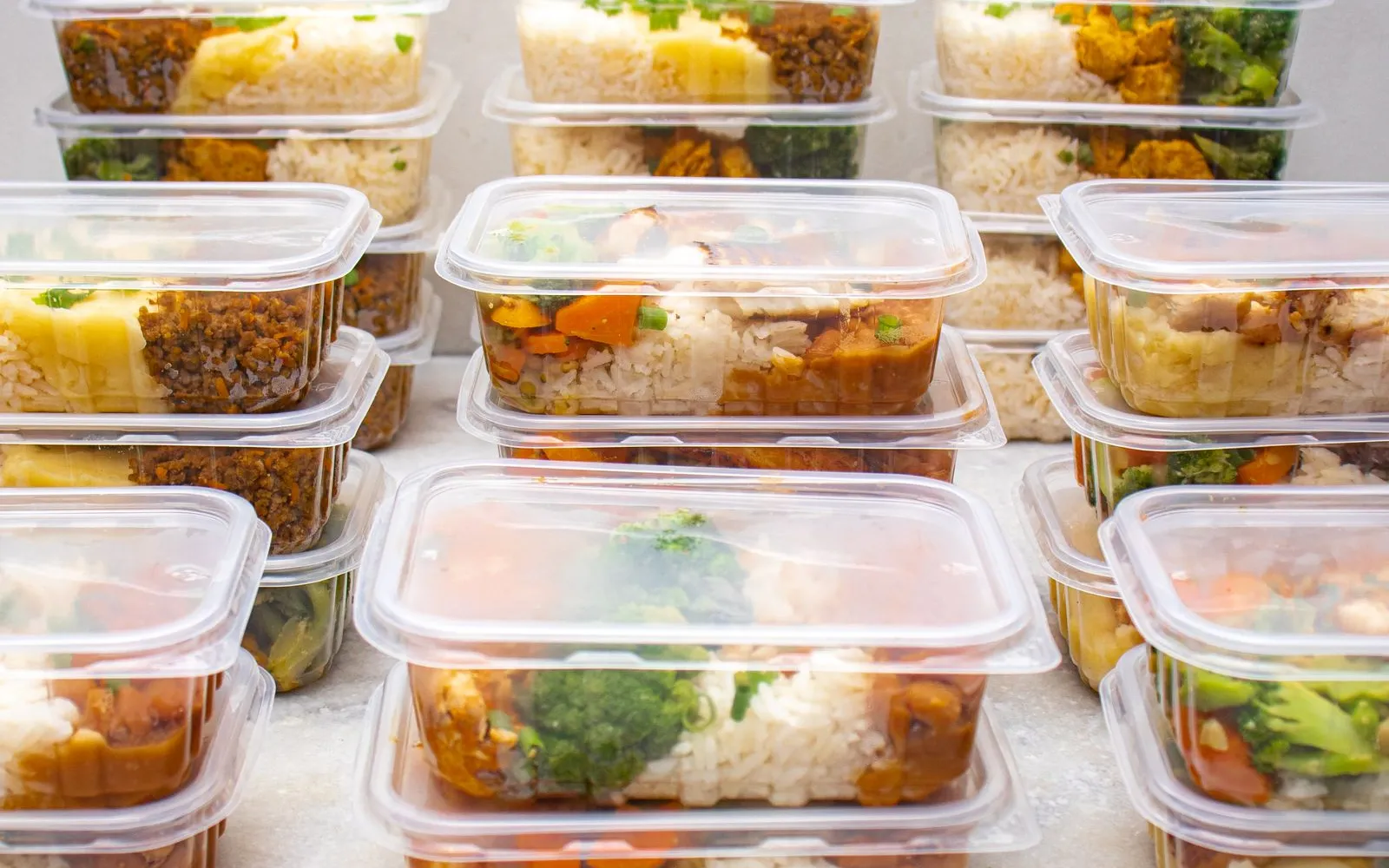
What are good meal prep meals for weight loss?
Ones you can cook in a big pot and split into boxes. Each box should follow the NHS plate rule: about half veg, some protein, and a starch that’s wholegrain where it can be.
| Meal | Protein | Veg for half the box |
|---|---|---|
| Turkey mince chilli with brown rice | Turkey mince and kidney beans | Peppers, onions, tinned tomatoes |
| Chicken traybake with new potatoes | Chicken breast, skin off | Courgette, red onion, broccoli |
| Lentil and vegetable soup | Red lentils | Carrots, celery, leeks |
| Chickpea and spinach curry with brown rice | Chickpeas | Spinach, onions, tinned tomatoes |
| Baked salmon with new potatoes | Salmon | Green beans and peas |
| Egg and vegetable frittata | Eggs | Peppers, spinach, mushrooms |
Source: NHS Better Health
Soups, chillies and curries split into single boxes easily. Eat any boxes with rice first.
Want more ideas? The NHS has recipes under 600 calories a portion. Pick two from the table for this week.
How do I make low calorie meal prep?
Weigh the starch before you cook it. Rice and pasta grow as they cook, so a scoop from the pot is hard to judge.
Source: NHS Better Health
Batch cooking makes this easy. You weigh once for the whole pot, then split it evenly.
Fill the rest of each box with veg. Measure oil with a teaspoon, not a pour from the bottle.
To lose weight, the NHS suggests eating around 600 calories a day less than you do now. For a full week of meals, see this 7-day meal plan for weight loss.
What about high protein, low calorie meal prep?
Put some protein in every box. The NHS says protein at each meal can help you feel full for longer.
Good picks are beans, pulses (like lentils and chickpeas), fish, eggs and lean meat. Cut fat and skin off meat before you cook it.
Go easy on red and processed meat, like ham, bacon and sausages. If you eat fish, aim for 2 portions a week, with at least 1 oily, like salmon.
Beans and lentils bulk out mince for little cost. For how much you need, see protein for weight loss and high protein diets.
How long does meal prep last in the fridge?
Two days. The Food Standards Agency says to eat leftovers within 48 hours or freeze them. That’s the 2-day rule, and it’s why you freeze half.
Rice is stricter. Get it in the fridge ideally within one hour and eat it within 24 hours. Or freeze it within an hour of cooking.
A batch cook that lasts the week
- 1
Cool fast
Split into smaller boxes. Into the fridge within 1 to 2 hours (rice ideally within 1 hour).
- 2
Fridge 2 days
Keep the next 2 days’ boxes in a fridge at 0 to 5°C (1 day if it has rice).
- 3
Freeze the rest
Label each box. Freezer around -18°C.
- 4
Reheat once
Defrost in the fridge. Heat until steaming hot all the way through.
Sources: FSA: chilling; FSA: cooking; FSA: rice
Use defrosted food within 24 hours. Stir it halfway when you microwave, as the middle can stay cold.
Use frozen veg to fill half the box. See frozen vs fresh vegetables.
Does meal prep help you lose weight?
It may help. Meal prep hasn’t been studied directly, but a UK study of 11,396 adults aged 29 to 64 looked at home cooked meals. It compared eating them more than 5 times a week with under 3 times.
The frequent home cooks were 28% less likely to be overweight by BMI. They also ate more fruit and veg. The study can’t show that cooking caused it.
The NHS says to limit ready meals and takeaways and cook from scratch.
Your batch cook checklist
- Pick two meals from the table and write one shopping list.
- Weigh rice and pasta before you cook them.
- Fill about half of each box with veg.
- Put some protein in every box.
- Keep 2 days of boxes in the fridge and freeze the rest. Boxes with rice: 1 day in the fridge, then freeze.
- Reheat each box once, until steaming hot all the way through.
Sources: NHS Better Health; FSA
Don’t skip meals to save boxes. The NHS says you might end up snacking more. For the pace to expect, see the best diet to lose weight.
When to speak to a GP
Talk to a GP before you change how you eat if you have a medical condition or a special diet for your health. The same goes if you have an eating disorder, or have had one.
The NHS also says to see a GP if your BMI is in the overweight or obese range and:
- you want help to lose weight
- your waist is more than half your height (see waist-to-height ratio)
- you have pre-diabetes (blood sugar higher than normal, but not diabetes), diabetes, high blood pressure, joint pain, high cholesterol, sleep apnoea (breathing that stops and starts while you sleep) or heart and blood vessel disease
- you have a family history of obesity
- you have, or think you may have, an eating disorder, such as binge eating
BMI (body mass index) compares your weight with your height. See what your BMI means. For eating disorder support, the charity Beat helps adults and children.
Ill after eating a meal you stored? The NHS page on food poisoning says when to call 111 or 999.