How much protein to lose weight?
About 1.2 to 1.6 g per kg a day. A review of weight-loss studies suggests this. The UK baseline is 0.75. But the calorie cut does most of the work. Protein changes what you lose.
On this page
How much protein do I need a day to lose weight?
A review of studies where people ate more protein while eating less suggests 1.2 to 1.6 g per kg of body weight a day. That’s a research range, not an NHS target.
The UK amount for all adults is 0.75 g per kg a day. It isn’t set for weight loss, and NICE gives no protein figure for diets.
- Below 0.8 g per kgBelow the UK amount for adults.
- 0.8 to just under 1.2 g per kgUK amount (0.75) and up.
- 1.2 up to 1.6 g per kgRange a weight-loss review suggests.
- Above 1.6 g per kgAbove the studied range.
Sources: British Nutrition Foundation; Leidy 2015
Have kidney disease? Ask your kidney team before you eat more protein.
Seen a calculator say 2 g per kg or more? That’s an athlete figure. None of the sources here set it for weight loss.
Your next step is to turn this into grams for your weight.
How many grams of protein a day for my weight?
Times your weight in kg by 1.2, then by 1.6. Weigh yourself in stone? Times by 6.35 first to get kg.
| Your weight | UK amount (0.75 g per kg) | Suggested range (1.2 to 1.6 g per kg) |
|---|---|---|
| 60 kg | 45 g | 72 to 96 g |
| 70 kg | 53 g | 84 to 112 g |
| 75 kg | 56 g | 90 to 120 g |
| 80 kg | 60 g | 96 to 128 g |
| 90 kg | 68 g | 108 to 144 g |
| 100 kg | 75 g | 120 to 160 g |
Sources: British Nutrition Foundation; Leidy 2015
You may be closer than you think. On average, UK men eat about 85 g a day and women about 67 g.
So a 75 kg man eating 85 g would need about 5 to 35 g more to reach 90 to 120 g. That’s one or two extra portions, not a new diet. Pick yours from the food list below.
Does more protein make you lose more weight?
A little. A review of 24 trials compared diets with the same calories.
More protein gave 0.79 kg more weight loss over about 12 weeks. The authors called the benefit modest. Longer studies found mixed results.
Source: Wycherley 2012
The British Nutrition Foundation says high-protein diets are not necessarily better than low-fat diets or intermittent fasting. That means eating only at set times or on set days. They can work for some people.
NICE says any weight-loss diet should keep your energy intake below what you use.
Protein made people feel a bit fuller, but it didn’t cut what they ate at the next meal.
The same review found people who stuck to the diet did best. So pick a plan you can keep, like the ones in the best diet to lose weight.
What does protein change about the weight you lose?
It helps you keep muscle. In those 24 trials, more protein kept 0.43 kg more lean mass. Lean mass is everything in your body that isn’t fat, and muscle is part of it.
Think of a loft clear-out. The aim is to bin the junk, not the furniture.
Eating less clears the loft. Protein helps a little more of the furniture stay.
Over 50? A review of 20 trials in that age group found higher-protein diets during weight loss kept more lean mass and lost more fat.
To protect muscle, see how to protect muscle during weight loss and how much protein you need after 40.
How to increase protein intake for weight loss
Spread it out. The review behind the 1.2 to 1.6 range suggests at least about 25 to 30 g at each meal.
Ways to add protein at each meal
- Fill half your plate with vegetables. Split the other half between protein and starchy carbs.
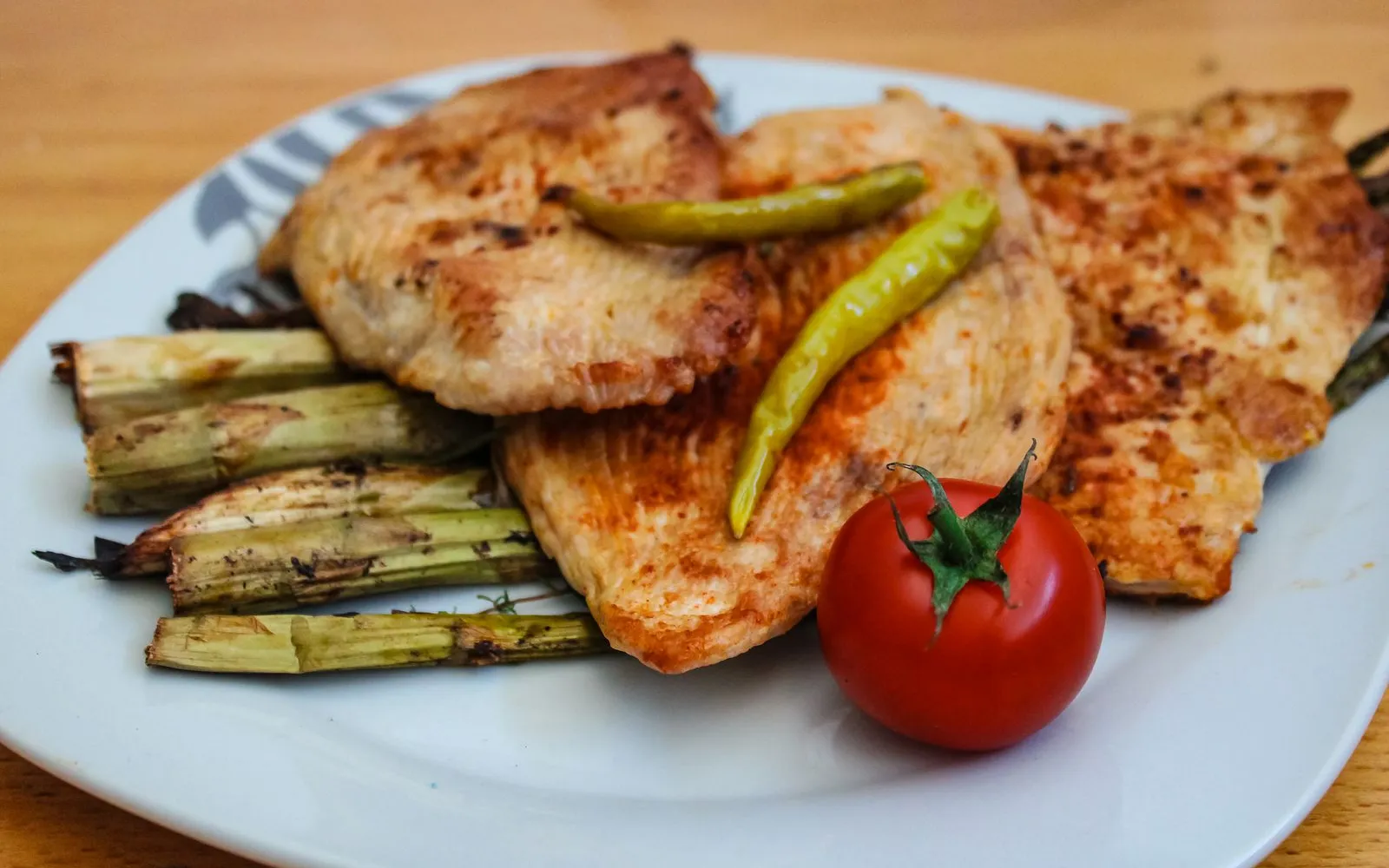
- Have 100 g of grilled chicken breast for about 32 g of protein.
- Open 100 g of tuna canned in brine for about 25 g.
- Spoon out a 300 g pot of cottage cheese for about 28 g.
- Go plant-based with 200 g of tofu (about 16 g) and 200 g of boiled red lentils (about 15 g).
- Add 2 boiled eggs, about 100 g, for about 14 g.
Sources: BDA: weight loss; British Nutrition Foundation
Choose lean meat, fish, beans and lentils. The British Nutrition Foundation says diets with a lot of red and processed meat aren’t advised, because of the link with bowel cancer.
You don’t need shakes, though protein powder for weight loss covers them. The same page says most of us don’t need protein supplements. For quick morning ideas, see high-protein breakfasts.
Aim to lose 0.5 to 1 kg a week, as the NHS suggests. And avoid cutting out whole food groups: NICE warns that unbalanced, restrictive diets don’t work long term and can be harmful.
When to speak to a GP
Speak to a GP or your care team if:
- You have kidney disease. Ask your kidney team before you eat more protein. A Kidney Care UK dietitian covers the risks of too much protein.
- You keep losing weight without changing your diet or exercise. The NHS says see a GP.
- You’re losing weight and have other symptoms too. The NHS says to see a GP as soon as possible.
- You want help with a diet. NICE says calorie-cut diets should come with support and follow-up, such as from a registered dietitian.
Wondering how your kidneys are doing? See what a kidney function test measures.