What are the symptoms of osteoporosis?
Usually none, until a bone breaks. But a bone in your spine can break without you knowing. Three changes in your back and height can give it away.
On this page
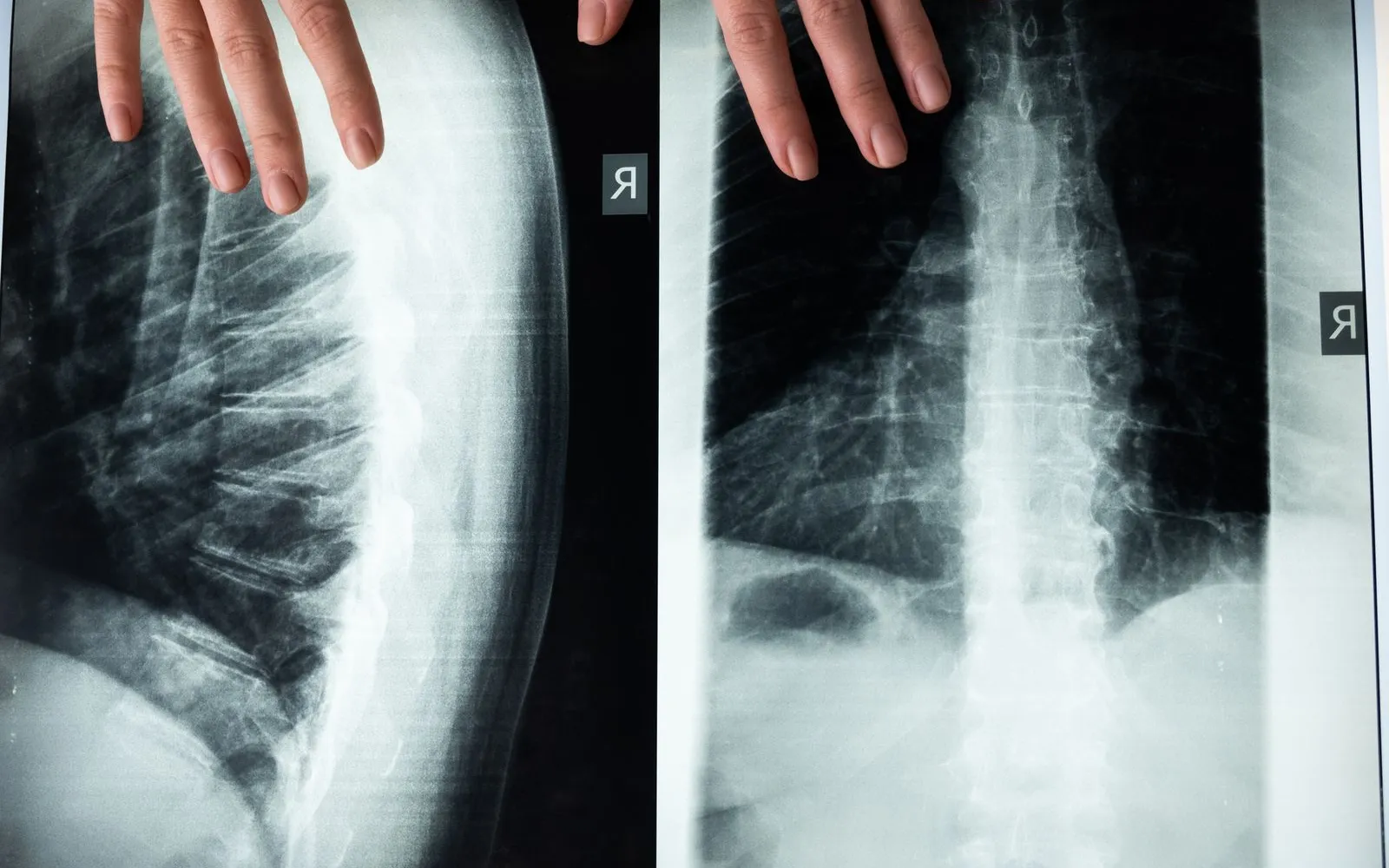
What are the symptoms of osteoporosis?
Usually none. The NHS says osteoporosis develops slowly over several years, with usually no obvious symptoms. You may not know until a bone breaks.
Osteoporosis itself doesn’t hurt. The broken bones it causes do.
Strong bones should cope with a bump, or a fall from standing height. If a trip like that breaks a bone, it’s often the first sign your bones have lost strength.
| Sign | What’s behind it | What to do |
|---|---|---|
| A bone breaks after a minor fall or bump | Bones that have lost strength. Wrist, hip and spine breaks are most common. | Talk to your doctor, especially if you’re 50 or over, past the menopause or taking steroid medicines. |
| Back pain or muscle spasms with no clear cause | Can be a small break in a bone of your spine. | See a GP if it’s not getting better after a few weeks. |
| Getting shorter | Spine bones squashed down by small breaks. | Speak to your doctor. |
| A curved spine or hunched posture | Spine bones that healed in a squashed shape. | See a GP. |
Those last three are the changes to watch. The NHS says they can be caused by small breaks in the bones of your spine.
Broken a bone in a minor fall? Ask your GP about your bone strength.
Are there early signs of osteoporosis?
No. The Royal Osteoporosis Society (ROS) says it doesn’t have any early warning signs. So the early clue is your risk, not a symptom.
The NHS lists things that raise your chances:
- getting older, or the menopause
- either of your parents having osteoporosis
- coming from a white ethnic background
- not enough calcium or vitamin D, or being underweight
- smoking, drinking too much alcohol or not much exercise
- some conditions, such as diabetes or rheumatoid arthritis
- taking steroid tablets
Your GP can check this with a fracture risk assessment. It’s a set of questions that works out your chance of breaking a bone.
| Who | And | NICE says |
|---|---|---|
| Aged 50 or over, or a woman past the menopause | A past break from a minor fall, or taking steroid medicines now or often, such as 5 mg or more of prednisolone a day for over 3 months, or higher doses on and off | Check the risk |
| All women 65 and over, all men 75 and over | Nothing else needed | Think about checking |
| Aged 50 to 74, or a woman under 65 past the menopause | 2 or more falls in the last year, a parent, brother, sister or child who broke a hip, a BMI (a weight-for-height measure) under 18.5, smoking, more than 14 units of alcohol a week, or another risk factor | Think about checking |
Source: NICE NG259
On steroid tablets? Never stop or change a prescribed medicine without your prescriber. Ask about your bones instead.
In one of these groups and never checked? Ask your GP about a fracture risk assessment.
Can osteoporosis of the spine cause back pain?
Yes, through small breaks. A spine bone doesn’t snap apart. It squashes down on itself.
Picture your spine as a stack of blocks. Squash one and the stack gets shorter, and it can start to curve.
The break may not hurt the way you’d expect. Or the pain can be mistaken for arthritis.
How a small break in the spine changes your back
- 1
Bone squashes
A spine bone squashes down, sometimes with little pain.
- 2
Heals in 6 to 12 weeks
But in its new squashed shape.
- 3
Shape changes
Height loss, a curve or a change in posture.
- 4
More breaks, clearer signs
Signs get more noticeable the more breaks you have.
Source: ROS
Signs NICE looks for include back pain, or pain spreading around the ribs, with no clear cause. Also height loss of over 4 cm, rounded shoulders or a strongly curved upper back.
Worried about paralysis? The ROS says spine breaks from osteoporosis do not cause paralysis. They’re stable, so they won’t move and damage the spinal cord.
Back pain with any of these signs? Ask your GP to check whether a spine break could be the cause.
What are the stages of osteoporosis?
The nearest thing to stages is your bone density scan (DEXA). It gives a T-score, which compares your bones with a healthy young adult’s.
- -2.5 or belowOsteoporosis range.
- Above -2.5 up to -1 Low bone density (osteopenia). Expected in older adults.
- Above -1 Normal.
Source: ROS
Normal is +1 to -1. Usually, the lower the score, the more likely a bone medicine will help.
But the scan isn’t the whole picture. You could be in the osteoporosis range and not need a medicine, or in the low range and be advised one. So it’s put together with your fracture risk assessment.
Score between -1 and -2.5? See low bone density (osteopenia). Ask your GP for your T-score and your fracture risk result.
How can I protect weak bones?
Six NHS steps to keep your bones strong
- Eat plenty of food high in calcium, and take a calcium supplement if your doctor prescribes one.
- Get vitamin D from sunlight in summer and from a supplement in winter.
- Eat plenty of fruit and vegetables, get enough protein and limit salt.
- Exercise regularly, with weight-bearing, strengthening and balance exercises.
- Cut the chance of a fall: wear shoes with good grip and use a non-slip mat in the bath or shower.
- Don’t smoke, and don’t drink too much alcohol.
Source: NHS: osteoporosis
Going through the menopause? The NHS says to take hormone replacement therapy (HRT) if you’re offered it for menopause symptoms.
Diagnosed? Some medicines stop or slow down damage to your bones. Others speed up the building of new bone.
Your doctor talks the options through with you. Never stop or change a prescribed medicine without your prescriber.
For meals, moves and drink limits, see diet for bone health, balance training, osteoporosis supplements and alcohol units.
When to speak to a GP
You can have osteoporosis without any symptoms. See a GP if:
- You have back pain that is not getting better after a few weeks.
- Your spine becomes curved or your posture becomes hunched.
- You think you may be at risk of osteoporosis and you’re worried.
- You’ve broken a bone easily, especially if you’re 50 or over, past the menopause or taking steroid medicines. The ROS says to talk to your doctor.
Recently had a fall or injury and the pain is not getting better? Ask for an urgent GP appointment or call 111.
Severe pain after a fall or injury? Call 999 or go to A&E. Do not drive yourself.