How should a woman start weight training?
Use the same plan as men. Two or three full-body sessions a week, with weights you can lift 8 to 12 times. One gap does show up in trials, and it favours women.
On this page
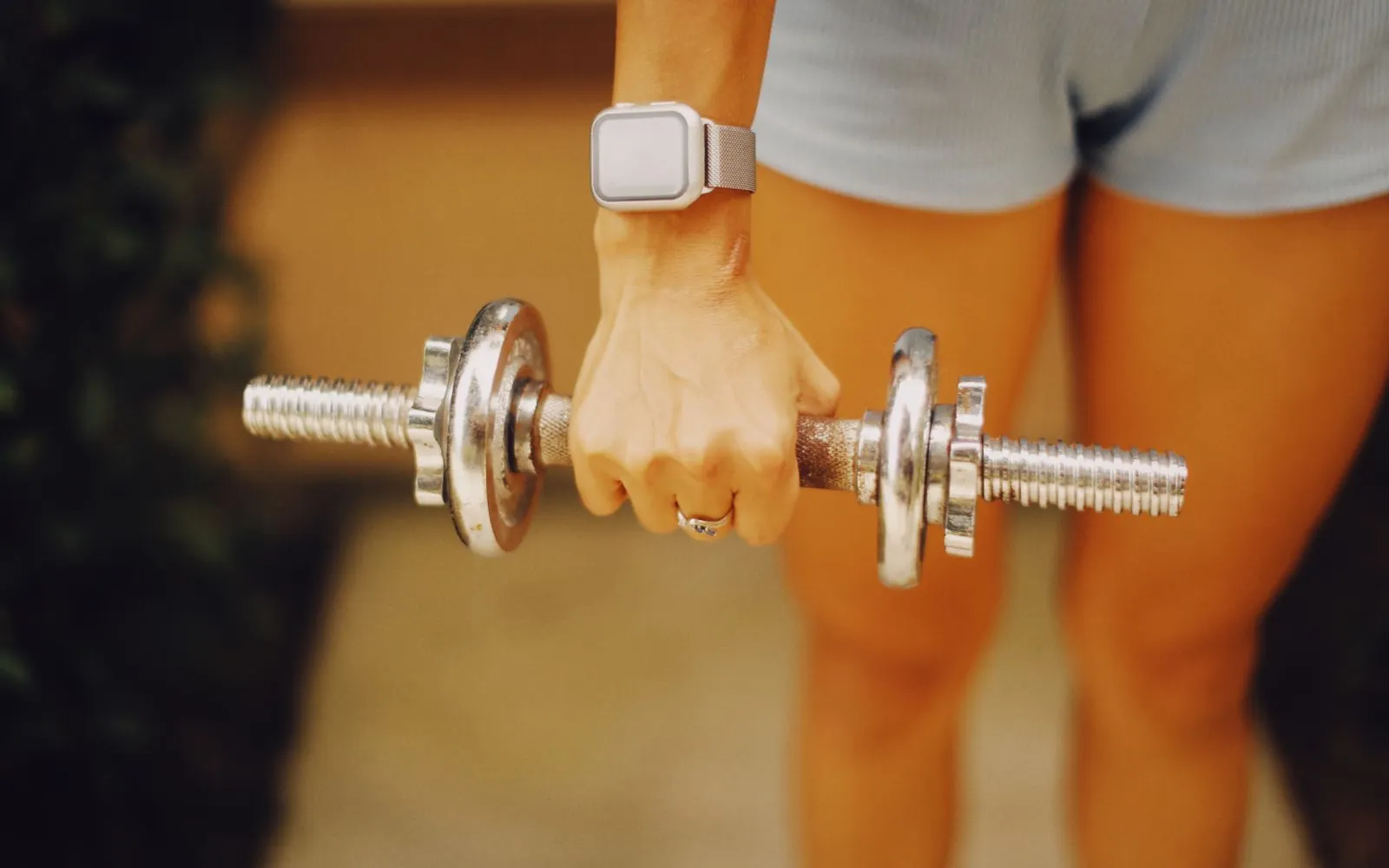
Is weight training for women different?
No. The NHS gives every adult the same rule. Do strength work on at least 2 days a week, working the legs, hips, back, tummy, chest, shoulders and arms.
A 2026 review pooled 126 studies of 4,019 healthy women. Its authors say general training guidelines could apply to women, with the plan still fitted to the person.
So here are the beginner numbers. They come from the NHS, ACSM (a US body of sports doctors and scientists) and the Royal Osteoporosis Society.
A rep is one lift. A set is a run of reps without a break.
| Part of the plan | Beginner amount | Source |
|---|---|---|
| Days a week | 2 to 3, with at least a day’s rest in between | ACSM, ROS |
| Time | 20 to 30 minutes | ROS |
| Reps per set | 8 to 12 | ACSM, ROS |
| Sets | Build up to 3 of each exercise | ROS |
| Effort | Until you need a short rest | NHS |
| Going heavier | Add 2 to 10% once you beat your reps by 1 or 2 | ACSM |
Pick your two days now, such as Monday and Thursday.
What gym workout plan should a woman follow?
Use four kinds of move: hinge, squat, push and pull. The Royal Osteoporosis Society suggests one from each group every time you train.
A hinge bends at the hips, like picking up a box. A squat bends the knees, like sitting in a chair.
A push moves weight away from you. A pull brings it in.
| Group | Day A | Day B |
|---|---|---|
| Squat (legs) | Leg press | Goblet squat, holding one weight at your chest |
| Hinge (bum and back) | Glute bridge, lying on your back and lifting your hips | Romanian deadlift with dumbbells, sliding them down your legs with a flat back |
| Push (chest and arms) | Chest press machine | Press-ups, on your knees if needed |
| Pull (back and arms) | Seated row | Lat pulldown, pulling a bar down towards your chest |
Warm up for at least 6 minutes first, such as marching on the spot and knee lifts. Then work down the list in order. ACSM puts big muscle groups before small ones.
Most gyms offer an induction, where staff show you how to use the equipment. The NHS says to ask an instructor if you’re unsure how to use a machine. Book yours for your first Day A.
Want a third day? Repeat Day A, or see our beginner gym plan.
How heavy should a beginner lift?
Heavy enough that 8 to 12 reps feel hard.
The Royal Osteoporosis Society gives a simple test.
If you can’t do 8 with good technique, go lighter. If you can do 12 and could keep going, go heavier.
- Below 8 repsFewer than 8: go lighter.
- 8 up to 12 reps8 to 12: keep this weight.
- Above 12 reps12 and could keep going: go heavier.
How much heavier? ACSM says to add 2 to 10% once you can do 1 or 2 more reps than planned.
Say you leg press 40 kg and one day you get 14 reps. Next time, add 0.8 to 4 kg, so up to 44 kg. Then build the reps back up.
Dumbbells often jump by bigger steps than that. Our progressive overload guide shows what to do then. Write down every weight and rep so you know when to step up.
Will lifting weights make me bulky?
You will build some muscle. That is the point. But no study promises a look, and muscle comes slowly.
A 2020 review compared young and middle-aged men and women on the same programmes. Women grew muscle at a similar rate to men, relative to where they started.
The gap that favours women is upper-body strength. Pooling 17 studies, women gained more of it than men, relative to their starting strength.
| What was measured | Studies | Women compared with men |
|---|---|---|
| Muscle size | 10 | No clear difference |
| Leg strength | 23 | No clear difference |
| Upper-body strength | 17 | Women gained more, relative to their start |
Source: Roberts 2020
The authors say the studies were short and more research is needed. Still, don’t skip the push and pull moves.
In the 2026 review of women, body fat fell and strength rose, before and after the menopause. Our guide on how to build muscle covers how fast it comes.
Should I train differently on my period or after menopause?
On your period, you don’t have to. A review of 78 studies in women with regular cycles found performance might dip only a trivial amount early in the cycle. The evidence was low quality, so the authors suggest going by how you respond.
Got cramps? The NHS lists gentle exercise like yoga, swimming, walking or cycling as one way to ease period pain. A lighter session is fine.
After the menopause, keep lifting. The NHS suggests resistance exercises, for example using weights, to help protect against weak bones. Strength rose by a similar amount in women after the menopause as before it.
Feeling weaker in your 40s or 50s? See losing muscle and strength for checks worth asking about.
Your first weeks of weight training
- Book 2 full-body sessions a week, with at least a day’s rest in between.
- Warm up for at least 6 minutes before each one.
- Do one squat, one hinge, one push and one pull every session.
- Use a weight you can lift 8 to 12 times with good technique, and build up to 3 sets.
- Write down the weight and reps for every set.
- Add 2 to 10% once you can do 1 or 2 more reps than planned.
Sources: NHS; NHS: warm-up; ROS; ACSM
When to speak to a GP
The NHS asks some people to speak to a GP first. Book an appointment if:
- You haven’t exercised for some time, or you have a medical condition or health concerns.
- You’ve been diagnosed with osteoporosis. The NHS says to talk to your GP or a specialist before a new exercise plan.
- You’re pregnant and new to lifting. The NHS says not to start a new vigorous activity in pregnancy and to start new exercise gently. Ask your midwife, and tell the instructor you’re pregnant. In later pregnancy, swap the glute bridge for another hinge. The NHS says to avoid lying flat on your back for more than a few minutes.
- Your period pain is severe or worse than usual, and painkillers haven’t helped. The NHS says to ask for an urgent GP appointment or call 111.
- You get chest pain that comes and goes, or that goes away quickly but still worries you.
Call 999 for sudden chest pain or discomfort that doesn’t go away, which can feel like squeezing, pressure, burning or indigestion. The same goes for pain that spreads to your arm, neck, jaw, stomach or back. Or chest pain with sweating, feeling sick, light-headed or short of breath.