What are the best upper back stretches?
Start with a seated twist and a chair back bend. NHS physios use both for a stiff mid back. But in neck pain trials, stretches alone may not ease pain. Strength work helped more.
On this page
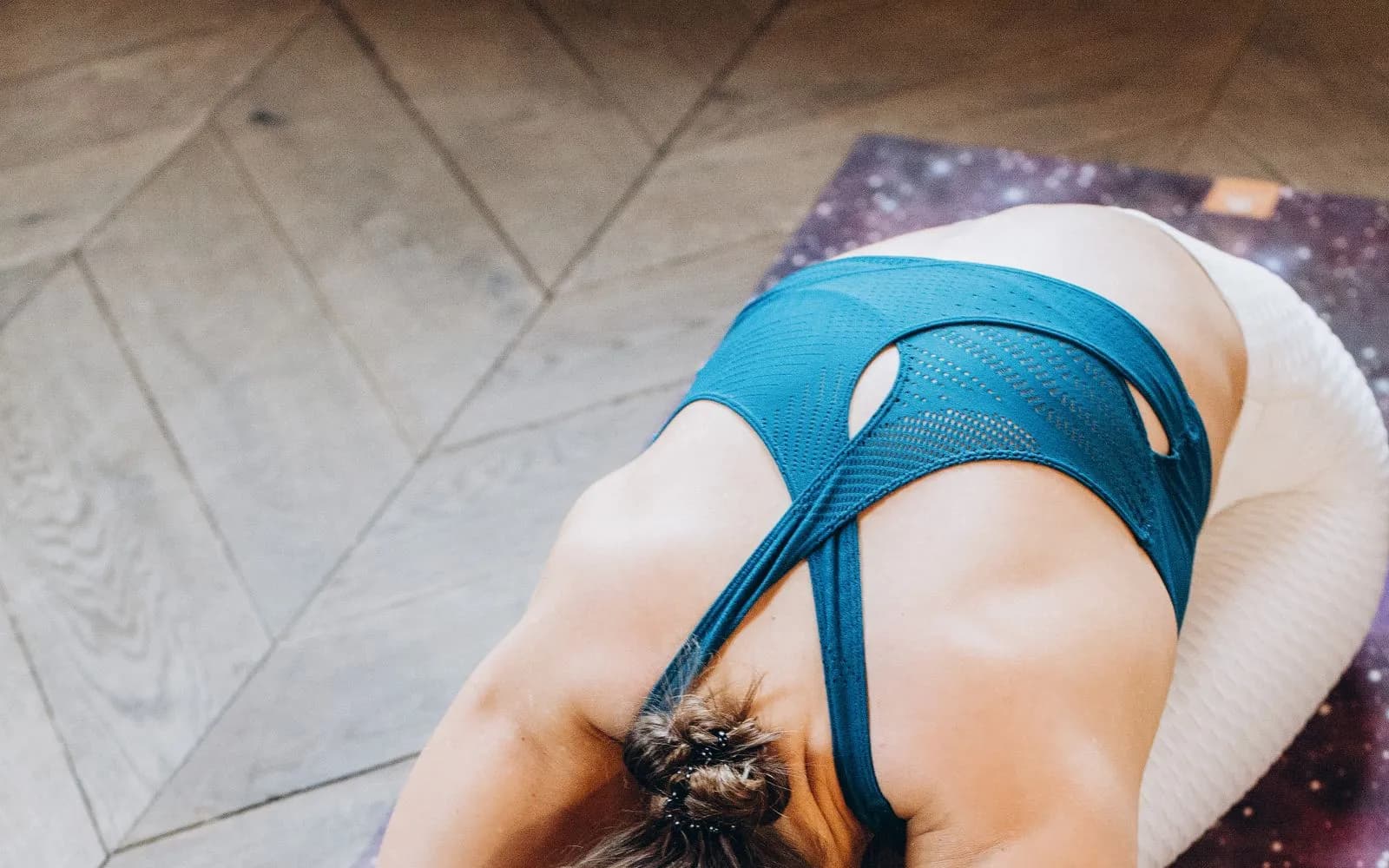
What are the best upper back stretches?
Start with two chair moves: a seated twist and a chair back bend. Both are on a physio sheet from Cambridge University Hospitals for the middle (thoracic) part of your spine.
Thoracic just means the part between your neck and your lower back.
| Stretch | How to do it | Where you feel it |
|---|---|---|
| Seated twist | Cross your arms over your chest, hands on opposite shoulders. Turn to one side, back to the middle, then the other way. | Mid back, as you turn. |
| Chair back bend | Sit on a chair with a high back, feet flat. Gently lean back over the top of the chair. | The part of your back just above the chair. |
| Round forward | Sit tall, feet flat. Bring your chin to your chest and round your upper back. Keep your shoulders relaxed. | Between your shoulder blades. |
| Arms up | Lift your breastbone, or lift your arms straight above your head. | Upper back. Keep your lower back still. |
Sources: Cambridge University Hospitals NHS; University Hospital Southampton NHS
The sheets leave the number of repeats to your physio. So start with a few slow ones. If they hurt, the Cambridge sheet says to ask a physio or GP.
Try the twist and the back bend now, at your desk.
Mid back stretches and thoracic mobility exercises
Got a mat or a bit of floor? These four moves come from NHS physio sheets too. They work the same part of your spine, with more room to move.
Four floor moves for a stiff mid back
- Arch and dip: on all fours, arch your back up and let your head relax down. Then let your mid-back drop, neck long, elbows straight.
- Thread the needle: on all fours, reach one arm under the other armpit. Then bring it back and reach up to the ceiling. Move from your upper back.
- Arm slide: on all fours, slide your arms along the floor as far as you can. Push your bottom back and down, and your chest towards the floor.
- Towel roll: lie on your back on a rolled towel between your shoulder blades. Hands behind your neck, breathe in and lower your elbows apart towards the floor.
Sources: Cambridge University Hospitals NHS; Wrightington, Wigan and Leigh NHS
For a hunched upper back or rounded shoulders, our posture exercises guide builds on these moves.
How often should I do upper back stretches?
One NHS physio sheet from Wigan suggests 3 to 4 times a week, with at least 1 day off in between. Here’s how it doses the floor moves.
How an NHS physio sheet doses each move
- 1
Arch and dip
Hold each position a couple of seconds. 10 each way, 2 sets.
- 2
Thread the needle
10 each side, 2 sets.
- 3
Rest
30 seconds between sets. Go slowly, don’t rush.
- 4
Check after
Some ache is normal. It should ease within 2 hours.
Still sore more than 2 hours later? The sheet says do fewer repeats next time.
And if the pain gets worse, the NHS says to stop and see a GP for advice.
Pick 3 days this week and put them in your diary.
Do stretches help upper back pain?
They help you move. For pain, they may not be enough on their own.
A Cochrane review pooled 27 trials of exercise for neck pain. We found no trials of stretches for upper back pain alone, so this is the closest evidence.
| What people did | What the trials found |
|---|---|
| Stretching alone | May not change pain or day-to-day function. Low-quality evidence. |
| Strength work for the neck, shoulder blades and arms | Pain eased a moderate to large amount, right after the programme and in the weeks after. Moderate-quality evidence. |
| Strength work plus stretching | Pain eased a small to large amount. |
Source: Cochrane, Gross 2015
So the move to add is strength work. The review found no high-quality evidence either way, so treat this as a good bet, not a promise.
The NHS says adults should do strength work on at least 2 days a week that work all the major muscle groups. That includes your back and shoulders. So keep your stretches, and add rows.
Our back exercises guide shows how to row with dumbbells or no weights. For a gentler start, try resistance band exercises.
Neck and upper back stretches
Stiff neck too? The NHS says bad posture, such as sitting at a desk for a long time, is a common cause of neck pain.
Three neck stretches from the Wigan NHS sheet
- Chin tuck: pull your chin in and hold for 5 seconds. Do it 5 times, 2 sets.
- Side tilt: tilt your head towards one shoulder until you feel a stretch on the other side. Hold about 5 seconds, 5 times each side.
- Head turn: turn your head to one side until you feel a stretch, then the other side.
The sheet says to stop if a move makes you feel dizzy or unwell.
A hot water bottle in a tea towel for 20 minutes, 2 to 3 times a day can help too. For a forward head, see our neck hump guide.
When to speak to a GP
Back pain often improves on its own within a few weeks. But pain between your shoulders is one the NHS wants a GP to check.
Back pain: who to call
- 1
999 or A&E
Chest pain, pain after a serious accident, pain, tingling, weakness or numbness in both legs, loss of feeling around your genitals or anus, bladder or bowel changes, or changes in how your penis or vagina feels during sex, or trouble getting an erection or orgasm.
- 2
Urgent GP or 111
You feel hot, cold, shivery or generally unwell, or severe pain starts suddenly or gets worse fast.
- 3
See a GP
Any sign in the list below.
Source: NHS: back pain
See a GP if:
- the pain is coming from the top of your back, between your shoulders, rather than your lower back
- it hasn’t improved after a few weeks at home, it stops you doing everyday things, or you’re worried about the pain or struggling to cope
- it’s worse at night, doesn’t ease with rest, or is worse when you sneeze, cough or poo
- you’ve lost weight without trying, there’s a lump or swelling, or your back has changed shape
- neck pain comes with pins and needles or a cold arm
Not exercised for a while, or have a health condition? The NHS says to speak to your GP first. In many areas you may be able to refer yourself to NHS physio.