Which vegetarian foods are highest in protein?
Eggs, dairy, Quorn, soya and pulses. Cheddar is one of the richest per 100 g. But Quorn gives you over three times as much protein per calorie. That’s the calorie catch.
On this page
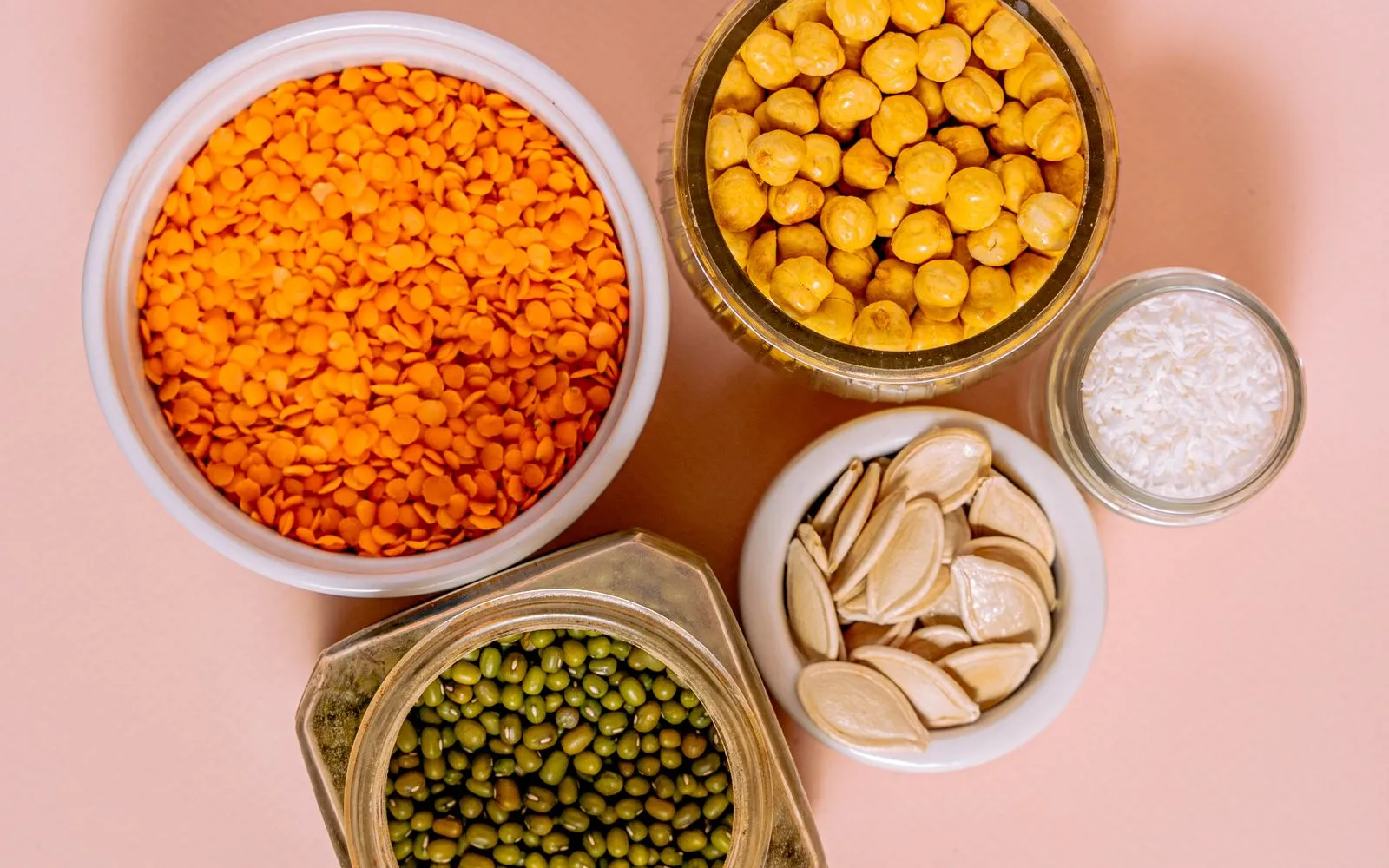
What are the best vegetarian protein sources?
Tempeh (a firm cake of soya beans), cottage cheese, eggs and Quorn give the most in one serving. Paneer, lentils and chickpeas come next.
The NHS lists eggs, pulses, Quorn, tofu and tempeh as protein foods for vegetarians. Milk, cheese and yoghurt count too.
| Food | Per 100 g | In one serving |
|---|---|---|
| Tempeh | 20.7 g | 100 g gives 20.7 g |
| Cottage cheese, reduced fat | 10.6 g | 150 g gives 15.9 g |
| Eggs, boiled | 14.1 g | 2 eggs (about 100 g) give 14.1 g |
| Quorn pieces | 14.0 g | 100 g gives 14.0 g |
| Paneer | 26.0 g | 50 g gives 13.0 g |
| Chickpeas, tinned, drained | 8.4 g | 150 g gives 12.6 g |
| Red lentils, boiled | 8.1 g | 150 g gives 12.2 g |
| Edamame (young soya beans), boiled | 12.2 g | 100 g gives 12.2 g |
| Semi-skimmed milk | 3.5 g | 250 ml gives about 9 g |
| Greek style yoghurt, plain | 5.7 g | 150 g gives 8.6 g |
| Cheddar | 25.4 g | 30 g gives 7.6 g |
Source: UK food tables (CoFID)
Paneer and Cheddar have the most per 100 g. But you eat less of them, so a 30 g slice of Cheddar gives only 7.6 g.
Brands vary, so check the label on yours. Then build each meal on one food from the top rows.
Which non-meat foods give the most protein per calorie?
Quorn and reduced fat cottage cheese. Think of calories as the price you pay for protein. Some foods charge a lot more than others.
| Food | Amount for 20 g | Calories |
|---|---|---|
| Quorn pieces | 143 g | 104 kcal |
| Cottage cheese, reduced fat | 189 g | 128 kcal |
| Tempeh | 97 g | 160 kcal |
| Eggs, boiled | 142 g | 203 kcal |
| Red lentils, boiled | 247 g | 252 kcal |
| Cheddar | 79 g | 328 kcal |
| Peanut butter | 88 g | 532 kcal |
Source: UK food tables (CoFID)
That’s the calorie catch. Cheddar costs over three times the calories of Quorn for the same protein.
Cheese isn’t bad. It just costs more.
The NHS says to go for lower fat milk and dairy foods. Watching your weight? Lean on the top four rows and use cheese as a topping.
For ideas, see high protein, low calorie snacks.
How much protein do vegetarians need?
The same as everyone else. The UK amount for adults is 0.75 g per kg of body weight a day.
| Body weight | UK amount (0.75 g per kg) | Very active (1.2 to 2.0 g per kg) |
|---|---|---|
| 60 kg | 45 g | 72 to 120 g |
| 70 kg | 52.5 g | 84 to 140 g |
| 80 kg | 60 g | 96 to 160 g |
| 90 kg | 67.5 g | 108 to 180 g |
Source: British Nutrition Foundation
The British Nutrition Foundation says most vegetarians get enough protein.
The higher column is the American College of Sports Medicine advice for athletes and people who do hard or long strength or endurance training. They may need more. The Department of Health advised adults to avoid more than twice the UK amount (1.5 g per kg).
Pregnancy adds 6 g a day. Breastfeeding adds 11 g a day while your baby is under 6 months, then 8 g.
Find your weight and note your number. For more detail, see how much protein you need a day.
Is vegetarian protein as good as meat?
Yes, if you eat a mix of foods. Protein is built from parts called amino acids. Animal protein has all of them in good amounts, so it’s called better quality.
But the British Nutrition Foundation says a variety of plant foods eaten during a day gives enough, when you eat enough calories. You don’t need to pair foods at every meal.
Eggs and dairy help too. The BDA calls them good sources, and says Quorn, soya burgers and seitan (made from wheat) are high-quality protein.
Meat substitutes are often high in salt and fat, so have them in moderation. Vegan? See vegan protein sources.
How can I get more protein as a vegetarian?
Add one protein food to meals you already eat. You don’t need a powder. Most people already get enough, and you can get enough from food even when training hard.
Six ways to add vegetarian protein this week
- Add 2 boiled eggs or 150 g of cottage cheese to your lunch.
- Stir a tin of drained lentils or chickpeas into soup, curry or pasta sauce.
- Use Quorn in place of mince, or add 100 g of tempeh to a stir-fry.
- Make porridge with semi-skimmed milk instead of water.
- Snack on 100 g of edamame or a pot of plain yoghurt.
- Check the label on meat substitutes for salt and fat.
Sources: NHS; BDA; UK food tables (CoFID)
Pick two and try them this week. For full meals, see high protein vegetarian meals. For mornings, see high protein breakfasts.
When to speak to a GP
The NHS says vegetarians need to get enough iron and vitamin B12. Iron from plants is harder for your body to take in. Speak to a GP if:
- You feel tired with no energy, get short of breath, notice your heartbeat, look paler than usual or get headaches. These can be signs of low iron.
- You feel weak or tired, get short of breath or headaches, or have a sore or red tongue. Or you have numbness, pins and needles, muscle weakness, problems with balance, or problems with your vision, memory, understanding or judgement. These can be signs of low vitamin B12.
- You keep losing weight without changing your diet or exercise routine. See a GP as soon as possible if you also have other symptoms.
- You have kidney disease and want to change your diet. You may be referred to a dietitian if blood tests show high potassium and phosphate.
- You are pregnant or breastfeeding on a vegetarian diet. You’ll need enough vitamins and minerals for your baby.
Ask your GP if a blood test for iron or vitamin B12 makes sense. Having some vitamin C with meals helps your body take in iron.
See also iron blood tests and signs of low B12.