Which vitamin D should I take?
Choose D3, 10 micrograms (400 IU) a day. Everyone should consider it from October to early March. Sprays did no better than capsules in trials. What you swallow it with did make a difference.
On this page
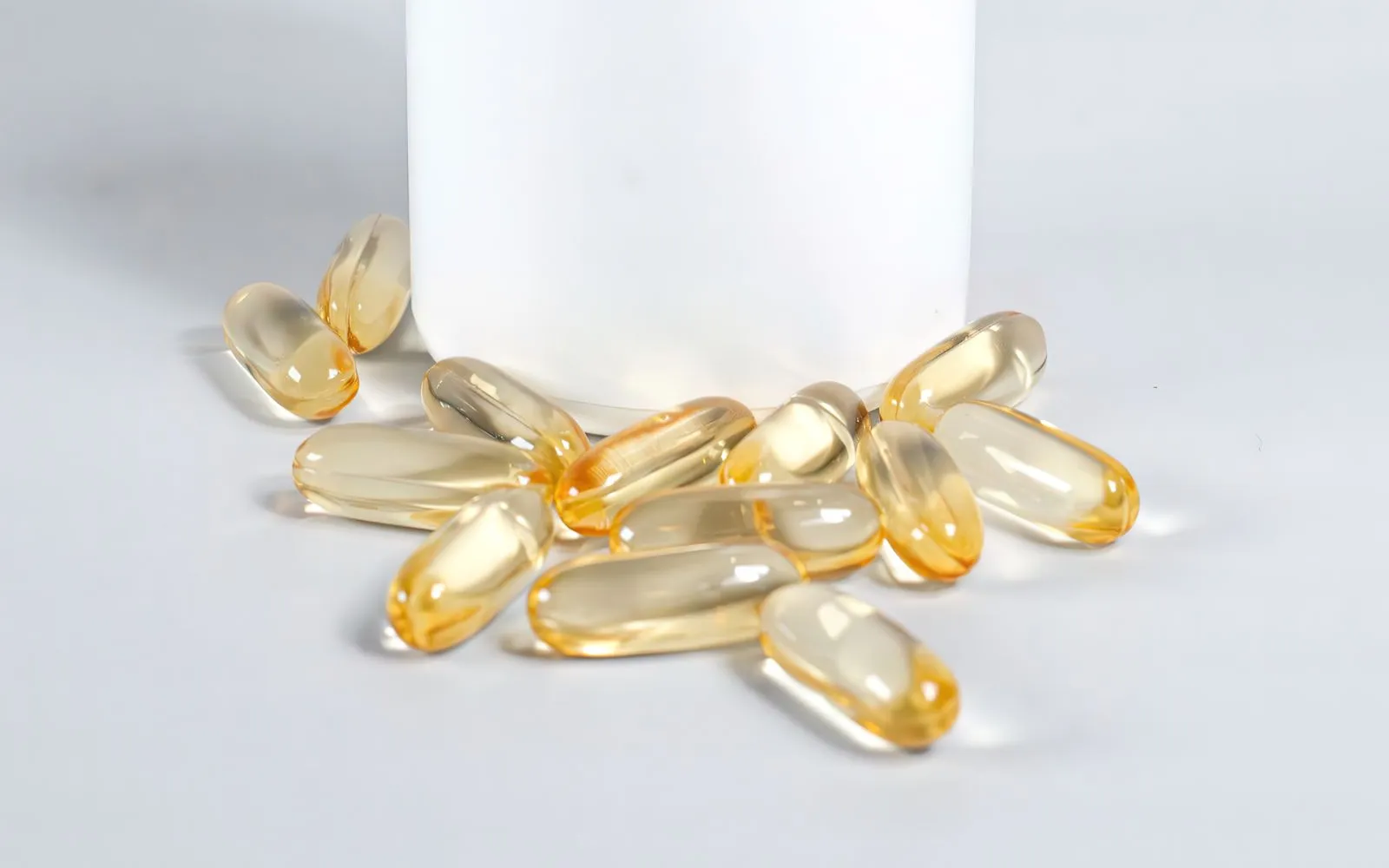
Do I need a vitamin D supplement?
Most people should think about one from October to early March. In those months, the NHS says we don’t make enough vitamin D from sunlight.
So it says everyone should consider 10 micrograms (400 IU) a day in autumn and winter. From late March or early April to the end of September, most people make all they need from sun on their skin. You may choose to skip it then.
Want it the natural way? Vitamin D is in a small number of foods, like oily fish, red meat, egg yolks and some fortified spreads and cereals. But the NHS says it’s hard to get enough from food alone.
| Who | How much a day | When |
|---|---|---|
| Adults and children over 4 | 10 micrograms (400 IU) | Consider it October to early March. |
| Rarely outdoors, in a care home, or skin mostly covered outside | 10 micrograms (400 IU) | All year. |
| Dark skin, such as an African, African-Caribbean or south Asian background | 10 micrograms (400 IU) | Consider it all year. |
| Children aged 1 to 4 | 10 micrograms (400 IU) | All year. |
| Babies under 1, breastfed or having less than 500ml of formula a day | 8.5 to 10 micrograms | All year. |
Source: NHS
Which kind? D3 raised blood levels more than D2 in trials. If you qualify for Healthy Start, you can get free vitamin D for you or your child.
Your next step: find a D3 product that gives 10 micrograms a day.
Vitamin D3 vs D2: which is better?
Most vitamin D you can buy is one of two kinds. D3 is called colecalciferol. D2 is called ergocalciferol. Your liver and kidneys turn both into the form your body uses.
| D3 (colecalciferol) | D2 (ergocalciferol) | |
|---|---|---|
| Usually made from | Sheep’s wool fat (lanolin), or lichen | Not from animals |
| Vegan? | Only if made from lichen | Yes, but check the capsule shell |
| In trials | Raised blood levels more | Raised blood levels less |
Sources: Nottinghamshire APC; Vegan Society; Tripkovic 2012; Tripkovic 2017
A review of trials found D3 raised blood levels more than D2 when given as one big dose. With daily doses, that review found no clear gap.
A later UK trial tested daily doses. It gave 335 healthy women aged 20 to 64 in Surrey 15 micrograms a day in juice or biscuits for 12 weeks over winter. D3 raised their levels about 15 to 17 nmol/L more than D2. That’s the unit on a vitamin D blood test.
So D3 looks like the better pick for most people. Vegan? D2 works, or look for D3 made from lichen.
Vitamin D tablets, spray or drops: which should I choose?
The one you’ll take every day. Sprays are often sold as easier to absorb. A review of 4 trials found sprays did not appear better than other forms.
In one trial of 22 healthy adults, spray and capsules worked equally well.
| Form | Suits | Check |
|---|---|---|
| Tablets and capsules | Most adults. Easy to find. | Capsules may contain gelatine, from animals. |
| Oral spray | People who find tablets hard to swallow. | Trials found it no better than capsules. |
| Drops | Babies and children under 5. | Drop into the mouth or onto a spoon. |
| Chewable or dissolving tablets | People who’d rather not swallow tablets whole. | Chew chewable ones. Drop dissolvable ones in water and drink as soon as they dissolve. Don’t chew those. |
Sources: NHS colecalciferol; NHS how to take; NHS; Nutrients 2020
Now the habit that did make a difference. It’s what you take it with.
In one study of 50 older adults, a single large dose was absorbed better with a meal containing fat. Blood levels of vitamin D3 peaked 32% higher than with a fat-free meal.
So take tablets and capsules with your main meal, as the NHS advises. Thinking of gummies instead? See gummy vitamins.
Is high strength vitamin D better?
Not for most people. The NHS says 10 micrograms a day will be enough for most. Adults and children aged 11 to 17 shouldn’t take more than 100 micrograms (4,000 IU) a day, as it could be harmful. For children 1 to 10 the limit is 50 micrograms (2,000 IU), and for babies under 1 it is 25 micrograms (1,000 IU). Some health conditions mean you may not be able to safely take as much.
Labels mix units. 1 microgram is 40 IU, so 25 micrograms is 1,000 IU.
- Below 10 micrograms a dayBelow the NHS daily amount.
- 10 up to 100 micrograms a dayEnough for most people. 100 is the most.
- Above 100 micrograms a dayOver the NHS limit unless a doctor says.
Source: NHS
Too much over a long time can let calcium build up. That can weaken bones and damage the kidneys and heart.
The very strong loading doses used for low levels are only on prescription. If your doctor gave you a different dose, follow their advice.
For every label strength in IU, see how much vitamin D to take. For the risks, see can you take too much vitamin D.
How do I choose the best vitamin D supplement?
How to pick a vitamin D supplement
- Choose vitamin D3 (colecalciferol) where you can.
- Pick 10 micrograms (400 IU) a day. Unless a doctor advises, never take more than 100 micrograms (4,000 IU) from age 11. For ages 1 to 10 the limit is 50 micrograms (2,000 IU), and under 1 it’s 25 micrograms (1,000 IU).
- Choose a form you’ll take every day: tablet, capsule, spray or drops.
- Take tablets and capsules with your main meal.
- Vegan? Choose D2 or D3 from lichen, and check the capsule has no gelatine.
- Already take a multivitamin or calcium? Check it for vitamin D, and ask your doctor before adding more.
Sources: NHS; NHS colecalciferol; Vegan Society
The NHS vegan advice is simple: read the label to make sure the vitamin D isn’t from animals.
Tell your doctor before you start if you have kidney problems or have had kidney stones. The same goes for high calcium in your blood or pee, or sarcoidosis (a rare condition that causes swelling in organs). Also tell them if you have a peanut or soya allergy.
Some medicines don’t mix well with vitamin D. These include digoxin (a heart medicine), some water tablets, epilepsy medicines and steroids. Never stop or change a prescribed medicine without your prescriber.
Want to add K2? See vitamin D3 and K2.
When to speak to a GP
Contact your doctor or 111 if:
- You took more than 4,000 IU in 1 day, and it wasn’t a prescribed loading dose. The same goes if a child aged 1 to 10 had over 2,000 IU, or a baby under 1 had over 1,000 IU. The NHS says to contact 111 for advice now.
- You start peeing more often or get swelling anywhere in your body. Call your doctor or 111.
- You’re sick, feel confused, or get bone or joint pain or an irregular heartbeat. These could be signs of too much calcium.
- You get a high temperature and a sharp pain in your side or one side of your lower back. It could be early kidney stones.
- You think your vitamin D is low, for example with bone or muscle pain. Your doctor can check with a blood test.
Call 999 if your lips, mouth, throat or tongue suddenly swell, you’re breathing very fast or struggling to breathe, or your throat feels tight. Call 999 too if you struggle to swallow, or your skin, tongue or lips turn blue, grey or pale. The same goes if you suddenly become very confused, drowsy or dizzy, or someone faints and can’t be woken. Or if a child is limp, floppy or not responding like they normally do. These can be signs of a serious allergic reaction.
For symptoms of a low level, see vitamin D deficiency. To check yours, see the vitamin D blood test.