How do I start dance workouts at home?
Start with 3 songs you love, or a free NHS dance video. It all counts towards the NHS 150 minutes a week. But only if you dance hard enough. One simple test tells you.
On this page
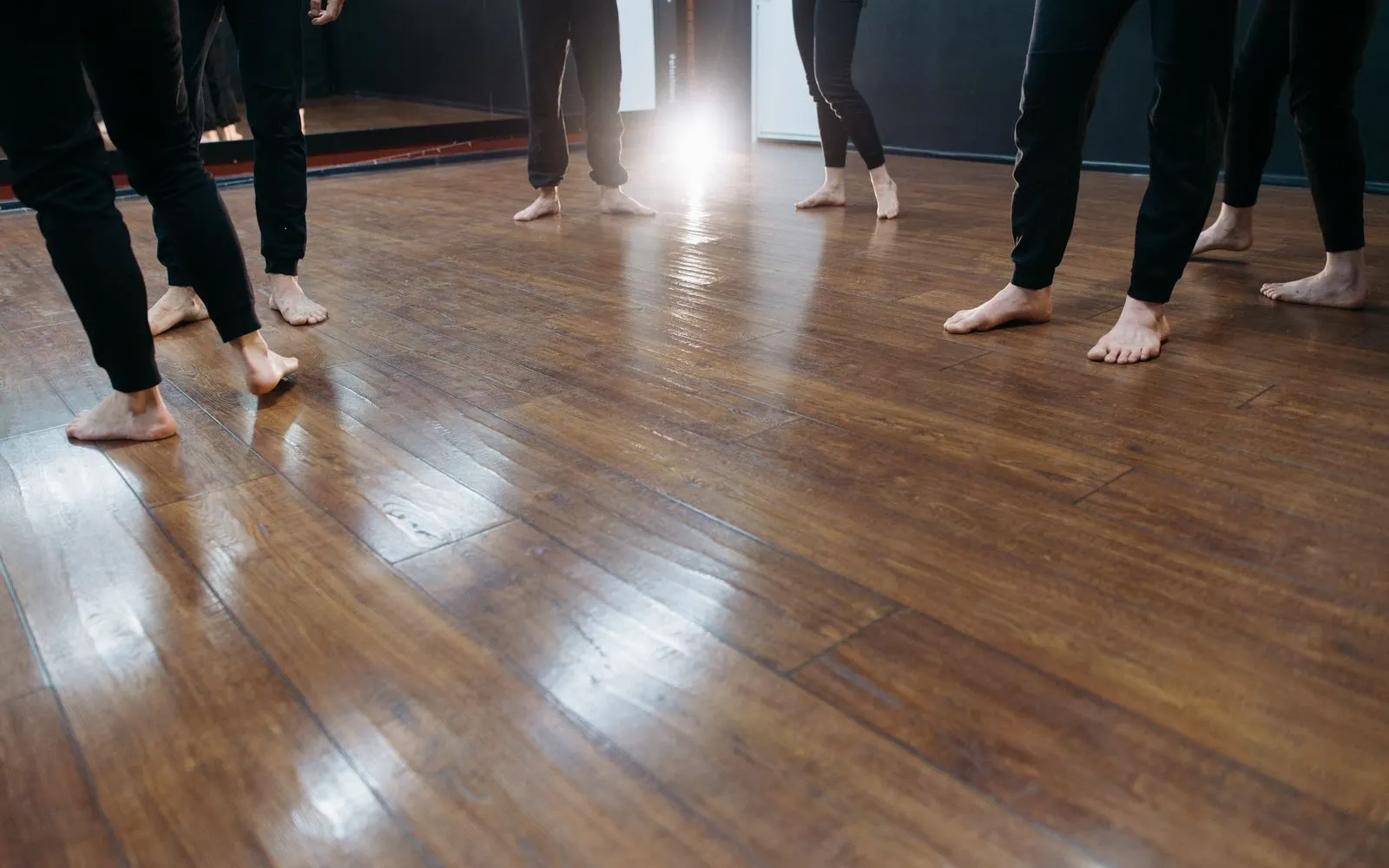
How do I start a dance workout at home?
Pick 3 songs you like and dance to them in your living room. Or press play on a free NHS video. You don’t need a class or any kit.
Warm up first. The NHS warm-up should take at least 6 minutes, and you can do it on the spot.
Your first dance workout: warm up, 3 songs, cool down
- 1
Warm up
March on the spot for 3 minutes, then do heel digs and knee lifts. At least 6 minutes in all.
- 2
Song 1
Step side to side and swing your arms. Keep it easy.
- 3
Songs 2 and 3
Lift your knees higher and make your arm moves bigger. You should be able to talk, but not sing.
- 4
Cool down
Pick a slow song. Walk it out, then stretch.
Sources: NHS: how to warm up; NHS: physical activity guidelines
Lost the steps? The NHS tip for its beginner video works for any song. If you can’t follow all the steps at first, just keep moving.
Try it today. For more on warming up, see warm-up stretches before a workout.
Does dancing count as exercise?
Yes. The NHS lists dancing as moderate activity, the same level as brisk walking.
The simple test is the talk test. If you can talk but not sing while you dance, that’s moderate. If you can only say a few words before you pause for breath, that’s vigorous.
| How it feels | NHS level | Each week |
|---|---|---|
| You can talk, but not sing. | Moderate | At least 150 minutes. |
| Only a few words, then you pause for breath. | Vigorous | Or at least 75 minutes. |
| Moves for legs, hips, back, tummy, chest, shoulders and arms. | Strength | Plus at least 2 days. |
The NHS says most moderate activities can become vigorous if you put in more effort. And 75 vigorous minutes can give similar health benefits to 150 moderate ones.
Dancing does not replace strength work. Add strength training at home on 2 days a week.
Free dance workouts at home
The NHS has free follow-along videos. Each one below lasts 45 minutes. Do as much as you can.
| Video | Music or style | Length |
|---|---|---|
| La Bomba | Latin American music, hip hop, Afrobeats and R&B. | 45 minutes |
| Belly dancing for beginners | Belly dance moves, made for beginners. | 45 minutes |
| Aerobics for beginners | Aerobics steps. The NHS lists aerobics as vigorous. | 45 minutes |
Sources: NHS: La Bomba; NHS: belly dancing; NHS: aerobics for beginners
For La Bomba, the NHS says you’ll need trainers and some water, and maybe a towel.
Want a Zumba workout at home? Zumba is built on Latin aerobic dances, so La Bomba is the closest free match.
Clear a space and press play. For moves with no jumping, see cardio at home.
Does a Zumba workout at home work?
For fitness, probably. For weight, the evidence is mixed.
A 2026 review of 7 trials looked at Zumba in women who were not active enough. Compared with doing nothing, Zumba raised fitness and cut body fat by about 5 percentage points, but BMI (weight for height) did not clearly change.
An earlier review found Zumba may improve fitness, but could not conclude that it cuts body weight.
A 2018 review of 28 studies found dance matched other planned exercise for heart fitness.
In older adults, a 2026 review of 17 trials found dancing about as good as other exercise for fitness, and better for muscle strength.
Most of these trials were classes, not home videos. So dance for fitness and fun. If weight is your goal, see the best exercise for weight loss.
How often should a beginner dance?
Build up to 150 minutes over the week. The NHS suggests you spread it over 4 to 5 days a week, or every day. Five 30-minute dance sessions cover it.
Your beginner dance week
- Warm up for at least 6 minutes before every session.
- Use the talk test: you should be able to talk, but not sing.
- Build up to 150 minutes of moderate dancing a week, over 4 to 5 days.
- Add strength exercises on at least 2 days a week.
- Over 65? Add moves for strength, balance and flexibility on at least 2 days a week.
- Stop at once if you feel any pain or become unwell.
Sources: NHS: how to warm up; NHS: physical activity guidelines; NHS: older adults
Hard to stick with it? See how to stay motivated to exercise, or try exercise snacks.
When to speak to a GP
Speak to a GP before you start if:
- You have not exercised for some time, or you have medical conditions or concerns.
- You have a health problem, an injury, any symptoms or feel unwell, or had a recent heart attack or operation.
- You’re pregnant or recently gave birth. The NHS does not recommend starting a new vigorous activity in pregnancy. Stop if you feel uncomfortable, too hot or unwell. After giving birth, the NHS says you can do more intense activity after your 6- to 8-week postnatal check, if you feel able to. It does not recommend vigorous activity if you were not active before pregnancy.
- You have chest pain that comes and goes, or that goes away quickly but you’re still worried.
Stop at once if you feel any pain or become unwell, and call 111 if symptoms worry you or don’t go away.
Call 999 for sudden chest pain or discomfort that doesn’t go away. It can feel like squeezing, pressure, burning or indigestion.
Call too for pain spreading to either arm, or your neck, jaw, stomach or back. Also call for chest pain with sweating, feeling sick, light-headed or short of breath.