What is functional strength training?
Strength training built on everyday moves. Squat, hinge, push, pull, lunge and carry. But it won’t beat gym weights at everything. In one trial, each won a different test.
On this page
What is functional strength training?
It’s strength training built from the moves your day is made of. A 2024 review describes it as training that uses daily activities, or moves that copy them.
Think of it as a rehearsal. You practise getting up, picking up, pushing, pulling, stepping and carrying, with enough load to make each one hard.
| Move | In daily life | Exercise |
|---|---|---|
| Squat | Getting up from a chair | Sit-to-stand, then goblet squat |
| Hinge | Picking a bag up off the floor | Kettlebell deadlift |
| Push | Pushing yourself up off the floor | Wall press-up, then press-up |
| Pull | Pulling open a heavy door | Bent-over row |
| Lunge or step | Climbing stairs | Step-up or lunge |
| Carry | Carrying heavy shopping | One-arm farmer carry |
The NHS counts carrying heavy shopping bags and digging as strength work. The Royal Osteoporosis Society (ROS) suggests one squat, hinge, push and pull every session, plus a lunge or step once or twice a week.
Your next step: pick one exercise from each row for your next session.
Is functional training better than weight training?
Not at everything. It depends on what you want to get better at.
In a 2024 trial, 30 adults with an average age of 71 trained twice a week for 6 weeks. One group lifted gym weights. The other did everyday moves in a weighted vest.
| Test | Everyday moves in a vest | Gym weights |
|---|---|---|
| Walking speed | Bigger gain | Smaller gain |
| Stand up, walk and sit back down | Bigger gain | Smaller gain |
| Heaviest weight for 5 reps on deadlift and leg machines | Smaller gain | 2 to 3 times bigger gain |
| Thigh muscle size and knee-straightening force | Improved | Improved |
Source: Frontiers in Aging 2024
That’s task specificity. You get better at the exact moves you practise, so each group won its own tests.
A review of 32 studies in older adults found functional training on its own helped with daily tasks. For balance and getting about, it did no better than other exercise programmes.
All this research was in older adults. If you’re younger, treat it as a sensible guide rather than proof.
Your next step: train the moves you want to get better at. Want heavier lifts too? Train those lifts as well.
Functional strength training exercises
Six functional exercises and how to do them
- Sit-to-stand: sit on the edge of a chair, lean slightly forward and stand up slowly using your legs, not your arms.
- Goblet squat: hold a kettlebell close to your chest, keep your shoulders over your knees and ankles, and squat.
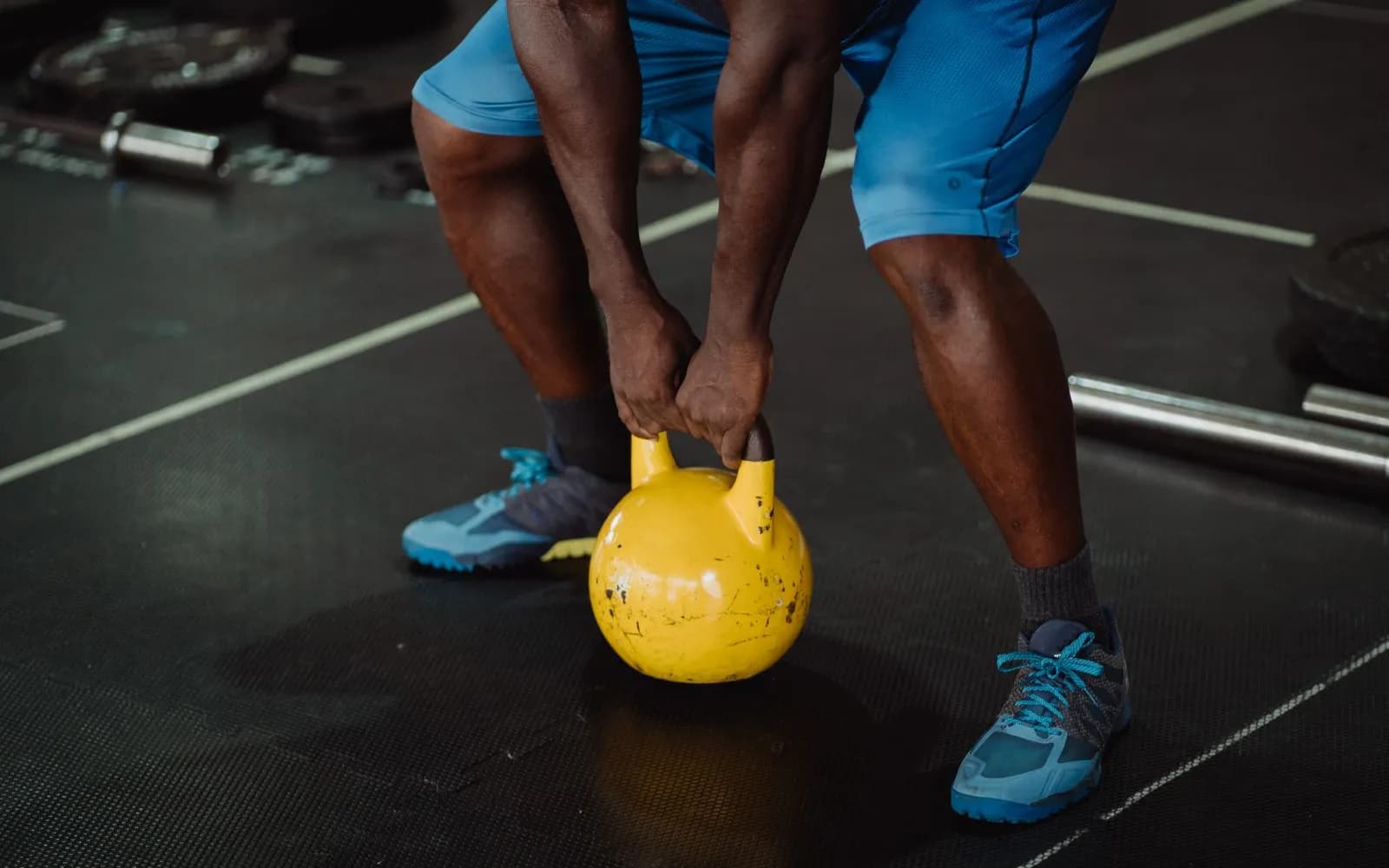
- Kettlebell deadlift: set the bell between your feet, nearer your heels. Hinge to grab it, keep your back straight and stand tall.
- Press-up: put your hands under your shoulders, keep your body straight and lower your chest towards the floor. Too hard? Start against a wall.
- Bent-over row: hinge forward, hold that position and drive your elbows back towards your back pockets.
- One-arm farmer carry: hold a kettlebell in one hand, stand up straight and walk forwards and backwards. Then swap hands.
Sources: NHS; The Prehab Guys
The cues come from the NHS strength exercises and The Prehab Guys, a team led by physios. Watch their goblet squat, deadlift, press-up, row and carry videos.
Not sure of your form? The ROS suggests asking a physiotherapist or qualified exercise instructor. For more lift choices, see the best strength exercises.
A functional workout routine for the week
The NHS advises strength work for all your main muscles on at least 2 days a week. Work each set until you need a short rest before going again.
A simple two-day functional routine
- 1
Day 1
Goblet squat, deadlift, press-up, row, then a carry.
- 2
Rest day
Leave at least a day between sessions.
- 3
Day 2
Goblet squat, step-up or lunge, deadlift, press-up, row, then a carry.
- 4
Each session
Aim for 8 to 12 reps, building up to 3 sets of each.
How heavy? The ROS says if you can’t do 8 reps with good technique, go lighter. If 12 feels easy and you could keep going, go heavier.
No kettlebell? A full shopping bag or a loaded backpack works for deadlifts and carries.
To keep moving up, see progressive overload for beginners. Starting at home? Plan your first two sessions or read strength training at home.
Can you build it into your day?
Yes, and for older people who fall it may help. The LiFE trial taught people aged 70 or over to fit balance and strength moves into daily routines.
Everyone in it had fallen twice or more, or once with an injury, in the past year. After 12 months, the LiFE group had 31% fewer falls than a group doing gentle exercise.
A set home programme, done 3 times a week, showed no clear difference from gentle exercise. Only the daily-habit approach made a clear difference.
Try one habit today. For example, stand up slowly from your chair without using your hands, or take the stairs.
Worried about falling? See balance exercises for healthy ageing and strength training for seniors.
When to speak to a GP
Check first, or get help, if:
- You haven’t exercised for some time, or you have medical conditions or concerns. The NHS says to speak to your GP first.
- You’ve had many broken bones or a broken bone in your spine, or you’re healing from a break. The ROS says to talk to your doctor or physiotherapist first.
- You get chest pain that comes and goes, or goes away quickly but you’re still worried. See a GP.
- You get sudden chest pain that doesn’t go away. It can feel like squeezing, pressure, burning or indigestion. Call 999.
- Chest pain spreads to your arm, neck, jaw, stomach or back, or comes with sweating, feeling sick, light-headed or short of breath. Call 999.
Fallen or worried about falling? The NHS says strength, balance and flexibility exercises will help make you stronger and feel more confident on your feet.