How do you do a kettlebell deadlift?
Bell between your feet, hips back, back flat. Then push the floor away and stand tall. If it feels like a squat, it probably is. A wall drill teaches your hips to go back instead.
On this page
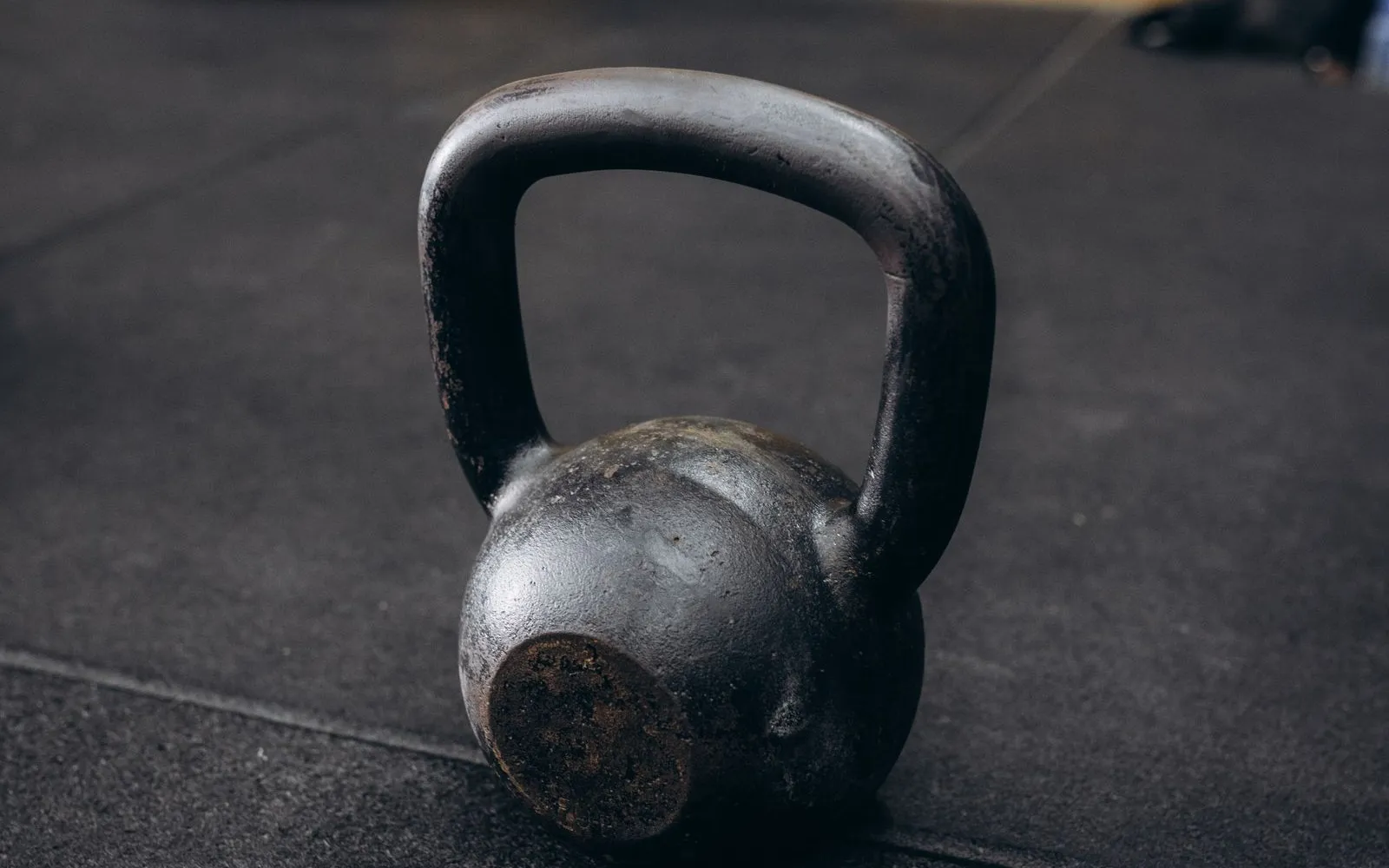
How do you do a kettlebell deadlift?
Stand with one kettlebell on the floor between your feet. Push your hips back, grab the handle with both hands, and stand up tall. Then lower it the same way.
The kettlebell deadlift in four steps
- 1
Set up
Put the bell between your feet, closer to your heels than your toes.
- 2
Hinge
Push your hips back and grab the handle with both hands. Keep your back and neck straight.
- 3
Stand
Push the floor away with your legs and stand tall, shoulder blades squeezed back.
- 4
Lower
Push your hips back again and lower the bell to the floor in a straight line.
These steps come from The Prehab Guys, a team of physiotherapists. They say it should mainly work your glutes (bottom) and hamstrings (backs of your thighs).
Two of their cues help most. Think about pulling the handle apart with your hands. And stand up by pushing the floor away, not by heaving with your arms and upper body.
Keep your tummy tight. Don’t let your lower back arch or bend, most of all as you lower the bell.
Am I squatting it? The wall test
Dan Cenidoza runs a kettlebell gym and starts every student on this lift. A few people struggle with it. When they do, he usually sees one of three mistakes.
| Mistake | What it looks like | What the wall drill trains |
|---|---|---|
| Squatting it | Knees bend a lot and push forward | Hips go back, not knees forward |
| Stiff legs | Knees hardly bend at all | Knees bend a little, as needed |
| Round back | Back curves as you reach down | Back stays straight as the hips go back |
Source: StrongFirst: Dan Cenidoza
If any of these sounds like you, try his wall hinge.
Stand with your back to a wall, about 30 cm (12 inches) away. Push your hips back until your bottom taps the wall, then stand up. Don’t lean on it.
Do five good reps. Then shuffle a little further forward and repeat.
The goal is to get as far from the wall as you can while still tapping it.
He finds this fixes things for most people. Then it’s back to the kettlebell.
How heavy should a kettlebell deadlift be, and how many reps?
Start light. The Prehab Guys say to start with a light kettlebell and only add weight slowly, once the move feels right. None of the sources gives a starting weight in kg.
For reps, Shane Heins, who teaches coaches at Onnit, suggests 8 to 12 reps with a moderate bell. With a really heavy one, he suggests sets of 3 to 5.
The NHS says to do strength moves until you need a short rest before repeating. Aim for at least 2 days a week, working legs, hips, back, tummy, chest, shoulders and arms.
Your first kettlebell deadlift sessions
- Do strength moves that work all your major muscles on at least 2 days a week.
- Start with a light kettlebell.
- If your deadlift looks like a squat, stiff legs or a round back, do the wall hinge first: five good reps at each spot.
- Do 8 to 12 reps with a moderate bell, until you need a short rest.
- Add weight slowly, only once the move feels right.
- If an exercise makes back pain worse, stop and see a GP.
Sources: NHS: physical activity guidelines; The Prehab Guys; Onnit: Shane Heins; NHS: back pain
For how to add weight over weeks, see progressive overload for beginners.
Double KB deadlift and other versions
Once one bell feels easy, Heins has a few next steps. Each changes where the weight sits.
| Version | How | Why pick it |
|---|---|---|
| Double KB (two kettlebells) | Two bells between your legs, feet a little wider than your hips. Push your hips back to reach them. | Lets you lift heavier than most kettlebell versions. Hard on your grip. |
| Suitcase | One bell by the side of one leg, handle turned front to back. Stand without twisting. | Loads one side. Do the same reps on both sides. |
| Sumo | Double bells with a wide stance. | Heins uses it to go really heavy. |
| From a box | Start with the bell raised on a box or mats. | Less distance to bend if you can’t reach the floor well. |
Source: Onnit: Shane Heins
Cenidoza teaches the deadlift first, then the swing. The swing is in our kettlebell workout.
Once the kettlebell version looks good, he moves people to a barbell. The trap bar deadlift is another step up. If your hands tire first, see deadlift grip.
Is it OK with back pain or in pregnancy?
Haven’t exercised for some time, or have a health condition? The NHS says speak to your GP first.
With back pain, the NHS says exercise can help. But stop if your pain gets worse and see a GP. For gentler moves, try back strengthening exercises.
Pregnant? The NHS says strength work can include gym training if you do this already. It says not to start a new vigorous activity in pregnancy.
Tell your instructor you’re pregnant, and stop if you feel uncomfortable, too hot or unwell.
When to speak to a GP
Back pain usually improves within a few weeks. Get help if:
- You haven’t exercised for some time, or you have medical conditions or concerns. The NHS says speak to your GP first.
- Back pain doesn’t improve after a few weeks of home treatment, stops your daily activities, or you’re worried or struggling to cope. See a GP if it doesn’t improve with rest, is worse at night, or is worse when you sneeze, cough or poo.
- Back pain comes from between your shoulders, you’ve lost weight without trying, or there’s a lump, swelling or change in the shape of your back. See a GP.
- You have back pain and feel hot, cold, shivery or generally unwell, or severe pain starts suddenly or gets worse quickly. Ask for an urgent GP appointment or get help from 111.
- Call 999 or go to A&E if you have back pain with pain, tingling, weakness or numbness in both legs. The same goes for loss of feeling around your genitals or anus, or chest pain. Also for changes in your bladder or bowels, such as difficulty peeing, or peeing or pooing yourself. Or changes in how your penis or vagina feels during sex, or not being able to get or keep an erection or orgasm. And if it started after a serious accident, such as a car accident.
In many areas you may be able to get NHS physio without a GP referral.