What makes a healthy breakfast muffin?
Bake your own with oats, wholemeal flour and eggs. Shop muffins average 27.7 g of sugar per 100 g, over the NHS high mark. Yet one NHS muffin has a tenth of another’s sugar.
On this page
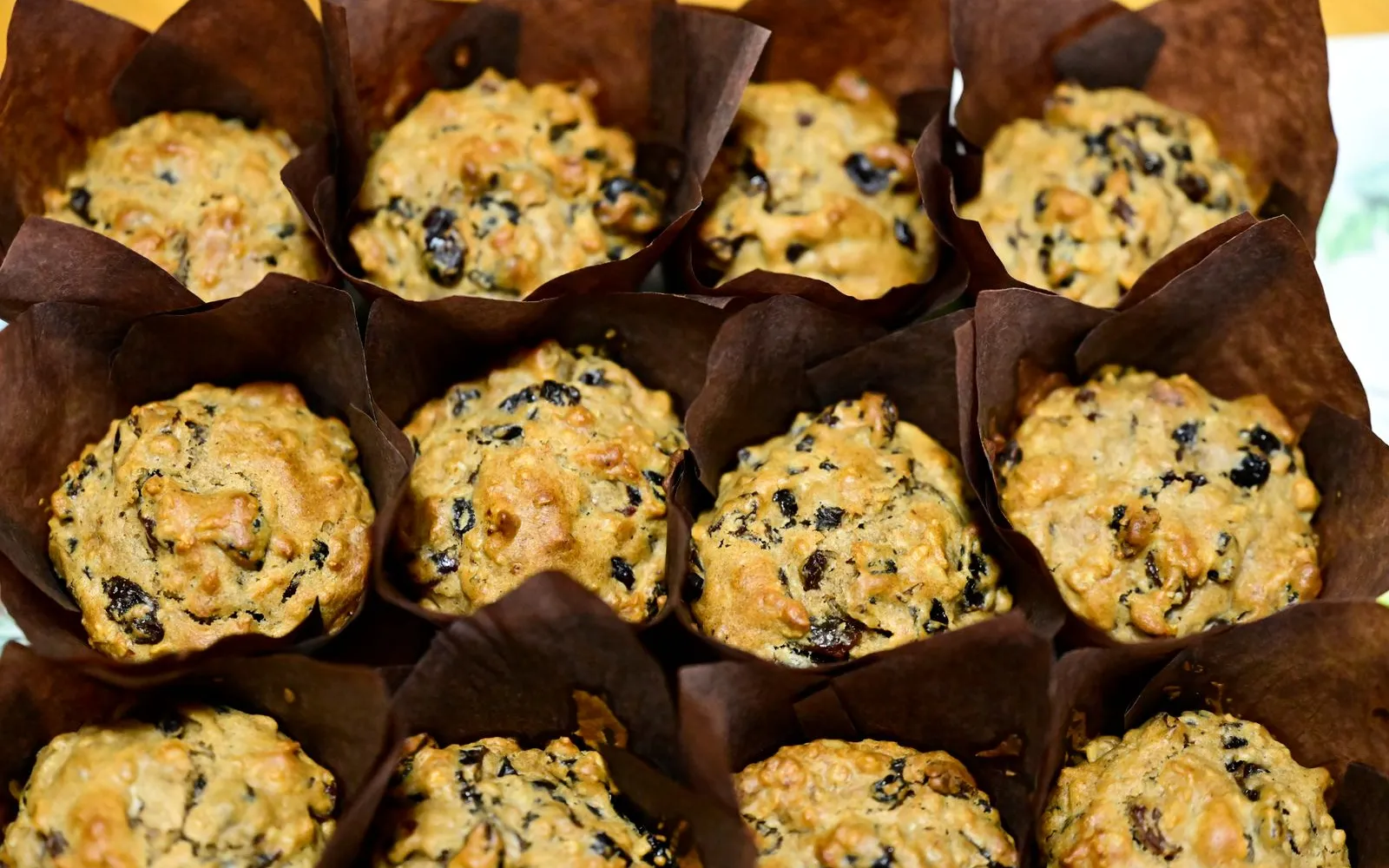
What makes a breakfast muffin healthy?
Less sugar, more fibre and some protein. In practice, that means baking your own with wholemeal flour, oats and eggs, and little or no added sugar.
Shop muffins fall short on sugar. UK government food tables put them at 27.7 g of sugar per 100 g, and 30.9 g for chocolate ones.
The NHS calls more than 22.5 g per 100 g high in sugar. Low is 5 g or less.
- 5 g or belowNHS: low in sugar.
- Above 5 up to 22.5 gNHS: medium.
- Above 22.5 gNHS: high in sugar.
Sources: NHS; UK food tables (CoFID)
Homemade isn’t automatically low. A homemade bran muffin in the same tables has 17.3 g per 100 g, in the middle band.
Buying one? Turn the pack over and find the sugar per 100 g. Over 22.5 g is high, whatever the front says.
Which healthy muffin recipe has the least sugar?
The carrot and courgette one. The NHS Healthier Families site has three muffin recipes, and their sugar runs from 1.4 g to 14.5 g a muffin.
| NHS recipe | Sugar | Calories and fibre |
|---|---|---|
| Carrot and courgette (makes 8) | 1.4 g | 200 kcal, 2.7 g fibre |
| Mini apple and banana (makes 12) | 6.3 g | 99 kcal, 0.7 g fibre |
| Blueberry and banana (makes 8) | 14.5 g | 227 kcal, 1.5 g fibre |
Sources: NHS: carrot and courgette; NHS: mini apple and banana; NHS: blueberry and banana
The carrot muffin has about a tenth of the blueberry muffin’s sugar. It is savoury: grated carrot and courgette with herbs, in place of the sweet stuff.
The blueberry recipe adds 50 g of brown sugar, 75 g of dried blueberries, a banana and apple purée. The carrot recipe has none of them, and uses wholemeal flour.
It also has the most fibre. Adults should aim for 30 g a day, but most get about 20 g.
Bake the carrot and courgette batch first. The NHS says the muffins keep in the freezer for up to 3 months.
Watching calories too? See the best breakfast for weight loss.
How do I make high protein muffins?
Swap some of the flour for eggs or cottage cheese.
On a UK pack, “high protein” means at least 20% of the calories come from protein. A gram of protein has 4 kcal, so that’s 5 g of protein per 100 kcal.
To check a label, divide the protein by the calories, then times by 100.
- Below 3 gCan’t be called a source of protein.
- 3 to just under 5 gCan be called a source of protein.
- 5 g or aboveCan be called high protein.
Sources: UK nutrition claims law; UK food tables (CoFID); NHS
We worked these out from UK food tables and NHS labels. A shop muffin gives 1.3 g per 100 kcal, and the NHS carrot muffin 2.8 g.
An egg is 9.6 g and reduced-fat cottage cheese is 15.6 g, from the same tables.
So the protein has to come from eggs or cottage cheese. Each bit of flour you swap for them pushes the number up. For more, see high-protein breakfast ideas.
How can I make any muffin recipe healthier?
Six swaps for your next batch of muffins
- Use wholemeal flour for some or all of the white. It has 10.1 g of fibre per 100 g, against 4.0 g.
- Add porridge oats, as the carrot and blueberry NHS recipes do.
- Grate in carrot or courgette, like the NHS muffin with 1.4 g of sugar.
- Cut the sugar, and don’t swap it for honey or syrup. The NHS counts those as free sugars too.
- Bake with rapeseed or olive oil, or a spread made from them, in place of butter.
- Freeze the batch in a bag or box. The NHS says its carrot and courgette muffins keep for up to 3 months.
Sources: UK food tables (CoFID); NHS: sugar; NHS: fats; NHS: carrot and courgette muffins
Free sugars are sugars added to food, plus those in honey, syrups, juices and purées. Adults should have no more than 30 g a day.
Whole fruit doesn’t count, unless it’s juiced or puréed. So the apple purée in a recipe does count. See how much sugar per day.
The oil swap is about fat, not calories. The NHS says to swap saturated fats (the kind in butter) for unsaturated fats, found mostly in oils from plants and fish. For more fibre ideas, see high-fibre foods.
When to speak to a GP
Speak to a GP if:
- You think you or your child may have a food allergy. Eggs, cows’ milk, wheat and tree nuts are among the most common.
- You have a medical condition, or a special diet for your health. Talk to a GP before changing what you eat.
- You have an eating disorder, or have had one. Talk to a GP before changing what you eat.
Call 999 if someone’s lips, mouth, throat or tongue suddenly swell, or they’re breathing very fast or struggling to breathe.
Also call 999 if their throat feels tight or they struggle to swallow, or their skin, tongue or lips turn blue, grey or pale.
Call too if they suddenly become very confused, drowsy or dizzy, or faint and can’t be woken. The same goes for a child who is limp, floppy or not responding.
If they have an adrenaline auto-injector or nasal spray, use it straight away. Then call 999, even if they seem to feel better.