Are ready meals healthy?
Some are: pick one with no red on the front label. No front label? The back gives salt per 100 g, and a 400 g tray holds four times that. One sum shows your total.
On this page
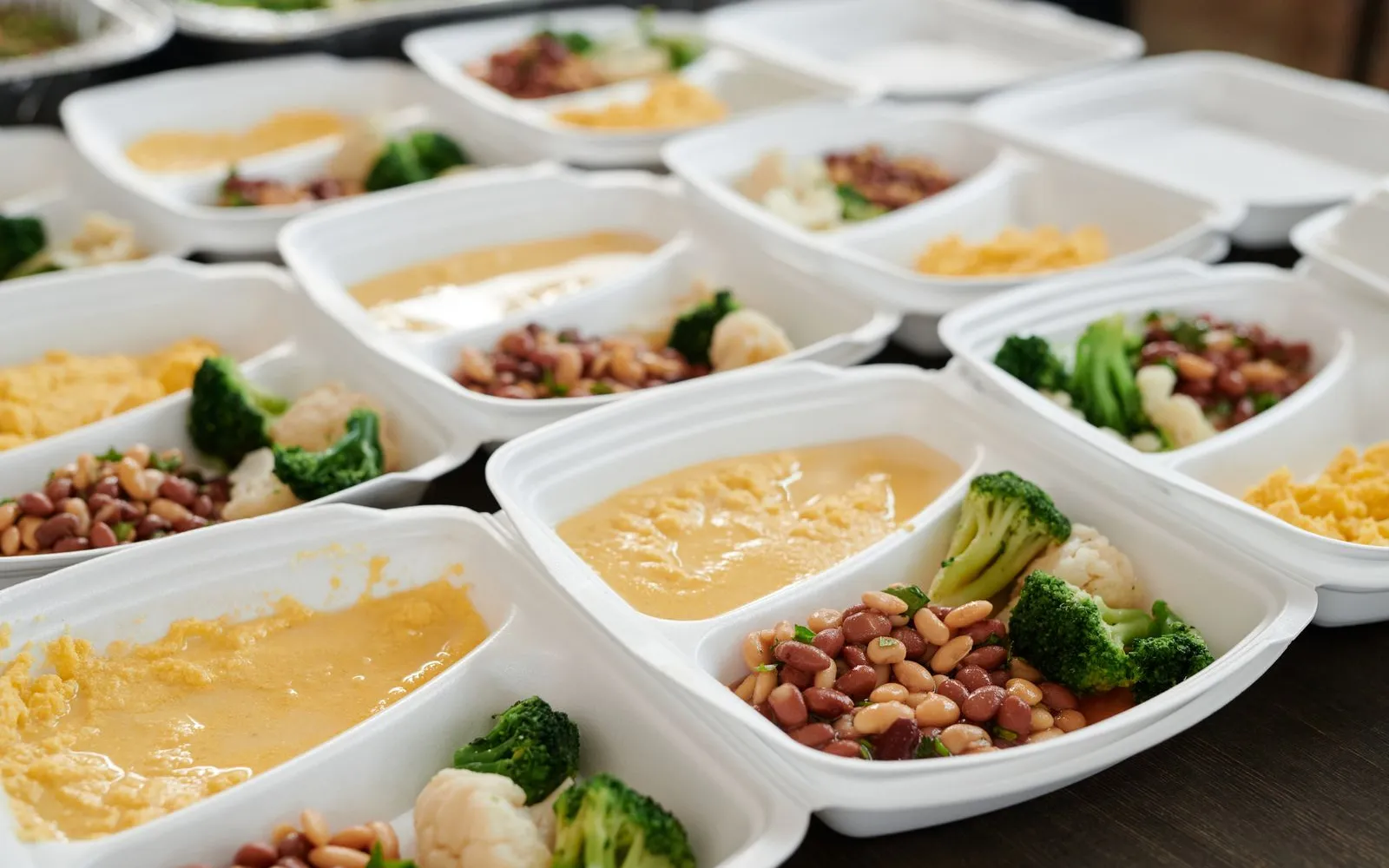
Are ready meals healthy?
Some are, and the label tells you which. Many packs have red, amber and green colours on the front.
The NHS says all or mostly green is a healthier choice. Mostly amber is fine most of the time. Any red means the meal is high in fat, saturated fat, sugar or salt, so have it less often.
| Per 100 g | Green (low) | Red (high) |
|---|---|---|
| Fat | 3 g or less | More than 17.5 g |
| Saturated fat | 1.5 g or less | More than 5 g |
| Sugars | 5 g or less | More than 22.5 g |
| Salt | 0.3 g or less | More than 1.5 g |
Source: NHS
Anything between green and red is amber. Calories get no colour, so read that number yourself.
In the shop, hold two meals side by side. Pick the one with more greens and ambers, and fewer reds.
How much salt is in a ready meal?
Adults should have no more than 6 g of salt a day, about a level teaspoon. The NHS names ready meals as one of the packaged foods that supply most of our salt.
The colours on the front are optional, and the back label lists salt per 100 g. Your tray weighs more than that.
Sources: NHS; DHSC label guidance
That sum is salt per 100 g times the tray weight. A 400 g tray means times four.
Government label rules turn a portion over 100 g red if it holds more than 1.8 g of salt, which is 30% of a day.
Too much salt can cause high blood pressure, which raises the risk of heart attacks and strokes. So aim for under 1.8 g a tray.
What counts as a high protein ready meal?
A box can only say high protein if at least 20% of its calories come from protein. Protein has 4 calories per gram.
So here is a quick check, worked out from those two rules. Divide the calories by 20. The protein should be at least that many grams.
| Meal calories | Protein needed |
|---|---|
| 300 | 15 g or more |
| 400 | 20 g or more |
| 500 | 25 g or more |
| 600 | 30 g or more |
Sources: UK nutrition claims law; UK energy values
The claim says nothing about salt or fat. A high protein meal can still have red on the front, so check both.
How much do you need? The British Nutrition Foundation gives 56 g a day for a 75 kg man and 45 g for a 60 kg woman. On average, UK adults already eat more.
Trying to lose weight? One review linked higher protein diets, possibly with at least 25 to 30 g a meal, to better appetite and weight control. See how much protein you need a day.
Are frozen and microwave meals healthy?
Frozen or chilled, judge them by the same label. Frozen vegetables count too: 80 g of fresh, canned or frozen is one of your 5 A Day.
The veg inside a ready meal counts as well. But the NHS warns some ready meals may be high in salt, sugar and fat, so have those now and then, or in small amounts.
Turn a ready meal into a fuller plate
- 1
Check the front
No red, or the fewest reds of the meals on the shelf.
- 2
Add veg
80 g of frozen peas, beans or broccoli is one of your 5 A Day.
- 3
Go wholegrain
Brown rice or wholewheat pasta versions add fibre.
- 4
Hold the sauce
Soy sauce, gravy and ketchup can be high in salt.
Sources: NHS: 5 A Day; NHS: balanced diet; NHS: salt
Worried about ultra-processed food (food made with ingredients you wouldn't use at home, like preservatives or sweeteners)? The NHS lists some ready meals as ultra-processed. But it says it's not known if that's down to the processing or the calories, fat, salt and sugar.
More in ultra-processed food and appetite.
Vegan? Bean, lentil and pea meals are a good start, as pulses are very low in fat and high in fibre and protein. See vegan protein sources.
How to pick a healthy ready meal
Six checks before a ready meal goes in your basket
- Pick a meal with no red on the front label, or the fewest reds.
- No colours? Times the salt per 100 g by the tray weight, and aim for under 1.8 g.
- For high protein, divide the calories by 20. The protein should be at least that many grams.
- Read the calories on the front. The NHS suggests cutting around 200 from your dinner if you're losing weight.
- Check the first few ingredients. They come in order of weight, so cream, butter or oil near the top means a high fat meal.
- Add 80 g of frozen vegetables to make one of your 5 A Day.
Sources: NHS: food labels; DHSC label guidance; NHS: calorie counting; UK nutrition claims law
For scale, the NHS gives 2,000 calories a day for women and 2,500 for men to stay at a healthy weight. To lose weight it suggests eating about 600 fewer a day. See calories to lose weight.
Most adults eat about 20 g of fibre a day, against a goal of 30 g. A box that says high fibre has at least 6 g per 100 g, or at least 3 g per 100 calories.
Rather cook your own for the week? Try high protein meal prep or high protein low calorie meals.
When to speak to a GP
High blood pressure does not usually cause symptoms. Speak to a GP if:
- You keep losing weight without changing your diet or exercise. See a GP as soon as possible if you have weight loss and other symptoms.
- You're 40 or over and haven't had your blood pressure checked for more than 5 years. Many pharmacies check it for free.
- You have kidney disease. NICE says you should be offered advice on salt, calories and the minerals potassium and phosphate, matched to how severe it is.
- You have a medical condition or special diet. The NHS says to ask your doctor or a registered dietitian.