High protein low calorie breakfast
Quark, cottage cheese or eggs. Seven easy plates give 20 to 30 g of protein for under 300 calories. But 20 g from peanut butter costs over 500. One quick sum shows why.
On this page
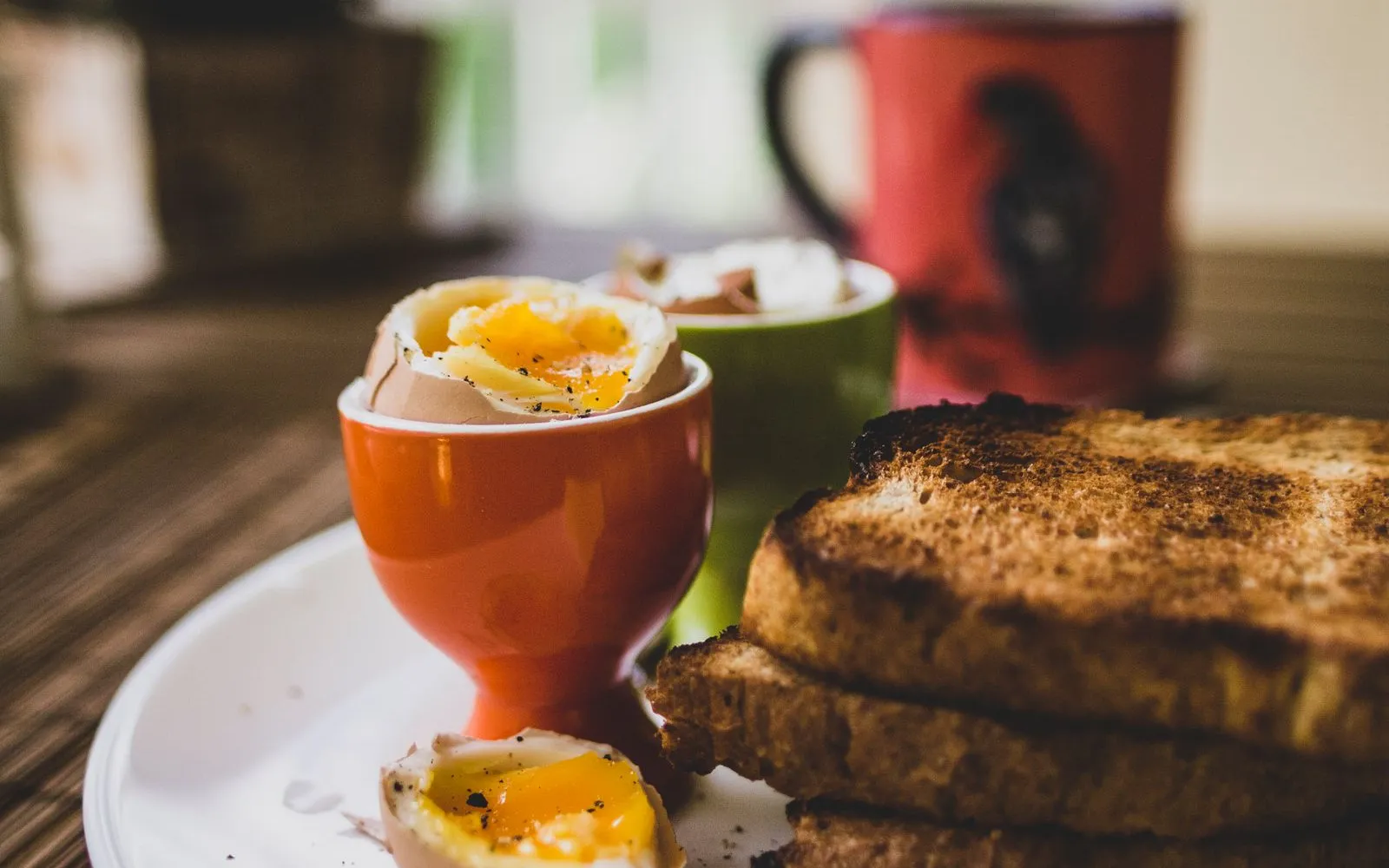
What is a good high protein low calorie breakfast?
One or two lean protein foods, plus fruit or veg. Quark, cottage cheese, eggs, egg white or smoked salmon all work.
Each of the seven plates below has 20 g of protein or more, for under 300 calories. We worked them out from the UK government’s food tables.
| Breakfast | Protein | Calories |
|---|---|---|
| 200 g quark with 80 g raspberries | About 30 g | About 170 |
| 60 g lean bacon steak, 1 poached egg, mushrooms and tomatoes | About 26 g | About 190 |
| 2 eggs and 100 g liquid egg white, cooked without oil, with mushrooms and spinach | About 26 g | About 195 |
| 150 g reduced-fat cottage cheese on 1 slice wholemeal toast, with tomatoes | About 20 g | About 205 |
| 200 g tofu scrambled without oil, on 1 slice wholemeal toast | About 20 g | About 235 |
| 2 eggs scrambled without milk, with 50 g smoked salmon | About 26 g | About 245 |
| Porridge: 40 g oats, 200 ml skimmed milk and 100 g quark stirred in | About 26 g | About 295 |
Source: UK food tables (CoFID)
Quark is a soft, plain cheese with almost no fat. It sits near the cottage cheese in most shops.
The totals leave out oil, butter and spreads. Add those if you use them. Check the tofu pack, as protein varies by brand.
Bacon is processed meat, which the NHS says to eat less of.
Pick two you’d enjoy and put them on this week’s shopping list.
Which breakfast foods give the most protein for the calories?
Egg white, quark and reduced-fat cottage cheese. Each gives 20 g of protein for about 130 calories or less.
Source: UK food tables (CoFID)
Here’s the quick sum. Divide the protein by the calories, then times by 100.
That number is protein per 100 calories. Quark scores about 20. Peanut butter scores about 4, because over half its weight is fat.
Like peanut butter? Keep it to a thin layer and get the protein from the rest of the plate. For lunch and dinner foods, see high protein low calorie meals.
How do I check a breakfast label for protein?
Use the per 100 g column and do the same sum. Protein divided by calories, times 100.
A food can only say “high protein” if at least 20% of its calories come from protein. That works out at 5 g of protein per 100 calories.
- Below 3 g protein per 100 caloriesToo low to say “source of protein”.
- 3 to just under 5 g protein per 100 caloriesCan say “source of protein”.
- 5 g protein per 100 calories or aboveCan say “high protein”.
So a granola that only just earns “high protein” gives about a quarter of quark’s protein per calorie. Trust the sum, not the word on the front.
Next shop, do the sum on your usual cereal or yoghurt.
Will a high protein breakfast help me lose weight?
It may help you feel full. But in one trial, it didn’t change body fat on its own.
The NHS says protein in each meal can help you feel full for longer.
In the NewStart trial, 56 women aged 18 to 30 with overweight ate a 34 g or a 6 g protein breakfast for 12 weeks.
The high-protein group felt fuller. Hoping for less belly fat? Food eaten and body fat, measured by a scan, changed no differently between the groups.
A 2015 review suggests higher-protein diets may help appetite and weight. Longer studies were mixed, and sticking with the diet seemed to matter most.
Calories still count. The NHS says you can gain weight even from healthy foods if you eat more than you need. So pick the plate you’ll keep eating.
How much protein and how many calories at breakfast?
For protein, the daily guide for adults is 0.75 g for each kg you weigh. That’s 45 g a day for a 60 kg woman and 56 g for a 75 kg man.
So a 20 g breakfast covers close to half of that 45 g.
For calories, the government’s rule of thumb is 400 at breakfast. To lose weight, the NHS suggests eating around 600 fewer a day, for example, about 100 from breakfast.
Your high protein breakfast checklist
- Build breakfast on egg, egg white, quark or reduced-fat cottage cheese.
- Add fruit or veg, like raspberries, mushrooms, spinach or tomatoes.
- Make porridge with skimmed milk and stir in 100 g quark.
- Add any oil, butter or spread you use to the totals.
- Check labels: divide protein by calories, then times by 100.
- Keep peanut butter and crunchy muesli to small amounts.
Sources: NHS; UK food tables (CoFID)
For the whole day, see how much protein you need a day and how many calories to eat to lose weight. Want more ideas? Try high-protein breakfast ideas.
When to speak to a GP
Before you make changes to your lifestyle to lose weight, the NHS says talk to a GP or a healthcare professional if you have:
- a medical condition
- a special diet for your health
- an eating disorder, or have had one in the past
The charity Beat Eating Disorders has help for adults and children.
Also see a GP if you:
- keep losing weight without changing your diet or exercise routine
- have weight loss and other symptoms (go as soon as possible)