High protein lunch ideas for work
Start with 100 g of chicken, tuna or salmon. That’s 25 to 32 g of protein. No meat? Use eggs and beans. Cheese matches tuna per 100 g. Why does a cheese sandwich give less?
On this page
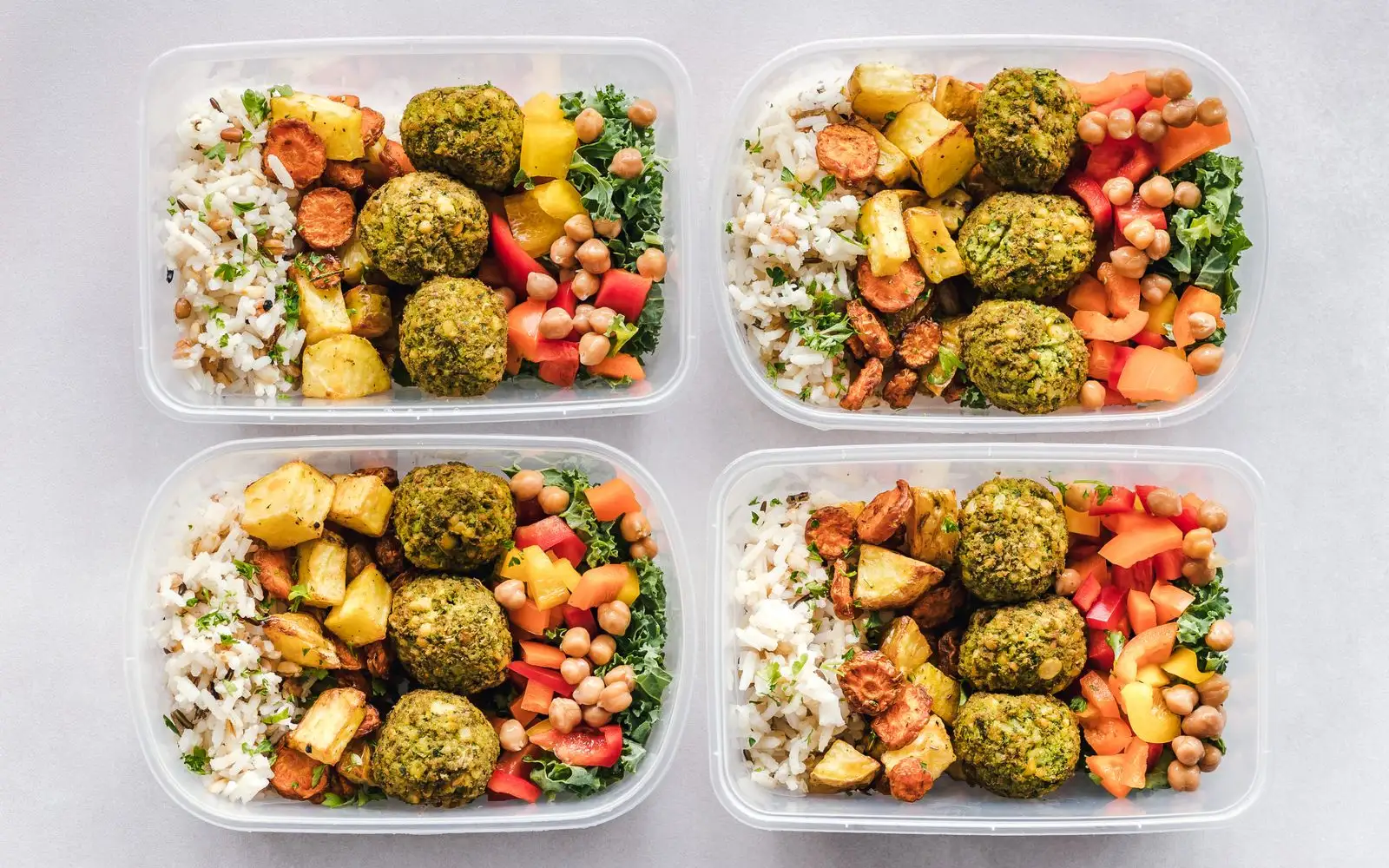
What is a good high protein lunch?
One protein food in a decent portion. 100 g of grilled chicken breast has about 32 g of protein. The same weight of tinned tuna in brine has about 25 g.
| Lunch | What goes in | Protein |
|---|---|---|
| Chicken salad | 100 g grilled chicken breast | About 32 g |
| Tuna and bean salad | 100 g tuna in brine (drained), 100 g tinned kidney beans | About 32 g |
| Salmon and rice | 100 g grilled salmon, cold rice | About 25 g |
| Egg and lentil salad | 2 medium boiled eggs, 150 g boiled red lentils | About 24 g |
| Cottage cheese and chickpeas | 150 g cottage cheese, 100 g tinned chickpeas | About 21 g |
Sources: British Nutrition Foundation; British Egg Information Service
Bread, wraps, rice and pasta add a little more on top.
How much do you need? Adults need 0.75 g per kg of body weight a day. That’s 56 g for a 75 kg man and 45 g for a 60 kg woman.
The British Dietetic Association’s sport advice says to spread it through the day. Over three meals, 56 g is about 19 g each. Every lunch above gives more than that.
Pick one and add what it needs to your next food shop.
Is a cheese sandwich high in protein?
Less than you’d think.
Cheddar has about 25 g of protein per 100 g, the same as tuna. The catch is the weight. You put far less cheese in a sandwich than a tin holds tuna.
Sources: British Nutrition Foundation; British Egg Information Service
To fix it, slice in two boiled eggs. A medium egg has about 6.4 g, so two add about 13 g.
Ham counts as processed meat, and a slice weighs about 23 g. If you eat more than 90 g (cooked weight) of red or processed meat a day, the NHS says to cut down to 70 g.
So weigh your filling once. It shows you what your usual sandwich really gives.
What protein lunch can I take to work with no fridge?
Cooked dishes, salads and dairy foods belong in a fridge. Between 8°C and 63°C, the Food Standards Agency (FSA) says germs may grow and make you ill.
No fridge at work? Pack your lunch in a cool bag with an ice pack. Or take unopened tins of tuna, beans or chickpeas and open them at lunch.
Nuts need no fridge. Two handfuls (100 g) of unsalted nuts or seeds give about 20 g of protein.
Last night’s dinner as today’s lunch
- 1
Cool
Cool it and put it in the fridge within 2 hours.
- 2
Eat soon
Leftovers within 48 hours. Rice within 24 hours.
- 3
Cold is fine
If it was cooked properly and chilled in time.
- 4
Reheat once
Only once, until it’s steaming hot all the way through.
Sources: FSA: chilling; FSA: cooking; FSA: home food fact checker
Rice needs the most care.
Uncooked rice can carry a germ that survives cooking, the FSA says. The longer cooked rice sits out, the riskier it gets. Cool it fast, ideally within an hour, and never reheat it more than once.
Only used half a tin? Don’t keep it in the can. Tip it into a covered container in the fridge.
What about a vegetarian or vegan protein lunch?
Beans, lentils and chickpeas are a cheap, low-fat source of protein and fibre. But they have less protein per 100 g than meat. So use a bigger portion, or mix two.
| Food | Amount | Protein |
|---|---|---|
| Red lentils, boiled | 150 g | About 11 g |
| Tofu, steamed | 100 g | About 8 g |
| Chickpeas, tinned | 100 g | About 7 g |
| Kidney beans, tinned | 100 g | About 7 g |
| Unsalted nuts or seeds | 2 handfuls (100 g) | About 20 g |
Sources: British Nutrition Foundation; British Dietetic Association
A salad of 150 g lentils and 100 g chickpeas gives about 19 g. Add two boiled eggs if you eat them, and it’s about 31 g.
Tofu differs a lot between packs, so check the label. For more, see plant protein for strength training.
How do I add protein to the lunch I already eat?
Add one food, not a new routine. Most of us already eat enough protein, so we don’t need bars or shakes, the British Nutrition Foundation says.
Six ways to add protein to your work lunch
- Slice 2 medium boiled eggs into a cheese sandwich for about 13 g more.
- Fill your wrap with 100 g of grilled chicken breast for about 32 g.
- Stir 100 g of tinned chickpeas or kidney beans into a salad for about 7 g more.
- Spoon 150 g of cottage cheese onto a jacket potato or salad for about 14 g.
- Keep an unopened tin of tuna in your desk and open it at lunch.
- Keep 2 handfuls (100 g) of unsalted nuts at work for about 20 g.
Sources: British Nutrition Foundation; British Dietetic Association; British Egg Information Service
Tinned and deli foods can be salty. Adults should have no more than 6 g of salt a day, so compare labels.
Trying for a baby or pregnant? The NHS says to have no more than 4 cans of tuna a week. Girls and women who haven’t been through the menopause should have no more than 2 portions of oily fish, like salmon, a week.
For mornings, see high protein breakfast ideas. For bars, see healthy protein bars. For training, see protein to build muscle.
When to speak to a GP
Food poisoning usually gets better within a week at home. Call 111 if you:
- keep being sick and cannot keep fluid down
- have bloody diarrhoea or bleeding from your bottom
- have diarrhoea for more than 7 days, or vomiting for more than 2 days
- still have signs of dehydration, like dark pee, after using rehydration sachets
Call 999 or go to A&E if you:
- vomit blood, or vomit that looks like ground coffee, or have green vomit
- may have swallowed something poisonous
- have a stiff neck and pain when looking at bright lights
- have a sudden, severe headache or tummy ache
- have blue, grey, pale or blotchy skin, lips or tongue
- have severe trouble breathing, or are taking lots of quick, short breaths
- are confused or not responding as usual
See a GP if you keep losing weight without changing your diet or exercise. Have kidney disease and blood tests showing high potassium and phosphate (minerals your kidneys usually clear from your blood)? The NHS says you may be referred to a dietitian.