How much protein to build muscle?
About 1.6 g per kg a day. At 75 kg that’s 120 g, if you lift weights. In a 49-trial review, more than that added no extra muscle on average. One thing added far more.
On this page
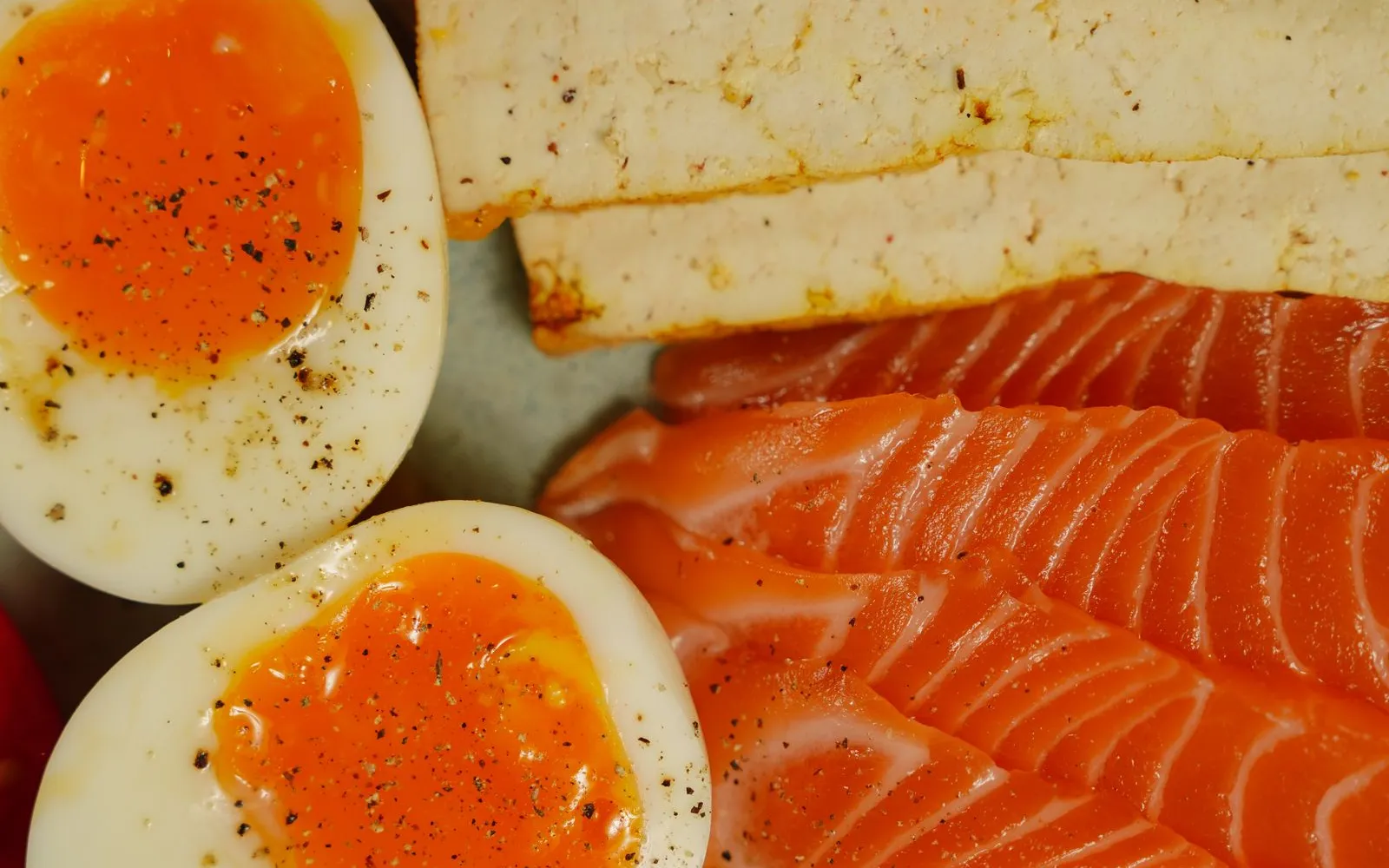
How much protein do I need to build muscle?
About 1.6 g for every kg you weigh, each day. Dietitians at the BDA say muscle gain needs strength training, enough food overall and about 1.6 to 1.7 g of protein per kg.
That’s about double the UK amount for adults who don’t train, which is 0.75 g per kg. A review of 49 trials found muscle gains levelled off at about 1.6 g per kg on average.
- Below 0.8 g per kg a dayBelow the UK amount for adults.
- 0.8 to just under 1.6 g per kg a dayUK amount. Enough if you don’t lift.
- 1.6 up to 2.2 g per kg a dayWhere gains levelled off. BDA: 1.6 to 1.7.
- Above 2.2 g per kg a dayAbove the highest estimate (2.2).
Sources: BNF; BDA; Morton 2018
Why 2.2? The review couldn’t pin down exactly where gains levelled off. Its best guess was 1.6, but it could be as high as 2.2.
The authors said 2.2 g per kg may be sensible if you want every last bit of gain.
Only run or go to a class? You’re unlikely to need any extra protein. Find your weight in the next section.
How many grams of protein per day for my weight?
Times your weight in kg by 1.6. At 80 kg, that’s 128 g a day.
| Your weight | UK amount (0.75 g per kg) | To build muscle (1.6 g per kg) |
|---|---|---|
| 60 kg | 45 g | 96 g |
| 70 kg | 53 g | 112 g |
| 75 kg | 56 g | 120 g |
| 80 kg | 60 g | 128 g |
| 90 kg | 68 g | 144 g |
| 100 kg | 75 g | 160 g |
You may be closer than you think. UK men already eat about 85 g a day and women about 67 g.
So a 75 kg man eating the average needs about 35 g more, not double. Write down one normal day’s protein to see your gap.
Does more protein build more muscle?
Only up to a point. Think of protein as bricks and your training as the builder.
Extra bricks don’t make a bigger wall. The BNF says protein beyond what you need is used for energy, and very high amounts won’t necessarily turn into muscle.
Source: Morton 2018
That one thing is the training itself. The NHS says adults should do strength work for all the main muscles on at least 2 days a week.
Work each set until you need a short rest before you go again. Then add a little weight or a rep over time, as in our progressive overload guide or beginner gym plan.
Older? The extra protein helped less with age in the same review. See protein after 40.
How should I eat it across the day?
Spread it out. The BDA says to share your protein evenly through the day. Sports nutrition experts at the ISSN suggest 20 to 40 g at a time, every 3 to 4 hours.
Each of these gives you about 20 g of protein
- Have 1 small chicken breast (75 g cooked) or a 100 g fish fillet.
- Open 1 small can (100 g) of tuna or salmon.
- Eat 3 medium eggs.
- Spoon out half a 450 g pot of Greek yoghurt, or half a 300 g pot of low-fat cottage cheese.
- Drink 1 pint (600 ml) of semi-skimmed milk.
- Heat a large 400 g can of baked beans, or 165 g of Quorn mince.
Source: BDA
So 120 g a day is six of these, or four meals of about 30 g. Try eggs at breakfast and yoghurt as a snack, as in our high-protein breakfasts.
Go easy on red and processed meat. If you eat more than 90 g a day, the NHS says to cut down to 70 g.
Plant-based? See plant protein for strength training.
Do I need protein shakes?
No. The BNF says even with hard training you can get enough protein from food.
A shake or bar can help if you train hard and are short of time. Food is still better where you can, as it brings other nutrients too.
If you do buy one, check the grams of protein per serving against the 20 g foods above. Our guides to protein bars and dairy-free protein compare the options.
When to speak to a GP
For healthy people who train, a review found no sign of kidney or liver harm from eating more protein. Some people should check first. Speak to a GP if:
- You have kidney disease. People with kidney failure do better on less protein, and too much carries risks, so ask your kidney team or GP before you eat more.
- You keep losing weight without changing your diet or exercise.
- You’re losing weight and have other symptoms too. The NHS says to see a GP as soon as possible.
Want to know how your kidneys are doing? See our kidney function test guide.