What kettlebell weight should you use?
New to weights? Start at 8 to 12 kg for women, 16 to 20 kg for men. That’s one coach’s guide, not a rule. And swings need more weight than you’d think.
On this page
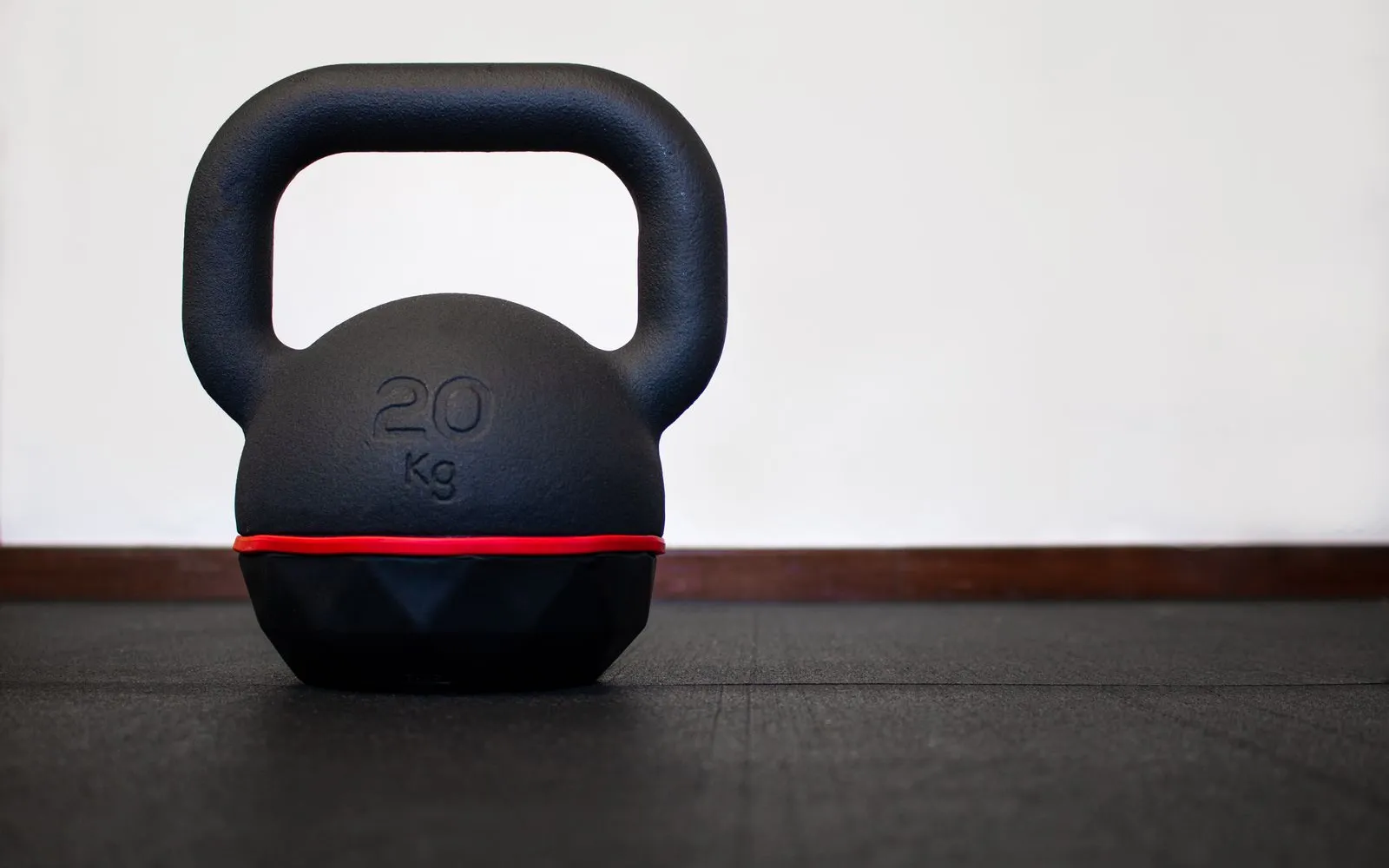
What kettlebell weight should a beginner use?
If you’ve never lifted weights, start at the low end. Lucy Campbell coaches at CrossFit Nottingham. She suggests 8 to 12 kg for women and 16 to 20 kg for men.
Her reason: a lighter bell lets you learn how each move works and use its full range.
| Your experience | Women | Men |
|---|---|---|
| New to weights | 8 to 12 kg | 16 to 20 kg |
| Used to weight training | 12 to 16 kg | 20 to 24 kg |
| Lots of experience and control | 16 to 24 kg | 24 to 32 kg |
Source: Lucy Campbell in Fit&Well
No NHS or official body sets a kettlebell weight. Researchers pick similar ones, though. In one small study of 13 young adults, women swung 8 kg and men 16 kg.
Another, in 21 healthy men who could already squat well, used 12 kg under 70 kg body weight and 16 kg over it.
So pick your row, then try the lighter bell in it first.
How heavy should a kettlebell be for swings?
Heavier than you’d guess. Campbell says a swing needs a heavy load so your hips do the work, not your upper body.
So a bell can be too light. If your arms lift it up from between your legs, go heavier. She suggests leaning towards the heavier side.
| What you notice | What it means |
|---|---|
| You squat, or your back rounds as the bell swings down | Too heavy |
| Your arms lift the bell up from between your legs | Too light |
| You feel it pulling in your lower back | Not right. You shouldn’t feel a swing there. |
| Hard work, but your hips drive it and your form holds | About right |
Source: Lucy Campbell in Fit&Well
Fit&Well suggests testing a few bells at a gym before you settle on one.
New to swings? Learn the kettlebell deadlift first. It’s the same bend at the hips, done slowly.
When should you go up a kettlebell size?
When your form is solid and your sets feel easy. The Prehab Guys, a team of physiotherapists, say to start with a light kettlebell and add weight slowly once the moves are right.
Kettlebells go up in big steps. Pavel Tsatsouline founded the kettlebell school StrongFirst. He gives the example of moving from a 24 kg to a 32 kg press: a 32% jump.
His rule for that jump is to first press the smaller bell 50 or more times in a session, all with good form. Build up reps before you build up weight.
Build reps first, then move up
- 1
Start light
Use the lighter bell in your row of the table.
- 2
Work hard enough
Each set should leave you needing a short rest.
- 3
Add reps
Last reps feel easy? Do a few more next time.
- 4
Then go heavier
Form still solid with more reps? Try the next bell up.
Sources: The Prehab Guys; NHS; StrongFirst
The short rest is the NHS test for strength work: do it to the point where you need a short rest. Our progressive overload guide shows how to step up week by week.
Should you buy one kettlebell or two?
One, to start. Campbell says most of the time you’ll only ever need one. She lists swings, deadlifts, goblet squats, one-arm presses and core moves.
She tells most people to start with one bell before adding a second. Our beginner kettlebell workout uses a single bell for six moves.
Thinking of an adjustable bell? Fit&Well warns they can be chunky and feel less sturdy. Their size may not suit lifting over your head.
Choosing your kettlebell weight
- New to weights? Start at 8 to 12 kg for women or 16 to 20 kg for men, at the low end.
- Buy one bell first, and try a few before you settle on one.
- For swings, go heavier if your arms are lifting the bell.
- Go lighter if you squat or your back rounds in the swing.
- Work each set to the point where you need a short rest.
- Add reps first. Move up a bell once your form stays solid.
Sources: Lucy Campbell in Fit&Well; The Prehab Guys; NHS; StrongFirst
Setting up at home? See our guide to building a home gym.
When to speak to a GP first
The NHS asks some people to speak to a GP first. Book an appointment if:
- You haven’t exercised for some time.
- You have medical conditions or health concerns.
- You get chest pain that comes and goes, or that goes away quickly but still worries you.
- Back pain doesn’t improve after a few weeks of treating it at home or after resting. Or it stops your daily activities or is worse at night.
- You’re pregnant and new to weights. The NHS lists gym strength training if you do this already, and says not to start a new vigorous activity. Speak to your midwife about what’s safe for you.
Ask for an urgent GP appointment or call 111 if back pain is severe and starts suddenly or gets worse quickly. The same goes if you also feel hot, cold, shivery or generally unwell.
Call 999 if you get sudden chest pain or discomfort that doesn’t go away. Or pain that spreads to your arm, neck, jaw, stomach or back. The same goes for chest pain with sweating, feeling sick, light-headed or short of breath.
Call 999 or go to A&E if you have back pain with pain, tingling, weakness or numbness in both legs. Or loss of feeling around your genitals or bottom, trouble peeing, or peeing or pooing yourself. Or changes in how your penis or vagina feels during sex, or trouble getting an erection or reaching orgasm.